
Angus Young has never been particularly interested in telling other musicians what they want to hear.
For him, rock’n’roll is supposed to have feel, energy and attitude – preferably delivered by a band that sounds like a band, rather than a collection of virtuosos showing off.
That explains some of his more startling verdicts on fellow rock stars. The Rolling Stones, he felt, had wandered too far from their roots. Deep Purple were guilty of turning rock into a display of technique. Eric Clapton, despite his 'Clapton Is God' reputation, simply never impressed him that much. And the Ramones? One song was enough for Young to make up his mind.
There is a logic behind the insults. Young’s heroes were Chuck Berry, Little Richard and the great early rock’n’roll performers, and he has always valued instinct over flash. As he once put it, 'Those guys have great feel. They hit the notes in the right spot and they know when not to play.'
In other words, Angus Young has a very clear idea of what rock should be. And plenty of famous musicians have failed his test.
The Rolling Stones: 'They must have progressed the wrong way'
Young’s objections to the Rolling Stones were not that they lacked talent. Quite the opposite: he thought they had already found the formula that mattered, then inexplicably moved away from it.
In an interview published in Classic Rock, Young was challenged on the Stones' musical progression since the late 1960s. 'Well, they must have progressed the wrong way,' he noted. 'I’ll tell you when it stopped getting’ good, when the Rolling Stones put out "Jumpin’ Jack Flash" and "Street Fightin’ Man". Past that, there’s been nothin’.

His real objection was that the Stones were no longer playing the kind of rock’n’roll he thought they did best. 'The Rolling Stones get up and play soul music these days, and this is supposed to be rock’n’roll,' he said. 'If the Stones played what they do best, they’d be a helluva lot better and they’d probably find themselves at ease.'
It is a wonderfully Angus Young complaint: don't overcomplicate something that already works.
And he applied the same principle to AC/DC. 'We try to keep it basic,' he explained in Guitar World, rejecting what he called the 'self-indulgent thing' of abandoning a band's established identity.
For Young, progression was fine. Losing the point was not.
Deep Purple: 'I always hated it'
Deep Purple represented almost everything Young distrusted about technically accomplished rock.
He recalled seeing them live and being distinctly unimpressed. 'I saw Deep Purple live once and I paid money for it and I thought, "Geez, this is ridiculous,”' he told Guitar World in 1984.
His verdict was brutal: 'I never liked those Deep Purples or those sort of things. I always hated it.' Then came the killer line: 'I always thought it was a poor man’s Led Zeppelin.'
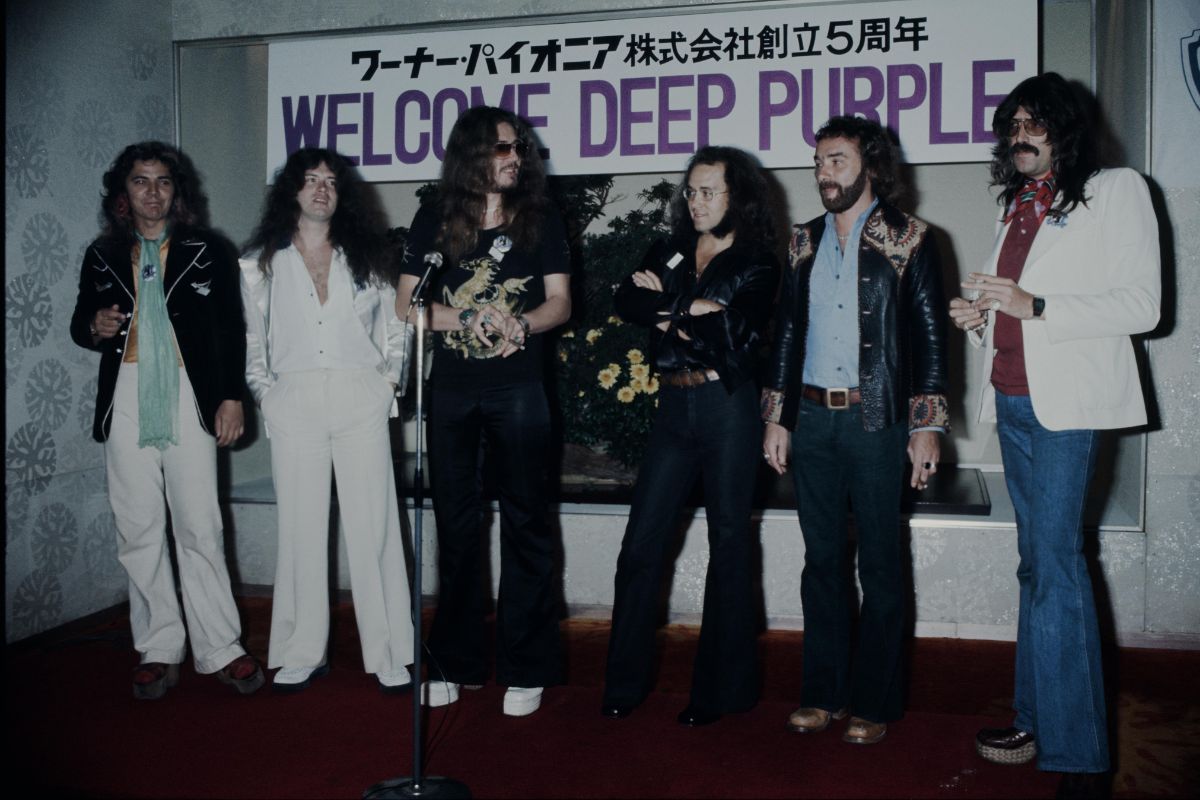
Young's problem wasn't simply that Deep Purple were virtuosos. He was suspicious of virtuosity when it became the main event.
He had much the same objection to Eddie Van Halen, despite acknowledging his enormous technical ability. 'Van Halen certainly knows his scales,' Young said, before complaining about guitarists who 'cram all the notes they know into one song'. His dismissive conclusion was that Van Halen was 'really just doing finger exercises'.
Young preferred the guitar to serve the song rather than become the song.
That philosophy also explains his admiration for his brother Malcolm's rhythm playing. 'Malcolm makes the band sound so full,' he said. And, in an extraordinary comparison, he insisted that Malcolm was a better guitarist than Van Halen.
For Angus, the magic wasn't necessarily in how much a guitarist could play. It was in knowing what not to play.
'I never saw what the big fuss was about'
If there was one guitarist Young seemed particularly determined to puncture, it was Eric Clapton.
The 'Clapton Is God' mythology meant little to him. In the 1986 Guitar World interview, Young compared Clapton unfavourably with Chuck Berry, saying: 'Even on a bad night, Chuck Berry is a lot better than Clapton will ever be.'
He then attacked the very thing that made Clapton famous: his mastery of the blues vocabulary. According to Young, 'Clapton just sticks licks together' borrowed from B.B. King and other blues players, assembling them in what he called a 'mish-mashed fashion'.
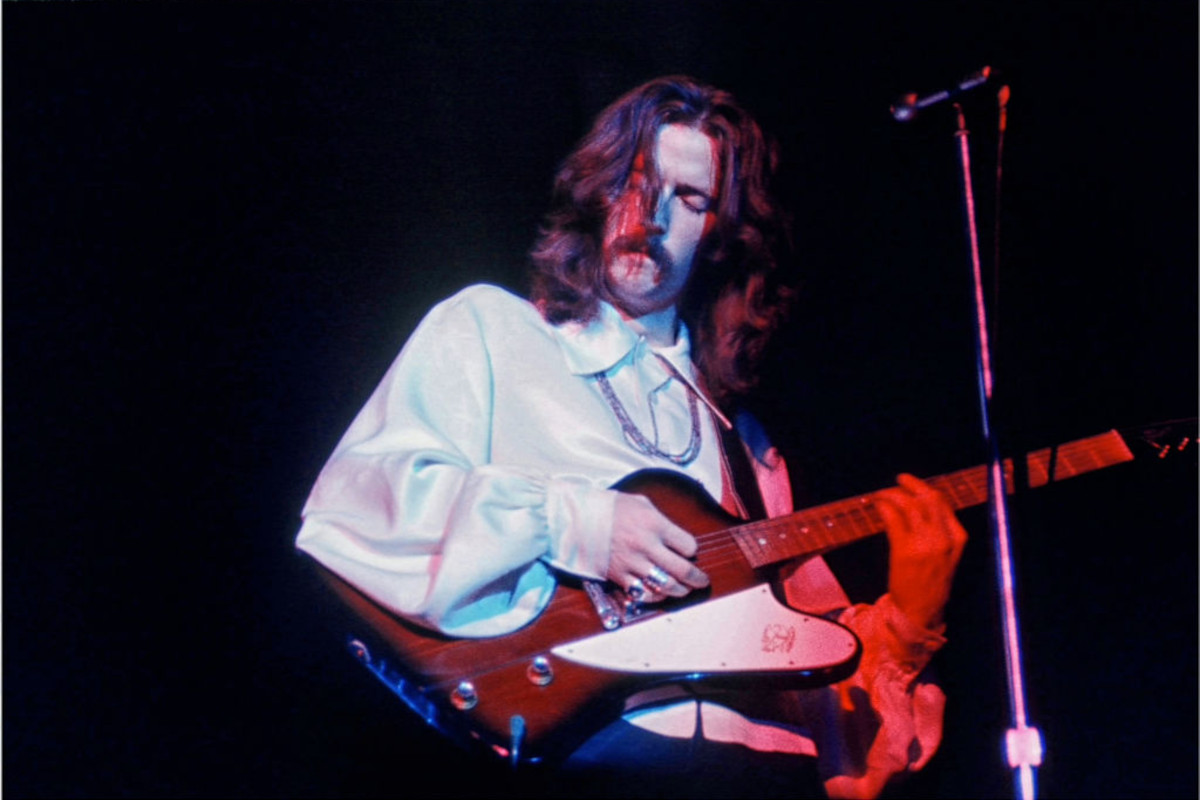
Young was prepared to concede very little. 'The only great album he ever made was the Blues Breaker album he did with John Mayall,' he said, adding that Clapton had perhaps made 'a couple of good songs' with Cream.
Then came the line that neatly sums up his entire attitude to Clapton: 'The guy more or less built his reputation on that. I never saw what the big fuss was about Clapton to begin with,' Young told Guitar World in 1986.
There was, however, an interesting exception to Young's suspicion of technically gifted guitarists: Jeff Beck.
'There are guys out there who can play real good without boring people,' he said. Beck, he believed, was technically impressive but still knew 'how to do it with guts. I really like the early albums he did with Rod Stewart.'
That distinction is important. Young wasn't anti-skill. He was anti-skill without excitement.
The Ramones: 'It did nothing'
Young's verdict on the Ramones was even more devastating because it required almost no argument at all.
He heard them once. That was enough.
'The Ramones, I only heard them once; I heard a song and it did nothing,' Young said. 'It seemed to me like the first band I was ever in and I'm sure even that was better – and was when I was 12.'
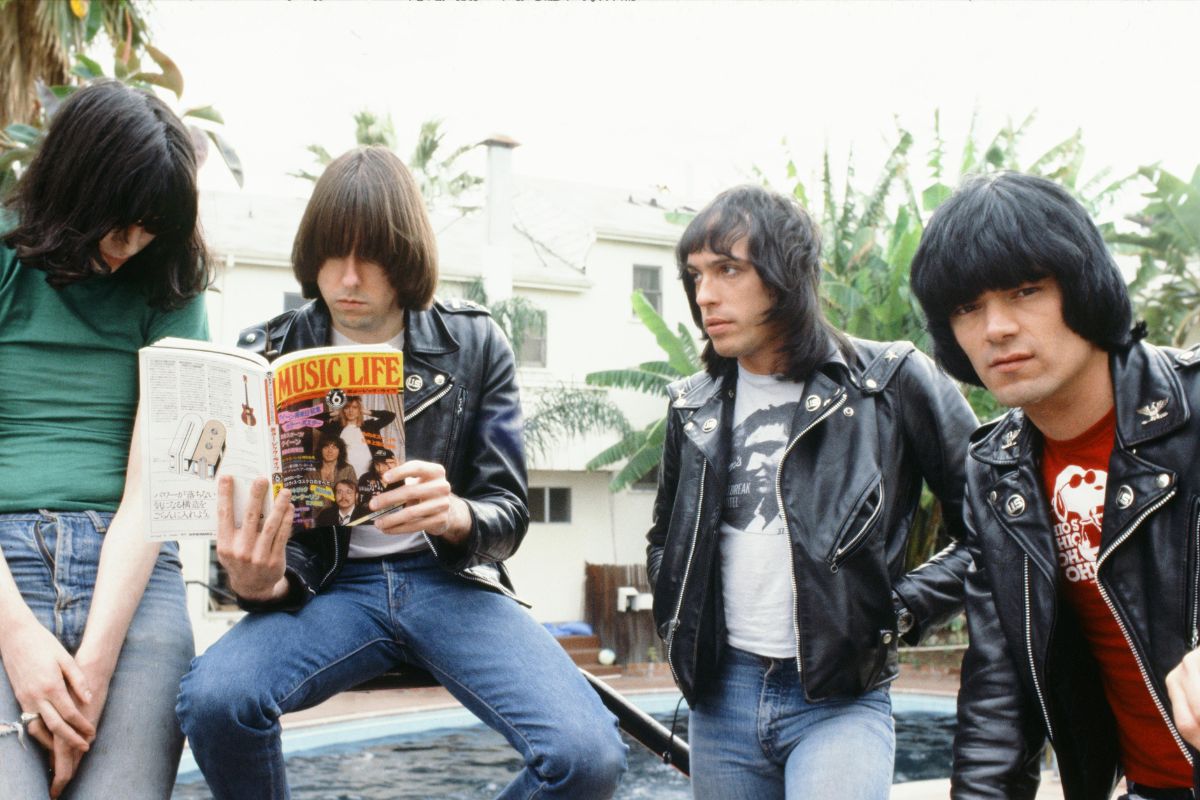
For most musicians, punk's stripped-down attack and refusal of rock-star excess might have been exactly what made the Ramones exciting. Young heard something different: a band that had apparently rediscovered simplicity without rediscovering the swing, swagger and physical excitement that he regarded as essential.
It is an unintentionally revealing criticism. The Ramones were stripping rock back to basics; so was AC/DC. But the two bands meant very different things by 'basic'.
Young's version came from Chuck Berry, Little Richard, Jerry Lee Lewis and the blues. He wanted the riffs to swing, the singer to roar and the rhythm section to hit hard. The Ramones wanted something faster, straighter and more aggressively minimal.
Young simply didn't hear the magic.
Angus Young's definition of rock
Taken individually, Young's verdicts can sound like the usual guitarist-versus-guitarist sniping. Taken together, they reveal something much more coherent.
He repeatedly comes back to feel.
He admires Chuck Berry because Berry could hit a note, grin and make the whole thing feel alive. He admires Jeff Beck because technical ability doesn't stop Beck from rocking. He values Malcolm because two guitars can lock together and make a band sound enormous.
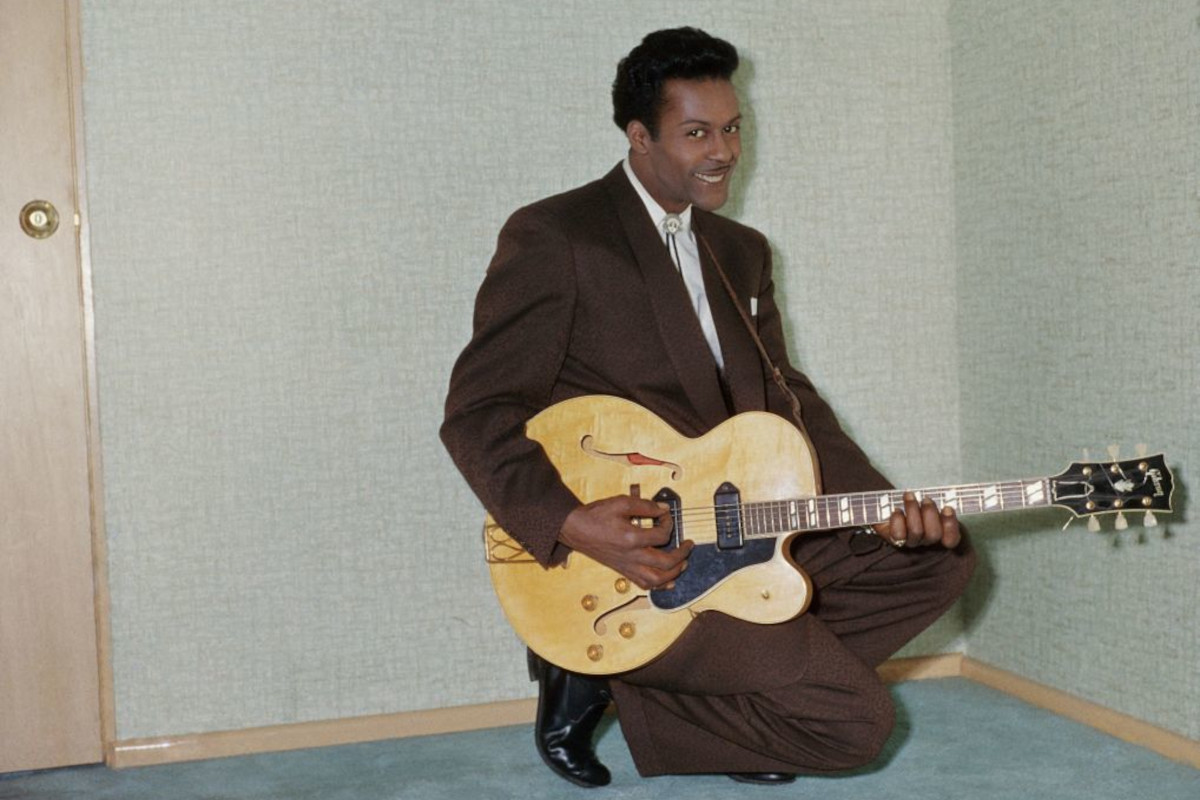
And he distrusts anything that seems to put musical cleverness ahead of that connection.
That is why Deep Purple could be 'ridiculous', Van Halen could be reduced to 'finger exercises', the Stones could be accused of wandering away from rock'n'roll, and Clapton could somehow become the guitarist who never quite lived up to his reputation.
It is also why Angus Young's own music has remained so stubbornly consistent. AC/DC never needed to reinvent rock. Young's belief was that the essential ingredients were already there.
As he put it when discussing his own band: 'We try to do everything with a fresh approach' – but without abandoning what made the music work in the first place.
For Angus Young, rock'n'roll didn't need more notes, more sophistication or more ambition.
It needed to hit harder.
Pics Getty Images


