It is hard to imagine Goodbye Yellow Brick Road being made under anything other than perfect circumstances.
Elton John was at the height of his powers, Bernie Taupin was supplying lyrics at extraordinary speed, and the resulting album would become one of the most successful double albums of the 1970s. Yet the sessions began with a recording disaster in Jamaica.
'Inadequate'
Elton, Taupin, producer Gus Dudgeon and the band travelled to Kingston in early 1973 intending to record Elton's seventh album at Dynamic Sound Studio, partly because the Rolling Stones had recently worked there on Goats Head Soup. Elton hoped the tropical setting would provide a peaceful, secluded environment in which to work. It did not quite turn out that way.
The city was caught up in the excitement surrounding the Joe Frazier-George Foreman heavyweight boxing fight, while political and social tensions around the studio made the atmosphere increasingly uncomfortable. Worse still, the studio itself was simply not equipped for the kind of elaborate rock recording Elton and Dudgeon wanted to make. There were too few microphones and the recording equipment was inadequate.
When the band attempted to record 'Saturday Night's Alright (For Fighting)', guitarist Davey Johnstone later recalled that it sounded like 'a bunch of angry bees'. After only a day or two, they abandoned the sessions.
'Absurdly efficient'
And yet the Jamaican fiasco accidentally gave Goodbye Yellow Brick Road its first crucial ingredient: time for Elton to write. While staying in Kingston, he began producing songs at remarkable speed. When the group reconvened several months later at the Château d'Hérouville, a residential recording studio in the French countryside where Elton had made his previous two albums, the flood of material continued.
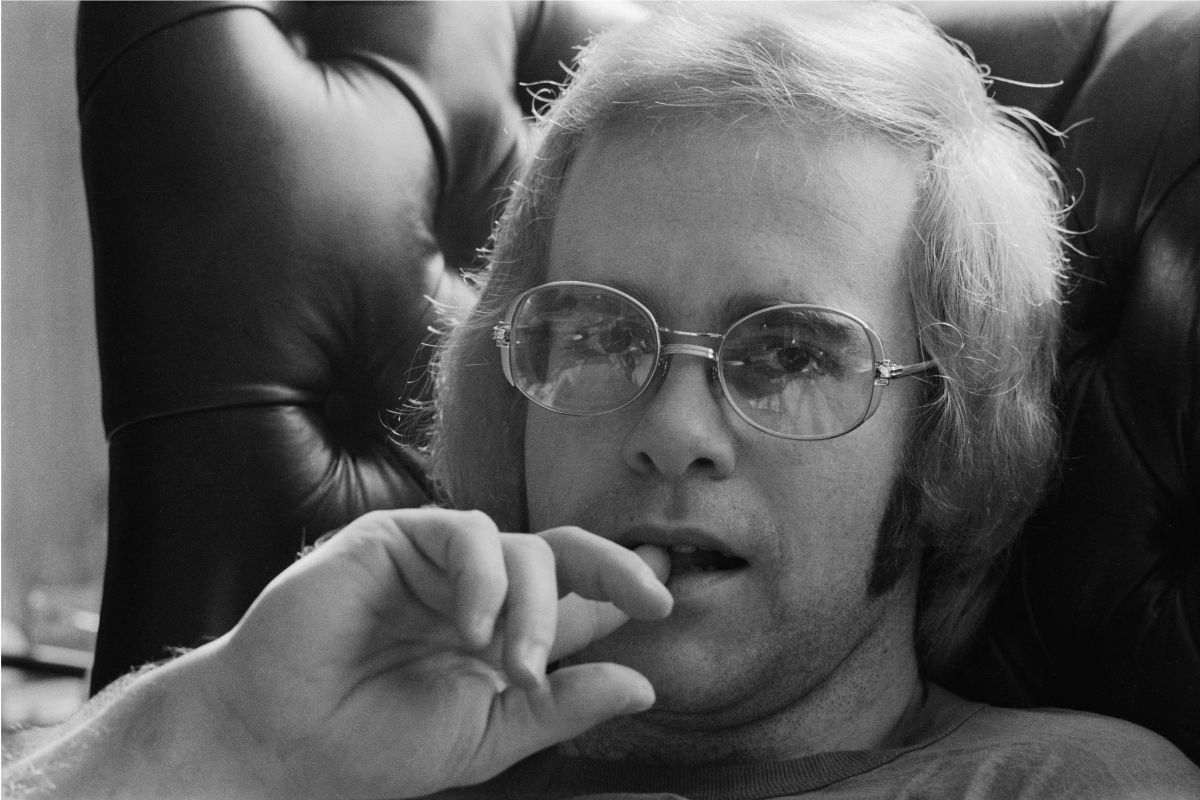
The working method was almost absurdly efficient. Bernie would arrive with a batch of lyrics, Elton would sit at the piano and begin composing, and the band could then take the new song into the studio and record it. Engineer David Hentschel remembered watching Elton write at the piano during breakfast before everyone went straight into the studio. Davey Johnstone recalled that some days they recorded three or four songs.
The original plan had been to make a single album. But suddenly there was far too much material. Dudgeon later suggested that Elton's songwriting frenzy, partly unleashed by the abandoned Jamaican sessions, was what turned the project into a double album. The final record contained 17 songs and more than 75 minutes of music – an astonishing amount of material, especially considering how quickly it had been assembled.
A masterpiece born from a problem
There was still room for some studio magic. 'Bennie and the Jets' sounds like a huge live performance, complete with cheering, whistles and applause, but Elton and the band had never actually played it before such an audience. Hentschel created the illusion using effects, repeated handclaps and crowd recordings, including material from a Jimi Hendrix live recording. Three people clapping could, through studio trickery, be made to sound like a much larger crowd.
The album was finished remarkably quickly: after the Château sessions, the team spent roughly another week on overdubs in London and about two weeks mixing. For a sprawling double album containing 'Candle in the Wind', 'Bennie and the Jets', 'Saturday Night's Alright (For Fighting)', 'Goodbye Yellow Brick Road' and 'Funeral for a Friend/Love Lies Bleeding', it was an extraordinary burst of productivity.
Released on October 5, 1973, Goodbye Yellow Brick Road would spend eight weeks at No.1 in America and reach the top of the charts in Britain, Australia and Canada.
The irony is almost perfect. One of rock's most lavish-sounding albums began when Elton John discovered that his carefully chosen Jamaican recording studio simply wasn't good enough. The disaster forced a change of plan – and somehow, that change helped produce the extraordinary abundance that made Goodbye Yellow Brick Road possible.
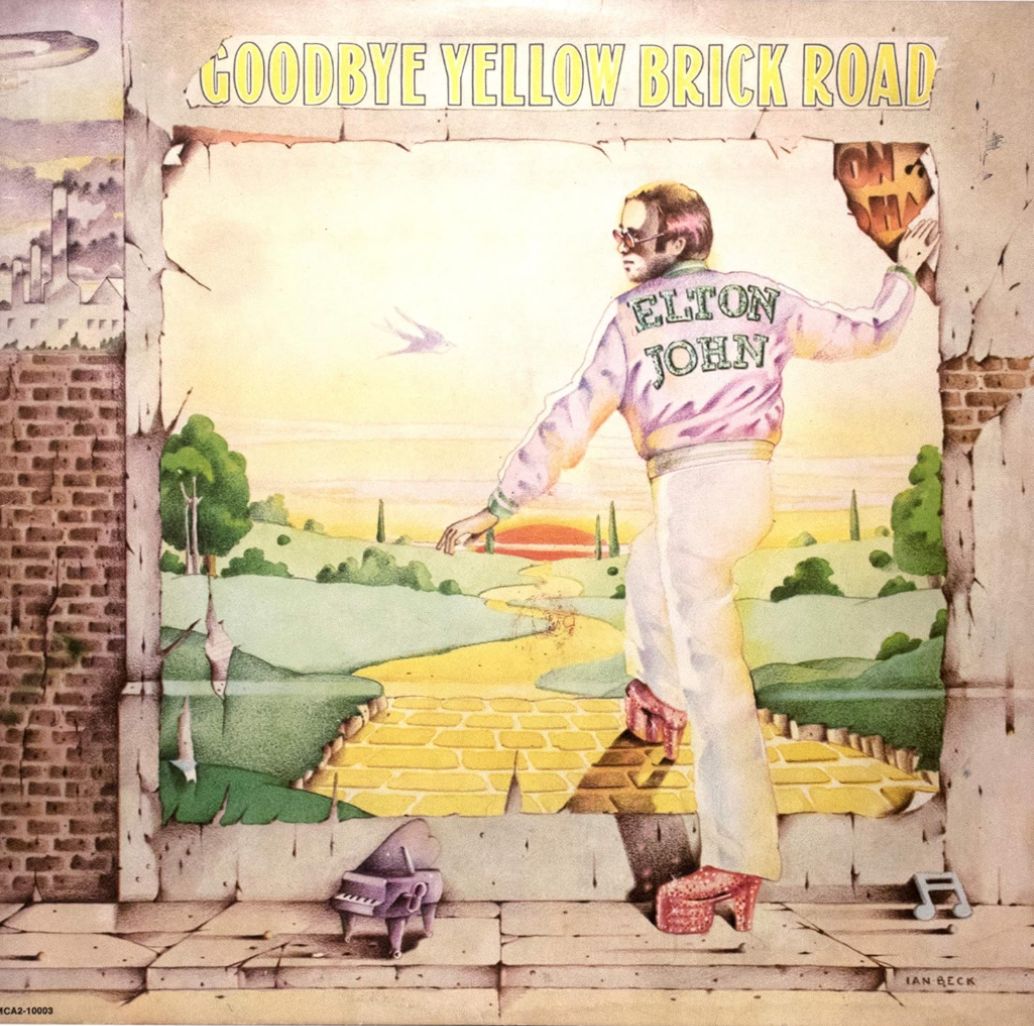
Goodbye Yellow Brick Road: the stories behind 5 key songs
'Goodbye Yellow Brick Road'
Bernie Taupin's lyrics use The Wizard of Oz as a metaphor for wanting to escape the glittering world of fame and return to a quieter, more grounded existence. The song's narrator rejects the fantasy of the yellow brick road in favour of 'the farm'. Taupin later stressed that it wasn't necessarily a rejection of success, but a yearning for tranquillity.
'Saturday Night's Alright (For Fighting)'
The song drew partly on Bernie Taupin's teenage experiences around the Aston Arms pub in Market Rasen, Lincolnshire, where Saturday nights could apparently be lively affairs. Yet Taupin has subsequently resisted the idea that it is simply autobiographical. Instead, he drew on the atmosphere of youthful drinking, fighting and weekend excitement to create one of Elton's most exuberant rockers.
'Candle in the Wind'
Despite the song's enduring association with Marilyn Monroe, Bernie Taupin wasn't a lifelong Monroe obsessive. He later explained that he could have written about another young celebrity who died tragically and prematurely. Monroe simply embodied the idea particularly well: a hugely famous woman whose public image concealed a much more troubled private life. The song was never intended as a conventional biography.
'Bennie and the Jets'
One of the album's most ingenious production tricks is that 'Bennie and the Jets' sounds like a spectacular live performance – but it wasn't. Producer Gus Dudgeon created the illusion in the studio, adding applause, whistles and other crowd noises. Some of the audience sounds were taken from recordings of other live performances, helping turn a studio track into an imaginary concert.
'Grey Seal'
'Grey Seal' was actually an old Elton John and Bernie Taupin composition that had already been recorded three years earlier. The original version appeared as the B-side of 'Rock and Roll Madonna' in 1970. For Goodbye Yellow Brick Road, Elton and the band completely re-recorded the song, transforming it into the faster, more muscular version that appears on the double album.
Pics Getty Images