John Lennon spent his life ricocheting between intense attachment and abrupt withdrawal.
Anyone who crossed his path — family, friends, lovers, collaborators — eventually discovered that Lennon could adore you one minute and drift away the next. It wasn’t malice so much as restlessness: he threw himself into experiences with total conviction, then shed them when they no longer matched the version of himself he was chasing. Bob Dylan ended up on that list too, though for a time he was one of the brightest lights Lennon ever followed.
Their connection began with fascination rather than friendship. In the early 1960s, both men were hailed as generational voices, but they occupied different corners of the cultural map. Lennon was the electrifying catalyst of mass youth rebellion — the man who made pop feel physical, communal and unstoppable.
The chemistry was instant
Dylan, meanwhile, was the solitary poet, the wandering prophet of the counterculture, speaking to people who felt lost in the noise. When they finally met in 1964, passing a joint back and forth, the chemistry was instant. Each recognised something in the other. Broadly, you might say that Lennon saw depth; Dylan saw reach.
The Beatles’ discovery of Dylan was almost religious. Paul McCartney later admitted, “He was our idol,” and Lennon remembered the moment with vivid clarity. In Paris, a DJ handed them Bob's new album The Freewheelin’ Bob Dylan, and the band played it obsessively for weeks. It cracked open a door Lennon hadn’t known existed — a way of writing that was inward, vulnerable, conversational.
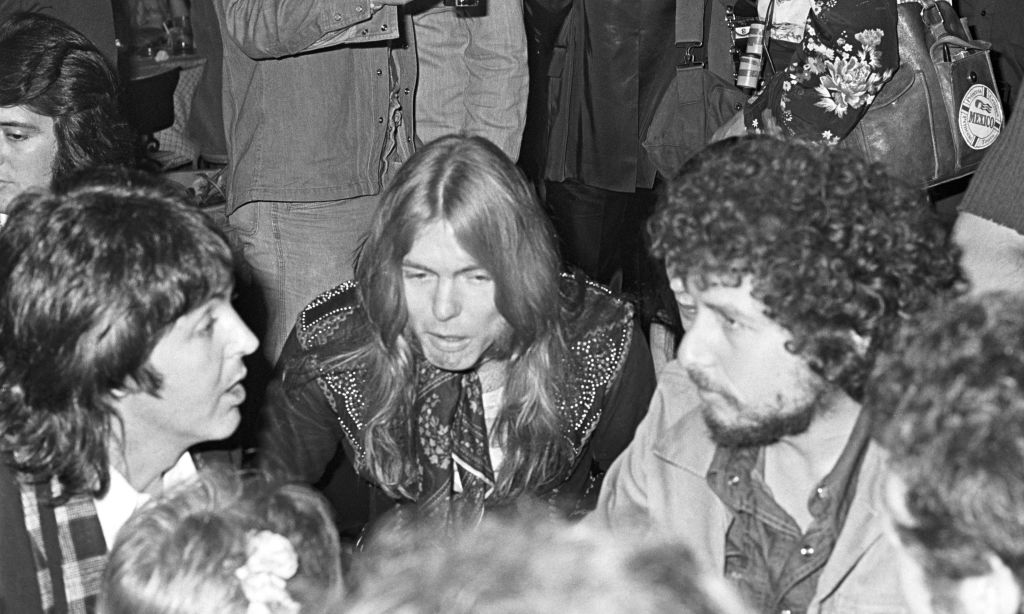
You can hear the shift immediately in songs like ‘Help!’ and ‘You’ve Got to Hide Your Love Away’, where Lennon’s voice suddenly sounds less like a pop star and more like a man thinking out loud. He later joked that he was a chameleon, borrowing whatever he admired: Elvis, the Everlys, Dylan — whoever showed him a new angle.
But the glow didn’t last. As the decade wore on, Lennon’s enthusiasm cooled. Yoko Ono never shared the Dylan mystique, and Lennon himself admitted that after Highway 61 Revisited and Blonde on Blonde, he stopped listening 'with both ears'. Lennon, after all, had loved the surreal, restless intensity of mid‑60s Dylan.
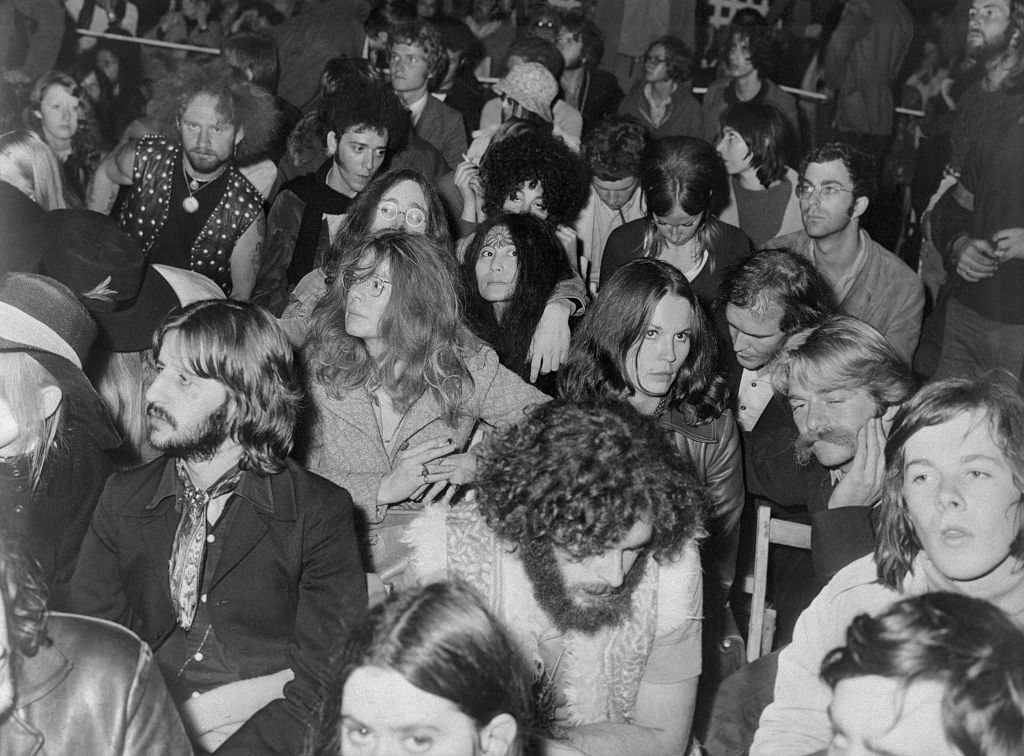
When the latter moved, after his July 1966 motorcycle accident, toward a more grounded, rootsy style, Lennon (who by then was diving into psychedelia, studio experimentation and personal introspection) simply didn’t connect in the same way.
Lennon was baffled
George Harrison, meanwhile, went the other way — falling headlong into Dylan’s orbit, flying out to the States to spend time with him, and forging a creative bond Lennon never quite managed. Ironically, Harrison’s obsession may have pushed Lennon away. He wasn’t competitive exactly, but he was contrarian; when someone else became the Dylan evangelist, Lennon drifted.
What unsettled him most, though, was Dylan’s next transformation: the turn toward Christian evangelism in the late 1970s. Albums like 1979's Slow Train Coming introduced a new, sermon‑like intensity, and Lennon found it baffling. When he heard ‘Gotta Serve Somebody’, he dismissed it with a caustic laugh, calling the performance 'pathetic' and the lyrics embarrassing.
The following year he even wrote a response song, ‘Serve Yourself’, poking fun at Dylan’s newfound devotion. Lennon frames it as a kind of anti‑sermon, twisting Dylan’s moral absolutism into something scruffier and more self‑reliant.
The lyric mimics Dylan’s cadence but flips the message on its head, replacing religious surrender with Lennon’s trademark scepticism: if Dylan was urging listeners to choose their master, Lennon was urging them to stop looking for one. It’s half parody, half provocation — a reminder of how sharply he bristled at Dylan’s evangelical turn.
Dylan's religious phase hit a nerve with Lennon
The tension spilled into interviews. Speaking to author David Sheff, Lennon argued that people who followed Dylan blindly — simply because he was Dylan — misunderstood him entirely. He bristled at the militaristic language of evangelical Christianity and contrasted it with Buddhism’s lack of proselytising. Yet, even then, the ever-perceptive ex-Beatle wasn’t wholly dismissive. Lennon suggested that Dylan’s religious phase might be part of a larger personal process, a search for belonging that could eventually lead him somewhere more balanced.
Underneath all this was something deeper. Lennon had never been comfortable with organised religion; he distrusted institutions and resisted any belief system he hadn’t built himself. Dylan’s embrace of faith felt, to Lennon, like surrender — a handing over of agency to something beyond the self.
And Lennon, shaped by childhood abandonment and lifelong insecurity, had learned to fear surrender. His mother’s early death, his fragmented upbringing, the constant departures of people he loved — all of it left him wary of anyone who seemed to drift away into another world.
In the end, Dylan didn’t betray Lennon. He simply changed. But for Lennon, change often felt like loss. Dylan had once been a beacon, a creative compass pointing toward a new kind of honesty. When that compass swung in a direction Lennon couldn’t follow, the connection dimmed. Another relationship, another influence, another chapter closed — leaving Lennon, as ever, searching for the next spark.
Five more intense musical friendships that fizzled out
1. David Bowie & Lou Reed
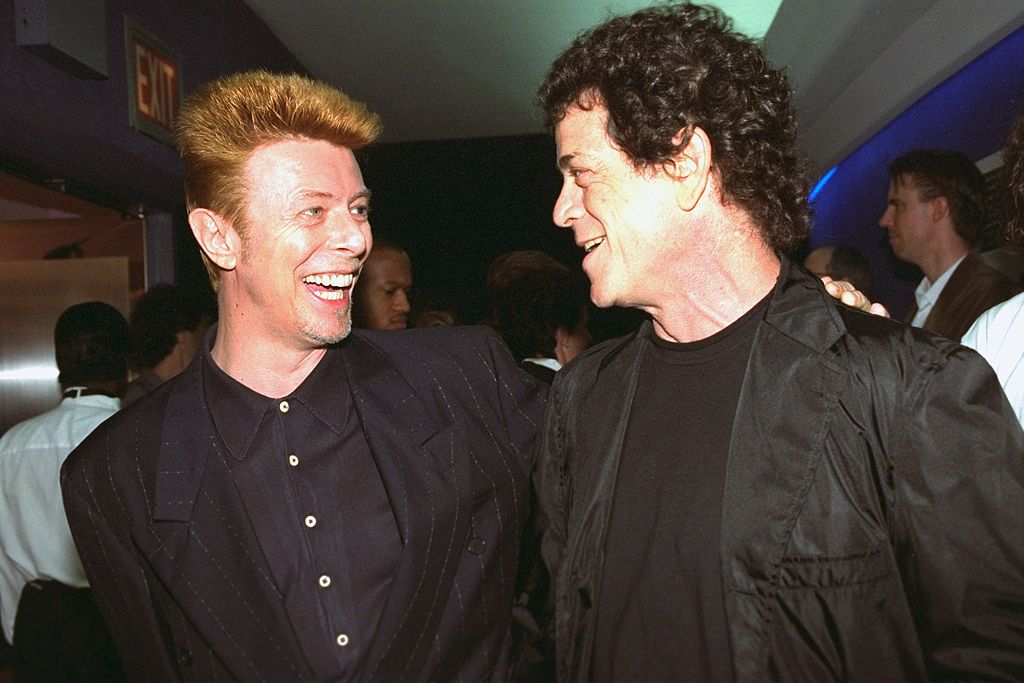
For a brief, volatile stretch in the early ’70s, Bowie and Reed were kindred spirits — glam’s great alchemist and New York’s street poet, united by mutual admiration and a shared appetite for reinvention. Bowie produced Transformer, Reed basked in the glow, and both men seemed energised by the other’s presence.
But the relationship soured quickly: Reed bristled at Bowie’s theatricality, Bowie tired of Reed’s unpredictability, and in 1979 a drunken punch-up in a London restaurant sealed the split. A creative spark became a cold, wary distance.
2. Prince & Morris Day
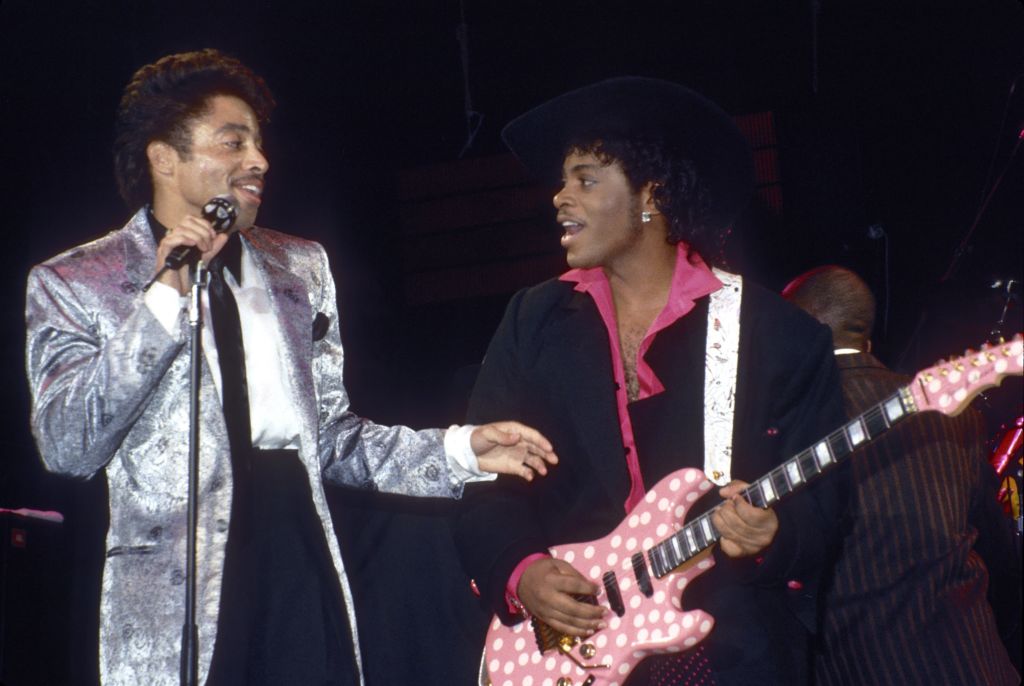
Prince and Morris Day were inseparable in Minneapolis — childhood friends who built funk-rock band The Time together, with Prince writing much of the material and Day embodying its swagger. Their chemistry was electric, but the power dynamic was fraught.
Prince’s controlling streak clashed with Day’s desire for autonomy, and as Prince’s fame exploded, tensions sharpened. By the mid‑’80s, the friendship had frayed under the weight of ego, workload and creative ownership. They reunited occasionally, but the effortless camaraderie of their early years never fully returned.
Here's 'Get It Up', the lead single from The Time's 1981 debut album. Prince wrote, produced, and played nearly all of the instruments on the track himself, while also contributing prominent backing vocals.
3. Eric Clapton & George Harrison
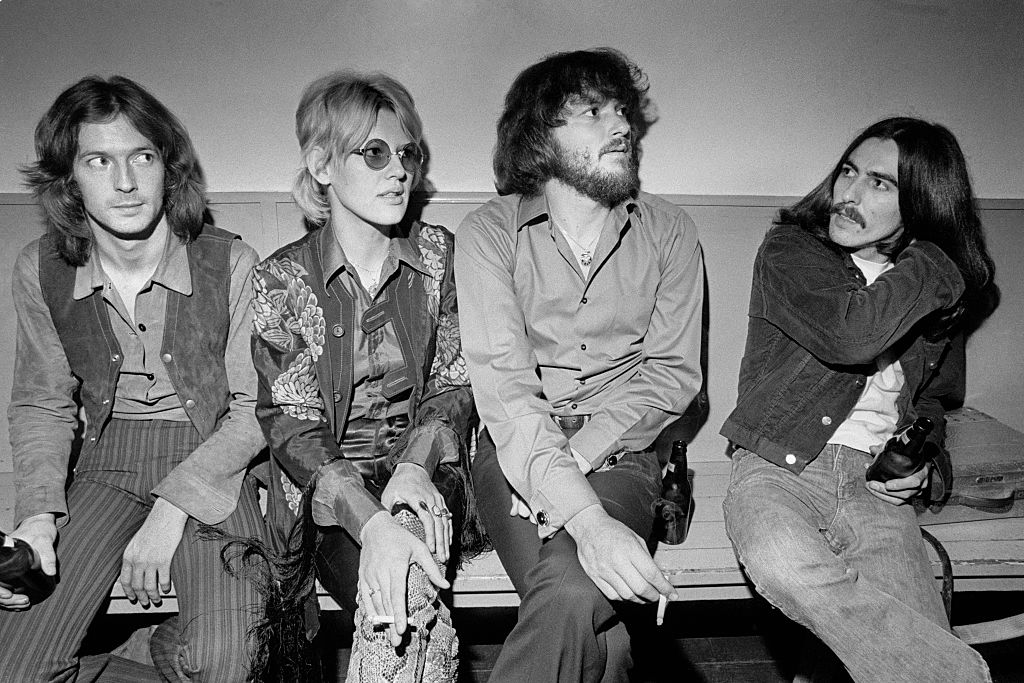
Clapton and Harrison shared a deep musical bond — trading ideas, playing on each other’s records, and finding solace in the same spiritual and artistic spaces. But their friendship was tested by the most complicated of triangles: Clapton fell in love with Harrison’s wife, Pattie Boyd, and eventually married her.
Remarkably, the two men stayed civil, even affectionate, but the easy creative closeness of the late ’60s and early ’70s never quite recovered. A brotherly connection became something more formal, more careful, more distant.
4. Paul Simon & Art Garfunkel
![American folk rock duo Simon and Garfunkel (Art Garfunkel [L] and Paul Simon), 1983](https://www.classical-music.com/resources/content/2a8391c9-f68d-46f5-b758-c78a6ac746db/4e0b4d7c-7dd0-47ad-807b-b09da59030aa/88717cbb-732f-43fe-953c-88216b91e34e/GettyImages-3202490.jpg?preview=false&platform=WEB&deviceId=87adf924-07af-402a-8f11-a34b6dd4920d)
A duo whose friendship and musical kinship once felt inseparable. Simon and Garfunkel’s early bond was built on harmony — literally and figuratively — yet success magnified every insecurity. Garfunkel’s acting detours irritated Simon; Simon’s perfectionism exhausted Garfunkel.
By the time Bridge Over Troubled Water arrived, their partnership was already cracking. They reunited many times (most notably for 1981's Central Park concert), but the warmth of their youth was gone. A childhood friendship became a long, delicate truce.
5. Kanye West & Jay‑Z
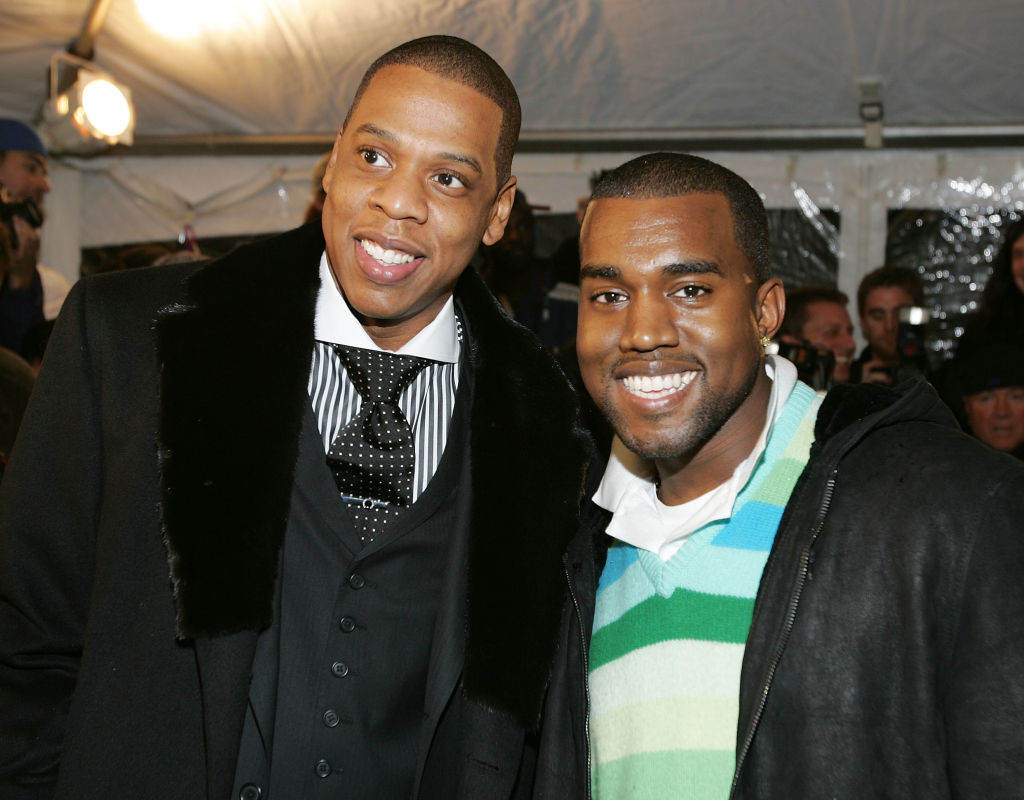
In the 2000s, Jay-Z and Kanye West were hip‑hop’s most powerful alliance — mentor and protégé turned equals, reshaping the genre with Watch the Throne. But personal tensions, business disputes and West’s increasingly unpredictable public behaviour strained the relationship.
Jay‑Z grew wary; West felt abandoned. Their bond never fully collapsed, but the effortless creative brotherhood of their peak years faded into something more distant and diplomatic. A golden partnership became a complicated, intermittent connection.
Pics Getty Images