
It’s difficult to believe today, but in prior to the release of her spectacular 1985 single ‘Running Up That Hill’, Kate Bush was in danger of becoming yesterday’s news.
With her 1982 album, the experimental masterpiece The Dreaming, Bush had enjoyed the complete creative control she’d always craved, producing the entire album by herself for the first time – a rare feat for a young woman in a male-dominated industry.
With its harder, edgier sound, a greater emphasis on percussion and rhythm, and Bush’s innovative use of the Fairlight synthesiser, The Dreaming pointed the way to future greatness. But, in a statement sent out in a 1983 fan-club newsletter, Bush revealed her plans to disappear from public life to further her art.
"I intend to keep on writing for the first part of the year," she wrote. "So yet again I slip away from the eyeball of the media to my home."
"I feel a lot more relaxed now I have my own place to work"
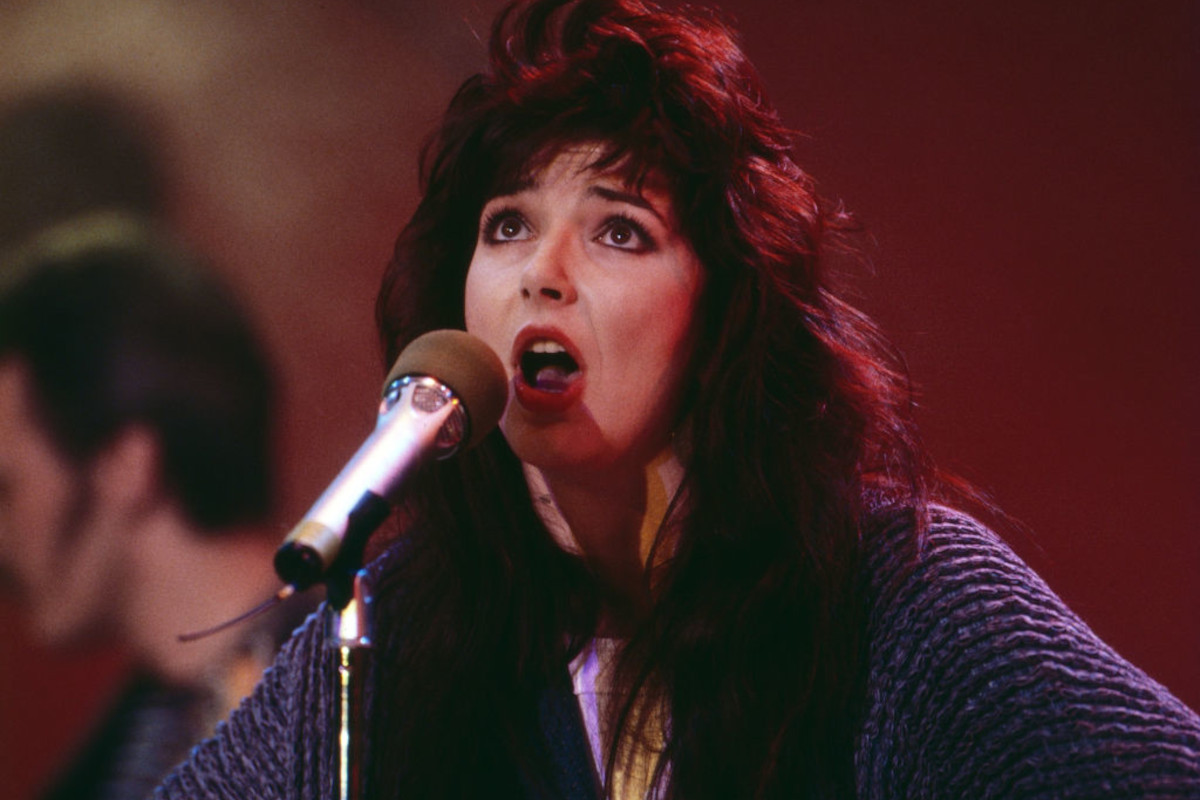
In early 1983, Bush moved from London into a 17th-century farmhouse in the Kent countryside. That summer she oversaw the construction of a state-of the-art 48-track studio at her family home in nearby Welling.
She explained the benefits of having her own home studio in a 1985 Melody Maker interview: "The pressure of knowing the astronomical amount studio time cost used to make me really nervous about being too creative. You can’t experiment forever, and I work very, very slowly. I feel a lot more relaxed emotionally now that I have my own place to work and a home to go to."
Inspired by her new surroundings, songs came easily, and reflected her state of mind. "On this album, I wanted to get away from the energy of the last one – at the time I was very unhappy, I felt that mankind was really screwing things up," she told Hot Press magazine.
"Having expressed all that, I wanted this album to be different – a positive album… more about the good things. A lot depends on how you feel at any given time – it all comes out in the music."
"'Art' is one of those things that should have absolutely no rules at all"

In the summer of 1983, Bush began demoing her new songs with then partner Del Palmer – she’d compose on piano or the Fairlight synthesiser while Palmer programmed patterns on a LinnDrum machine. Recording proper began in November 1983, as Bush worked with a team of engineers and musicians to flesh out the demos.
As hoped for, her own studio meant that she could pursue her artistic vision with no constraints, and she outlined her approach to the Canadian magazine Now. "I feel that ‘art’ is one of those things that should have absolutely no rules at all.
"In fact, the rules that are already laid down I feel like deliberately breaking, to try what they say you can’t do. I think really the approach is something you continually experiment with – you try and find the best way of expressing something well."
From the first few seconds of ‘Running Up That Hill’ – all mystic synth fog, bullish beats and otherworldly-sounding Fairlight stabs – the song is special, but her passionate performance of an extraordinary lyric pushes it into the realms of greatness.
The song imagined negotiating with a higher power to gain a deeper understanding of a loved-one’s experience, as Bush explained to The Times: "It seems that the more you get to know a person, the greater the scope there is for misunderstanding.
"Sometimes you can hurt somebody purely accidentally or be afraid to tell them something because you think they might be hurt when really, they’ll understand. So what that song is about is making a deal with God to let two people swap place so they’ll be able to see things from one another’s perspective."
Released a month ahead of the album, ‘Running Up That Hill’ was a spectacular success, reaching No 3 in the UK and giving Bush her US breakthrough, hitting the Billboard Top 30. And it has continued to resonate – those who were lucky enough to attend Bush’s run of shows at London’s Hammersmith Apollo in 2014 will certainly never forget the pan-generational outpouring of love that her performance of the song received.
In 2022, it became a bigger hit than ever before, finally reaching the top of the UK charts and breaking three Guinness World Records thanks to its use in the hit Netflix TV series Stranger Things.
"Consistency of rhythm is what's happening on this album"

Placed as the opening song on Hounds Of Love, where it was given the full title ‘Running Up That Hill (A Deal With God)’, the song gave way to the album’s title track.
Soon to be another classic single, the song began with the petrified-sounding voice of actor Maurice Denham exclaiming, "It’s in the trees! It’s coming!" – a sample of dialogue from the 1957 horror film Night Of The Demon – before unfolding into a giddy and exhilarating paean to letting go of inhibitions, swept along by thudding drums and sawing cello.
‘Hounds Of Love’ sounded like nobody else at the time, and nobody has sounded like it since. Talking to Billboard, Bush acknowledged her shift in style: "Consistency of rhythm is what’s happening on this album. Rhythm has always attracted me, but it has taken me time to understand it and come to terms with it in music."
The expansive sound continued with ‘The Big Sky’, a massive-sounding, awestruck celebration of the power of nature. The song hurtles towards a dizzying climax, with an ecstatic Bush losing herself in the moment, ad-libbing free-form vocals.
She elaborated on the song’s meaning in an issue of the Kate Bush Club newsletter sent to fans around the album’s release: "Someone sitting looking at the sky, watching the clouds change. I used to do this a lot as a child, just watching the clouds go into different shapes.
"I think we forget these pleasures as adults. We don’t get as much time to enjoy those kinds of things, or think about them; we feel silly about what we used to do naturally. The song is also suggesting the coming of the next flood – how perhaps the ‘fools on the hills’ will be the wise ones."
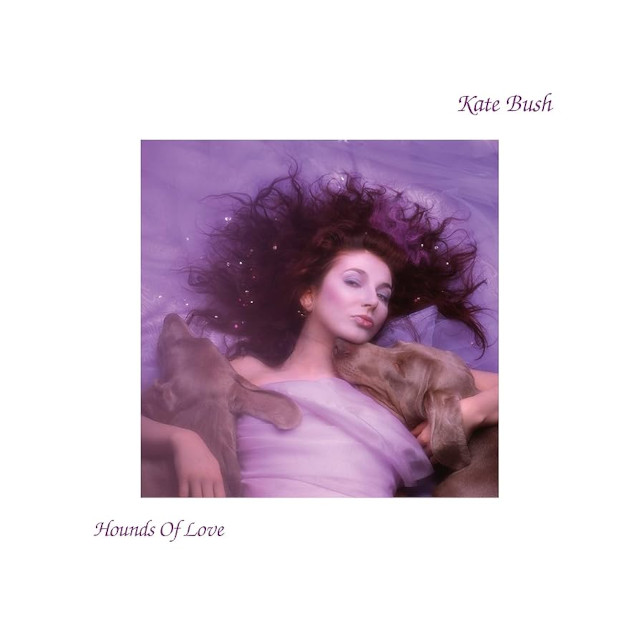
On earlier albums, a song such as ‘Mother Stands For Comfort’ might have taken the form of an elegiac piano-led ballad. On Hounds Of Love, Bush relishes in using it as an opportunity to explore new sonic territories, as Eberhard Weber’s supple and inquisitive double bass weaves around spectral sounding synths and Bush’s yearning vocal melody.
Looking back on the song in a 1992 interview with BBC Radio 1, Bush highlighted it as another example of her willingness to tackle big questions. "Well, the personality that sings this track is very unfeeling in a way. And the cold qualities of synths and machines were appropriate here," she explained.
"There are many different kinds of love and the track’s really talking about the love of a mother, and in this case, she’s the mother of a murderer, in that she’s basically prepared to protect her son against anything."
The first half of Hounds Of Love closed with another hit single, the production masterclass that is ‘Cloudbusting’, which combines a choppy string line, played by the Medici Quartet, with booming, marching band-style drums.
Speaking to Kris Needs, of ZigZag magazine, Bush revealed that she’d discovered the inspiration for the song nine years earlier, in the memoir A Book Of Dreams, written by Peter Reich, the son of the Austrian psychoanalyst Wilhelm Reich.
"It was incredible," she enthused. "It’s through his eyes as a young boy, and his life with his father, who was everything to him… He was quite a well-respected psychoanalyst, and he had a machine, according to his son, that could make it rain. They’d go out together and point the machine at the sky and make it rain. The book was so sad, because the whole thing is through the child’s eye about his father.”
"Working conceptually was very interesting but more demanding"

The second half of Hounds Of Love was a seven-song suite titled The Ninth Wave. Presented as a woman’s inner thoughts as she floats adrift at sea, uncertain of her survival, it was a breathtaking achievement.
In her fan-club newsletter, Bush explained how she embraced the challenge of putting together a narrative song arc. "It was very different for me working conceptually across half an hour’s worth of music, rather than five minutes optimum in a song, and it was very interesting but more demanding," Bush wrote.
"The whole was changed by anything you did to one part of the concept. Once the piece was in context with what was happening before and after it, it would change its nature dramatically, and it was important that the whole side kept a sense of flow and yet kept the interest and kept building and ebbing in the right places."
Bush would later tell ZigZag why she chose the sea as the setting for one of her most ambitious works yet: "It’s the energy that’s so attractive – the fact that it’s so huge. And war films, where people would come off the ship and be stuck in the water with no sense of where they were or of time, like sensory deprivation. It’s got to be ultimately terrifying."
Opening The Ninth Wave, the piano-led ‘And Dream Of Sheep’ ushers the listener in with its tender beauty, Bush’s lyrics introducing the story’s protagonist – the woman adrift in the ocean, unable to stay awake and so giving in to sleep.
‘Under Ice’ breaks the spell with unsettling, stabbing strings straight out of a Hitchcock thriller; here the woman is dreaming that she’s skating on a frozen river – until she sees a crack in the surface and wakes abruptly to realise that she herself is under ice.
‘Waking The Witch’ makes for a startling shift, its throbbing bass line and crashing percussion anchoring a sound collage that represents memories of friends who wake the woman up in order to stop her from drowning. It’s a genuinely terrifying listen – just as Bush intended.
"As they wake up and surface, they are coming out of the whole feeling of deep subconsciousness," she wrote to her fan club.
"One of the voices tells them there’s someone there to see them, and here in the water is a witchfinder. This is a sort of nightmare they’re having. This monster figure is basically trying to drown them, trying to see if they’re innocent or guilty. If they drown, then they’re innocent. If they don’t drown. they’re guilty, they’ll be drowned anyway."
"Endings should always have some kind of light in there"

Providing much-needed relief, ‘Watching You Watching Me’ is built from feather-light synth lines and mellifluous vocals, but its lyrics tell another story. Most of all, Bush’s heroine wants the security and comfort of home and her partner; though she finds herself there with him she realises that she’s not real and can’t interact with him.
"It’s more of a nightmare than anything so far," Bush explained to her fan club. "Because this is the closest she’s been to any kind of comfort, and yet it’s the furthest away."
Set to a Celtic-flavoured track which nods to Bush’s Irish roots, the album’s following song, ‘Jig Of Life’, finds the protagonist’s future self pleading with her not to give up. For the tune’s extended instrumental section, Bush travelled to Ireland to record the cream of the country’s traditional musical talent.
The dramatic, six-minute ‘Hello Earth’ is a slow-moving wonder which, Bush said, marks the point where her character is, "so weak that she relives the experience of the storm that took her in the water, almost from a view: looking down on the earth up in the heavens, watching the storm start to form – the storm that eventually took her and that has put her in this situation."
Monastic chants interrupt the reverie, suggesting an out-of-body experience, while composer Michael Kamen’s orchestral arrangements create a tempestuous build-up and release. ‘The Morning Fog’ closes The Ninth Wave – and Hounds Of Love itself – with a hopeful resolution. "Morning Fog is the symbol of light and hope," Bush wrote. "It’s the end of the side, and if you ever have any control over endings they should always, I feel, have some kind of light in there."
Released on 16 September 1985, Hounds Of Love went to No 1 in the UK on its way to achieving double-platinum sales figures; it also became Bush’s first record to break the US Top 40. It has since won over successive generations of music fans, and, hot on the heels of ‘Running Up That Hill’’s success in the summer of 2022, it re-entered album charts worldwide.
Most importantly, Hounds Of Love vindicated Bush’s single-minded approach to her art, giving her total control of her music. From this point on, she’d never let it go.
All photos Getty Images / Album art Amazon
Top image Kate Bush signing copies of her Hounds of Love album, 1985


