
Summer 1967, San Francisco, and the 'Summer of Love’ is flowering.
An estimated 100,000 groovy young things have descended on the city, focusing on its Haight-Asbury district, lured by the promise of a new age of peace and love. If you believed the media, the parks were awash with the unwashed, a generation of hippies casting off the shackles of their parents’ generation and experimenting with new ways of living and thinking.
Meanwhile, in Los Angeles, love-ins and flower chains were the last thing on 22-year-old pop visionary Arthur Lee’s mind. The frontman of garage-psych rockers Love was recording his band’s third album, Forever Changes, and was convinced that it would be his epitaph.
"By Forever Changes – when I did that album, I thought I was going to die at that particular time, so those were my last words," Lee told ZigZag magazine in 1974. "I’d always had this thing about when I was going to die, man, or physically deteriorate, and I thought it would be about 26… something like that, I just had a funny feeling."
Love had been threatening to break big since unleashing the revved-up R&B of their self-titled debut album in April 1966.
Their second album, Da Capo, followed in November that year and suggested a swift evolution, with an expanded line-up delving into psychedelic pop (‘She Comes In Colours’), explosive proto-punk (‘7 And 7 Is’) and hazy folk-rock (‘Orange Skies’). But despite Da Capo’s brilliance, the album didn’t take off, with Lee refusing to promote it.
Meanwhile the band was becoming fragmented, with guitarist Bryan MacLean and Lee’s relationship deteriorating. Love had been the hottest thing on LA’s Sunset Strip, the rise of The Doors meant they were in danger of becoming yesterday’s men.
The increasingly insular Lee’s outlook may have jarred with the flower power times, but it informed a set of brilliant songs that, along with the stellar songwriting contributions of MacClean, would make Forever Changes Love’s masterpiece.
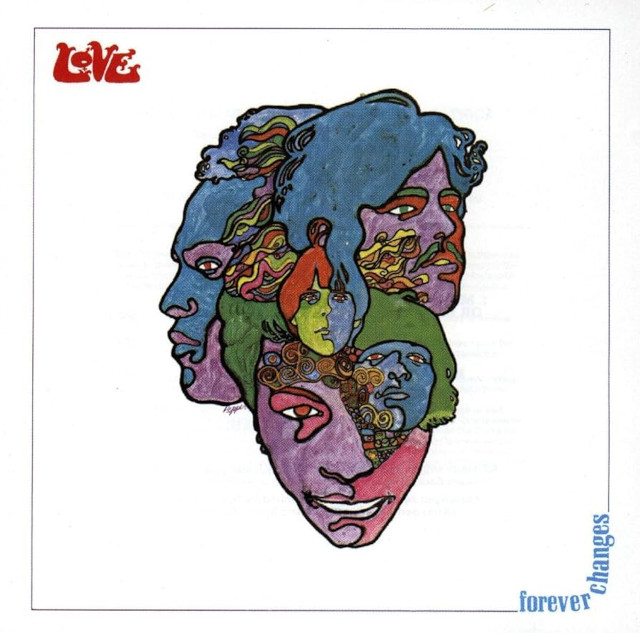
Aware of the strength of the material, Elektra Records’ founder, Jac Holzman, thought it best that Love stripped things back for the record. "I suggested to Arthur that I thought there was a quieter tonality which might be a winning context for the band," Holzman recalled in his 1998 autobiography, Follow The Music.
"What would happen if you advanced backwards? What would it sound like if [Love’s] rock’n’roll sensibility was applied to songs accompanied by acoustic instruments?"
Lee was already aware that Love couldn’t compete with the guitar histrionics of his old friend Jimi Hendrix, whose sound was revolutionising the rock world, and so he heeded Holzman’s advice.
"The band were crying during the session"
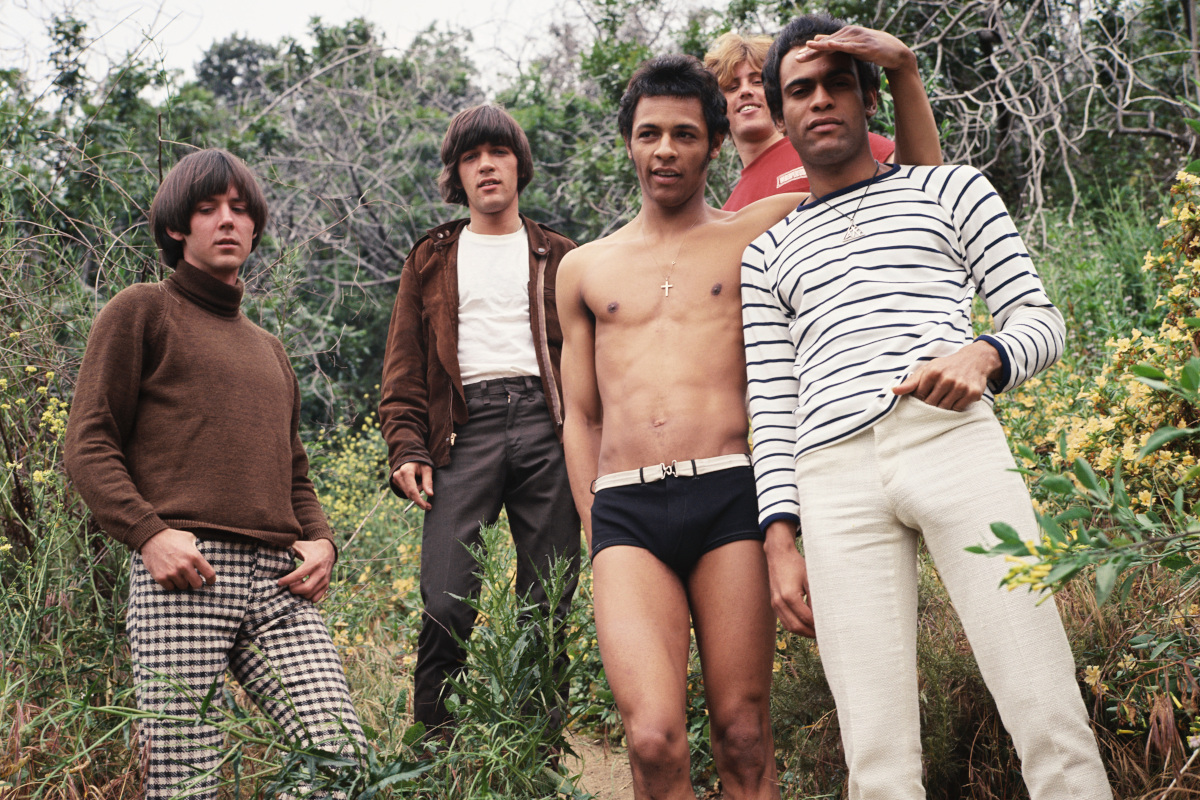
Having recently defined a darker strain of 60s rock with debut album and its follow-up, The Doors’ self-titled Strange Days, producer Bruce Botnick was brought in to helm the Forever Changes sessions. As he explained to Andrew Sandoval in 1995, for the sleevenotes to the box set Love Story: 1966-1972, he initially had a well-known sidekick in tow.
"Forever Changes started out as a project that Neil Young and I were going to produce," Botnick revealed. Young’s group The Buffalo Springfield were "a bit shaky," Botnick added, explaining that he "thought Neil could use a new direction and perhaps play some guitar" on the Love album.
But "Neil was unable to fulfil his role because of his obligation to the Springfield. He was going through some changes and he wasn’t physically well at the time. So he dropped out and it was me."
Not only had Botnick lost his co-producer, but Love were also in a bad way. "There were lots of personal problems and the band hadn’t played live for a while," Botnick recalled.
“Arthur had all these songs, but the band was so untogether and playing so badly… I was prepared to record the album with Arthur singing and playing on his songs and Bryan singing and playing on his songs, with backing by studio musicians.”
In just three hours, Botnick and Lee arranged and recorded two songs, ‘The Daily Planet’ and ‘Andmoreagain’, as the group looked on. "I remember [them] physically crying at this session," Botnick said. "The band was so shocked, so put out, so hurt that it caused them to forget about their problems and become a band again."
Spurred into action, the group knuckled down, and when sessions recommenced, on 11 August, at Western Recorders, they were ready. Follow up sessions were held at Sunset Sound and songwriter Leon Russell’s home studio, and, by 25 September, Forever Changes was complete.
"Violent and surreal imagery"
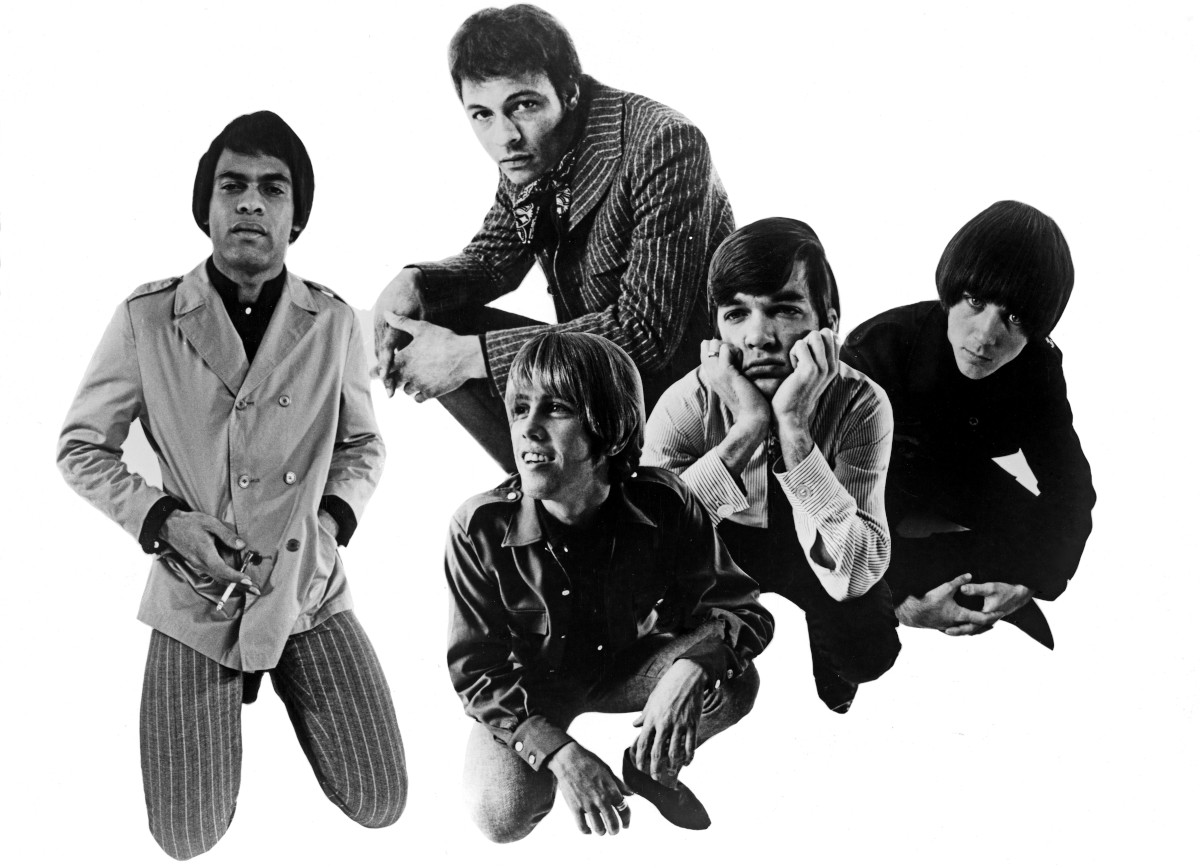
Despite its turbulent gestation, Forever Changes was a landmark album. The nine songs Lee contributed were unlike anyone else’s: disquieting thoughts on mortality, tensions in society and feelings of outsiderdom articulated with violent and surreal imagery.
‘A House Is Not A Motel’, ‘The Daily Planet’ and ‘Bummer In The Summer’ find Lee returning to his R&B roots with tough vocal performances married with strident folk-rock.
On ‘Andmoreagain’, ‘The Red Telephone’, ‘The Good Humor Man He Sees Everything Like This’ and ‘You Set The Scene’, Lee’s songs were juxtaposed with lush and ornate string and horn arrangements.
Speaking to Goldmine magazine in 1991, Lee credited arranger David Angel with translating his musical ideas into notation. "David Angel’s great – he’s on the whole record!" Lee enthused. "I told him what to do – I helped orchestrate. There was part of the LA Philharmonic Orchestra on there, with those horns. We tried everything on that album."
Bryan MacLean’s contributions were fewer but impactful. ‘Alone Again Or’ was a breathtaking opening track, a sweeping, melancholic rush festooned with mariachi brass that remains Love’s best-known song, helped along by cover versions from acts as disparate as The Damned and UFO. MacClean’s other song, ‘Old Man’, was a reflection on the aging process set to a delicate string arrangement and yearning melody.
"It's like death is in there, so it's definitely forever changes"
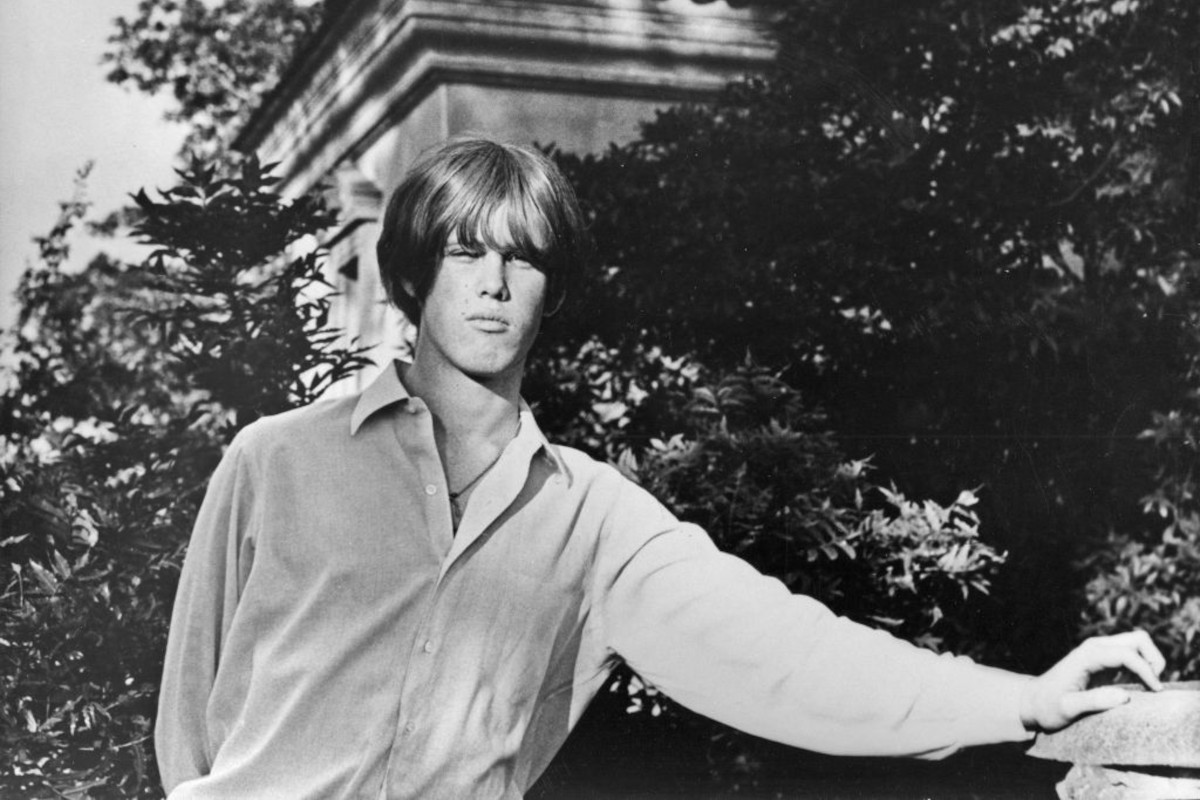
Upon its release, on 1 November 1967, Forever Changes struggled to make an impact, despite its obvious quality.
Lee’s reluctance to promote it didn’t help matters, and Forever Changes only reached No 154 in the US. It fared better in the UK, however, where it reached No 24 and found an appreciative audience of musicians, among them Robert Plant, Eric Clapton and Syd Barrett.
Throughout the following decades, Forever Changes’ reputation grew to the point where, in 1996, Mojo ranked it No 11 in its list of The 100 Greatest Albums Ever Made, and Uncut ranked it as the sixth best of all time in a similar 2015 list.
All the while, it continued to win the hearts of musicians, influencing The Stone Roses, Teenage Fanclub and Belle & Sebastian, among many more.
Bryan MacLean died of a heart attack on Christmas day 1998, aged 52, but lived to see his contributions to Love find the acclaim they deserved. Despite his prophecies, Arthur Lee died from complications of leukaemia in August 2006, aged 61.
Following a spell in prison for possession of a firearm, gross negligence and discharge of a firearm for allegedly shooting a gun in the air during an argument with a neighbour (which he denied), Lee toured Forever Changes to adoring audiences worldwide from 2003.
Talking to Goldmine, he declared, "The album Forever Changes was to be my last words to this life. And it’s like death is in there, so it’s definitely forever changes." The album has since become an epitaph to his incomparable vision.
All photos Getty Images / Album cover Amazon
Top image Love pose backstage at a club in October, 1967, Los Angeles, California


