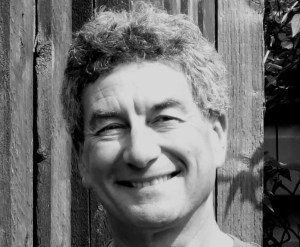
Joaquín Rodrigo Concierto de Aranjuez: the composer
Born in the province of Valencia in 1901, Joaquín Rodrigo was left with extremely limited sight after contracting diptheria at the age of three and would eventually go completely blind. Nonetheless, he excelled as both a pianist and composer, going on to study in Paris with Dukas among others. Beyond the famous Concierto de Aranjuez, he wrote numerous works for solo guitar and piano plus concertos for other instruments such as the harp, cello and flute. From 1947, he was Manuel de Falla Professor of Music at the Complutense University of Madrid for 30 years. He died, aged 97, in 1999.
Joaquín Rodrigo Concierto de Aranjuez: the work
The Aranjuez is ‘the’ Spanish guitar concerto, with every musical trick in the Iberian book. Strummed chords. Hints of flamenco. The hemiola (a rhythmic pun, 3-3 followed by 2-2-2). Phrygian scales (play A-G-F-E and you’re in Andalusia). The middle movement’s gravely beautiful theme on cor anglais and guitar has become a pop classic, whose overfamiliarity saw the concerto nicknamed the ‘Orange Juice’ well before the 1993 film Brassed Off used it. Eighty-odd years after it appeared, no other guitar work has such widespread appeal.
Perhaps it’s the simplicity. Three short movements, each of one clear idea. Fast/slow/fast. Light/dark/light. Whistlable tunes. One-syllable stuff. Wagner it isn’t. One recordings website offers 147 different downloadable versions. Everyone has done it (with one major exception, as we’ll see).
In September 1938, Joaquín Rodrigo and his wife Victoria were broke expat musicians in Paris. The Spanish civil war was raging, wider European conflict looming. Over a couple of riojas, Rodrigo’s guitarist colleague Regino Sainz de la Maza suggested he write a concerto. It was a big ask. In 1933, Rodrigo had written a breathtaking solo Toccata for Sainz de la Maza, who’d found it unplayable. Composing for guitar on piano, as Rodrigo did, can be like a satnav fail: someone’s clever route proves impossible for your vehicle. But, inspired again by the guitar’s Spanish soundworld, Rodrigo set to.
Concierto de Aranjuez: composition, structure and inspirations
The second movement’s famous theme came to him in one go (influenced by ‘Erbarme dich’ in Bach’s St Matthew Passion, some think). A harp-like guitar accompanies a soulful cor anglais imitating the saeta, a flamenco song style associated with Easter ceremonies in Seville. (Search YouTube for ‘saeta’ to see how beautifully the theme evokes it: solemn, soul-searching, insistently decorated yet basic in outline.) The guitar meditates on the theme, often stretching the technical limits of players at the time. It struggles upwards, desperately searching something, but the false-summit restatement of the opening three-note figure feels a hollow victory. The guitar can only repeat it an octave down, then two, then three. It has to start from the bottom all over again, this time fretting its way up to furiously smashed chords at the instrument’s highest limits. The theme returns in full orchestra, overwhelmingly so. There is no triumph here, just stark acceptance and resignation. Simple music, profound effect.
By spring 1939, the second and third movements were finished. In June, expecting their first child, Victoria had a miscarriage. Her autobiography suggests this devastating event inspired the slow movement, but no: it was already completed by then. Nevertheless, its desolate feel is appropriate. Rodrigo wrote the first movement soon afterwards. With its sprightly neo-classical elegance in mind, he cast around for a suitably evocative title for the completed work. He settled on ‘Aranjuez’, a sort of Spanish Versailles, complete with ornate gardens, several miles south of Madrid. (The Rodrigos didn’t ‘honeymoon there’, whatever Victoria’s memoirs claim.)
Concierto de Aranjuez: the premiere
Sainz de la Maza played the premiere in November 1940 in Barcelona. Not the great guitarist Andrés Segovia, who wasn’t happy at not being involved – but he was in Uruguay, displaced by the Civil War, so couldn’t be anyway. He eventually heard the Aranjuez in 1947 in Argentina and wrote positively to Rodrigo, wanting the score, to ‘improve’ it. Instead Rodrigo wrote Fantasia para un gentilhombre for him – this genteel reheat of golden-age Spanish music was more to Segovia’s taste, but never matched the Concierto de Aranjuez.
Some of the Fantasia’s smoothness is down to Segovia’s guidance. The guitar part of Aranjuez, however, can be messy. Everyone who has played it – i.e. everyone else – has their own working solution for the unplayable and awkward bits. If Segovia had commissioned it instead, perhaps he’d have improved it. Or perhaps watered it down: the frantic despair of the guitar solo wasn’t his aesthetic. We’ll never know, as he never performed or recorded it.
Miles Davis and global attention
The concerto’s critical reception had been good, but international success was modest. Until 1960, that is, when jazz trumpeter Miles Davis paraphrased the slow movement in his album Sketches of Spain… without permission. The Rodrigos were furious, but eventually accepted it. Particularly when the LP brought the Concierto de Aranjuez global attention – plus royalties awarded by the lawyers.
The slow movement, often casually torn out from the concerto where Rodrigo knew it belonged, took on a life of its own in playlists, films, popular media and TV ads. It endured questionable ‘adaptations’ by jazz and easy-listening ensembles. It even made No. 3 in the UK pop charts in 1976. Fame, commissions and honours for Rodrigo followed, but Aranjuez (and usually just the slow movement) overshadowed everything else he wrote. Unfairly so.
Yes, the Concierto de Aranjuez is flawed and overplayed. It’s also a work of irresistible, enduring, uncomplicated genius. From darkness, light shines gloriously out. Let’s raise a glass of rioja to the ‘Orange Juice’. ¡Salud!
Concierto de Aranjuez: recommended recordings
The best recording
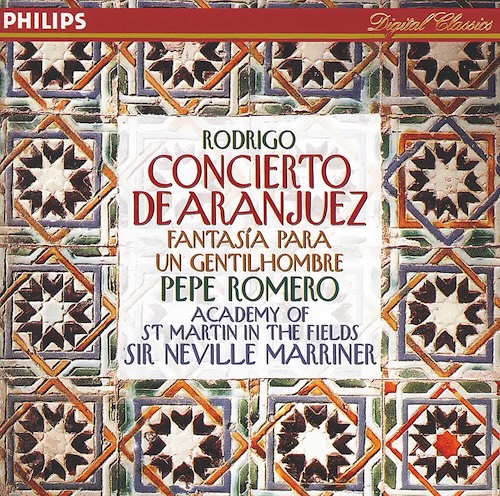
Pepe Romero (guitar)
Academy of St Martin in the Fields/Neville Marriner
Philips 4380162
Since Regino Sainz de la Maza’s first 78s version circa 1947, Concierto de Aranjuez has been recorded at least 150 times – and that’s not counting adaptations or transcriptions. But this recording from 1992 (and not to be confused with the same lineup’s earlier go from 1979) is many people’s top choice. And no wonder: it ticks pretty much all the boxes. Pepe, one of the legendary Spanish Romero guitarist dynasty, has a precision and technique as good as anyone, and knows how to exploit the range of native stylistic influences. (If you’re looking for recordings of Rodrigo’s Concierto Madrigal for two guitars, or his Concierto Andaluz for four guitars, there are all-Romero lineups for both works.)
The opening movement is splashy, sunny, rhythmic and drives along. The guitar’s jolly opening rasgueados – strums, if you like – show the orchestra the way to alternate with it. Right from the start there’s a sprightly, natural-feeling balance between guitar and orchestra here. The detail is all deep, crisp and even, even in the fastest scale work, and Romero’s sheer fluency makes it all sound natural. There is indeed a lot of this in the work, often putting huge demands on the guitarist for questionable musical effect – Rodrigo once joked about how he and Pepe would look down from heaven, smoking cigars, and laughing at other guitarists’ struggles to play such passages.
Crashing chords and well-judged rubato
The slow movement flows beautifully, with well-judged ruminative rubato that doesn’t halt the flow of the guitar’s first climax. The second climax, with those crashing high chords, comes as a violent and very effective shock. As elsewhere on this recording, it’s all well judged to the spirit of Rodrigo: sometimes elegant and ‘classical’, sometimes off-beat and crunchily dissonant, sometimes pure Spanish passion.
The perky finale is a bright dance with missed beats, winking dissonances and show-off scales. Again, Romero makes it sound easy. Everything is bouncy and springy, on guitar and in the orchestral ensemble, and the endless tricky runs are dashed off with apparent ease. You can almost see them all smiling.
Perhaps there’s a slight metallic quality to the guitar. And you’ll find individual passages played with, arguably, more atmosphere or flash on other recordings. But for a well-rounded, highly-accomplished version that does everything brilliantly, this is your go-to. An Aranjuez for the ages.
Three other great recordings
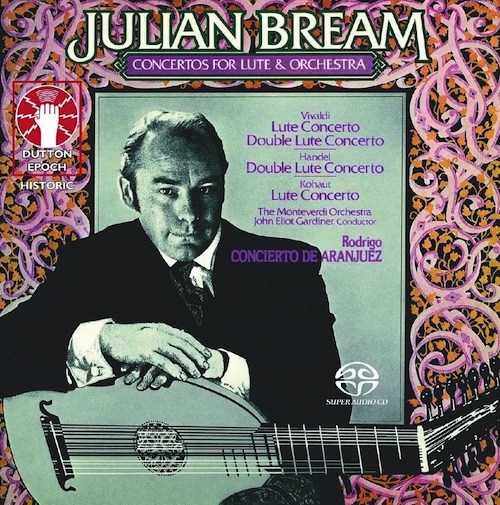
The British guitarist recorded Aranjuez four times (plus many Rodrigo solo guitar works, dazzlingly) – all are intense, melodramatic and top-class. This, recorded in 1974 with the Monteverdi Orchestra under John Eliot Gardiner, has arguably the smoothest orchestral sound of the four, and doesn’t have Bream’s sometimes over-the-top later timbral extremes. If guitar matters more than orchestra to you, this is the one, because Bream played the solos better than anyone else, with an almost terrifying drive and sense of climax – no rubatos of convenience for him. (Dutton CDLX7333)
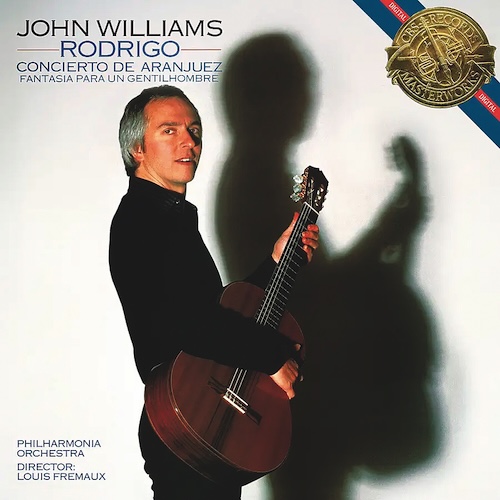
The consummate artist-technician, John Williams’s working version of the Aranjuez is many players’ basis for a performance. Sometimes he intervenes: at the cadenza’s climax, he moves the big chords down an octave for a bigger sound. (If you like this adjustment too, this could be your top recording of all.) He brings robust, secure playing to his three recordings – everything is bright and sparkling, from runs to jagged bass notes – and this, recorded with the Philharmonia Orchestra under Louis Frémaux in 1985, is the one with the best orchestral detail. A reliable choice. (Sony G0100033894421)
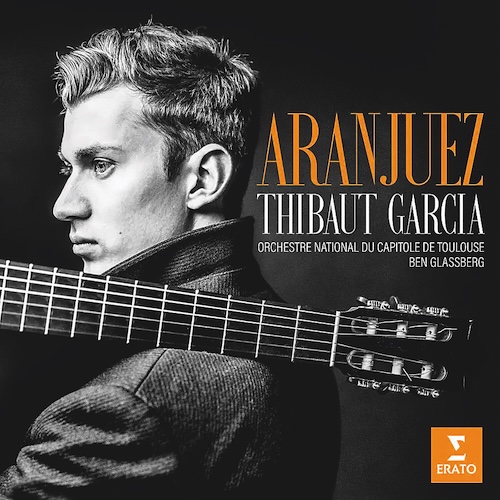
A recommendable recent recording, with big, rich, well-shaped sound. The opening really zips, and there’s a sturdy bounce to the outer movements. Playing with the Toulouse Orchestra under Ben Glassberg, Garcia brings great energy and detail to the guitar lines, and solves the fast-bits problem in the guitar solo with waves of rhetorical, flexible tempo, the opposite of Bream. The climax is suitably frenetic, and the orchestral take-up of the tune is huge and noble. The final movement sweeps us along with great guitar detail. (Erato 9029523571)
And one to avoid…
The flamenco genius Paco de Lucía plays Aranjuez by ear, with startling flamenco dash – great rasgueados, piercing runs – and the outer movements are effortlessly impressive. But classical constraints mean this valiant effort from 1991 doesn’t quite come off overall; somehow the guitar solo doesn’t catch fire. Still, it’s worth a listen out of curiosity, and at least it’s not downright funny, as are some of the more arbitrary takes on the Aranjuez. I mean you, Modern Jazz Quartet – Vision On meets Orange Juice. Oof!