
Roy Harris Third Symphony: the composer
Roy Harris (1898-1979) composed for a wide range of forces, was a well-travelled and influential teacher and, with his wife, the pianist Johana Duffey, was one half of a power couple of American music. But for all that he seemed to be the quintessential American composer, he wasn’t afraid to stir the odd hornets’ nest – his praise of the bravery of the Soviet people in his Fifth Symphony (1942) would later raise the suspicions of the US authorities, while references to slavery and civils rights in his 13th Symphony, commissioned to mark the American bicentenary in 1976, was not to everyone’s taste.
Roy Harris Third Symphony: the work
Background influences
Roy (Leroy) Ellsworth Harris was the archetypal American boy who made good – being born in a log cabin and sharing Abraham Lincoln’s birth date were useful snippets of information he could dine out on. He grew up working on his father’s farm in the San Gabriel Valley, a remote area of California, but found time to practise the piano under the tutelage of his mother. At school he learned to become a talented clarinettist. He went on to study philosophy at the University of California Berkeley but the plain-spoken young student quickly tired of its wordiness and so turned to his first love: music.
Harris’s promising early compositions earned him a Guggenheim Fellowship, allowing him, like a number of his American contemporaries, to study with Nadia Boulanger in Paris from 1926-29. Sadly, this was not a happy time for Harris, who resisted Boulanger’s rigid teaching methods and her emphasis on neo-classicism – it was, instead, his great love of Renaissance polyphony which, fostered during this period, would be his main source of inspiration throughout all his composing life.
Considerably more influential, however, were the high-level contacts that Harris made upon his return to the US. Foremost among these was conductor Serge Koussevitzky, long-term music director of the Boston Symphony Orchestra, who commissioned, premiered and recorded Harris’s Symphony No. 1, ‘1933’ – the work’s release on the Columbia label made it the first American symphony to be widely distributed in such a way. Koussevitzky was also earmarked to conduct the first performance of Harris’s Second Symphony but declined to do so, with the pair having fallen out for some (still unexplained) reason.
Roy Harris Third Symphony: the commission
Reconciliation came in the form of Harris’s Third Symphony, which was premiered by Koussevitzky and his BSO forces on 24 February 1939. Not, however, that the great Russian maestro had been the initial driving force behind the work – that, instead, was the Dutch conductor Hans Kindler, who had commissioned the Third for his own National Symphony Orchestra, only for Harris to hand it over to his old sparring partner upon completion.
Another commission at that time had also come from violinist Jascha Heifetz, who had asked Harris for a concerto. When Heifetz then decided he did not like the composer’s efforts and the commission fell through, Harris, not wanting to let good ideas go to waste, did a little recycling, with music initially earmarked for the concerto now appearing at the beginning of the Third Symphony. A lukewarm reception for the Third’s first outing saw the composer make slight tweaks here and there, after which the work steadily grew in popularity.
Roy Harris Third Symphony: form and sections
Roughly 17 minutes in duration, the Third is a miracle of concision, whose single uninterrupted movement is made up of five linked sections titled ‘Tragic’, ‘Lyric’, ‘Pastoral’, ‘Fugue – Dramatic’ and ‘Dramatic – Tragic’. The work opens with a dark, string-led threnody, increasing in intensity as the music builds to a quasi climax fortified by ominous brass chords. The second section is a simple lyrical interlude, lasting just 80 seconds, before a pastoral landscape is revealed – this is the longest sequence in the symphony, basically untroubled but with the occasional threat of storm clouds on the horizon. Woodwind are given their chance to shine, swirling like dust motes in shafts of sunlight, and listen out, too, for the appearance of the vibraphone.
The following fugal section, which shouts ‘America’, is the epicentre of the work – for a similar soundworld, think of the finale of Nielsen’s Fourth Symphony where brass and timpani battle it out to the death. The final section, a funeral march underpinned by a doom-laden drumbeat, is brought to a curt and decisive finish. And that’s it.
Roy Harris Third Symphony: influences and legacy
Harris’s best work grows organically from a simple germ, of which the Third Symphony is a prime example. Influenced by Sibelius’s Seventh Symphony, with its depiction of Karelian forests and lakes, Harris’s Third conjures up vivid images of America’s windswept prairies. Both works are also conceived in one continuous movement, but there the similarities between the two composers end. Sibelius remains a colossus in the pantheon of great symphonic writers; Harris is in danger of being seen as a one trick pony, despite having written over 170 pieces, including 13 numbered symphonies, works for military band, chamber ensembles, vocal and choral works for professional and amateur musicians.
Remarkably, in US music critic Michael Steinberg’s The Symphony (1995), Copland, Ives, Hanson, Harbison, Piston, Schuman and Sessions all receive their due, whereas Harris, whose Third was regularly hailed as ‘the great American symphony’ in the 1940s and ’50s, does not get a mention.
Let’s not underestimate his influence, however. With his Third Symphony, Harris surely provided a blueprint for a host of cinematic composers from Elmer Bernstein to John Williams. Aren’t there echoes of the Third in, for instance, the soundtracks to The Big Country, The Magnificent Seven, the Indiana Jones movies… or even the TV series Dallas?
Roy Harris Third Symphony: the best recordings
Our top pick
Leonard Bernstein (conductor)
New York Philharmonic
Sony G010001223092W
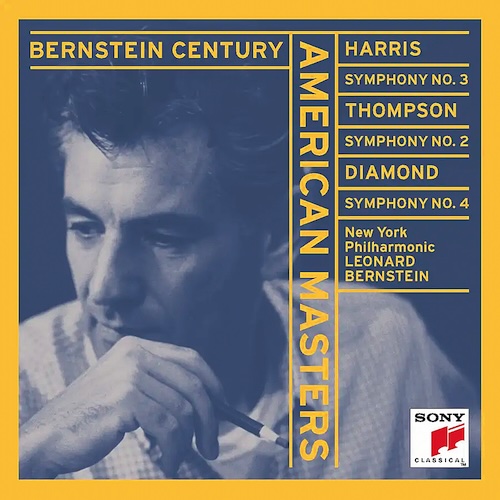
Archival recordings of Harris’s Third Symphony by conductors Antal Dorati, Howard Hanson, Arturo Toscanini and Otto Klemperer survive, all from the 1940s and difficult to get hold of without a lot of detective work. Also from that decade, but a lot easier to track down, is Serge Koussevitzky’s with the Boston Symphony Orchestra, which Harris himself considered the closest to his ideal. Did a sense of gratitude towards the conductor colour his judgment? Probably not, as Koussevitzky was indeed renowned for orchestral brilliance and here achieved it in spades. But the question is nonetheless worth raising because, while Koussevitzky’s pioneering recording both has historic interest and rightly remained the reference recording for many years, it does not quite tell the whole story.
In 1962, Leonard Bernstein appeared on the scene with an even more cogent account in much improved sound quality for its time – a release which Harris himself approved. At this time, Bernstein had served his apprenticeship with the New York Philharmonic and was carving out a formidable recording career, comparable to that of his Austrian contemporary Herbert von Karajan. He was recording exclusively for CBS, a record company not synonymous with state-of-the-art sound or with the consistency of its vinyl pressings, but paradoxically, the sound on this recording serves the composer rather well. (It has since been re-mastered by Sony, taming its stridency but retaining clarity and impact).
A granitic view of Harris's score
The Third is not a colour symphony. Its tonal palette is monochromic – the dramatic black-and-white photography of Ansel Adams comes to mind – and it’s the gradations of light and dark which Bernstein captures better than anyone. The NYPO brass is given free rein in the fugal section, where the glorious Gabrieli-inspired antiphonal fanfares echo around the canyons to thrilling effect, and the final death march is delivered with the same grim inevitability which characterises Bernstein’s Mahler recordings. In this early partnership, Bernstein and the NYPO provide a granitic view of Harris’s score which sweeps all before it, setting the bar so high that it is difficult to imagine it being better done.
Although Bernstein championed other symphonies by Harris, he didn’t take them into the studio – a shame, as the gritty Seventh, for example, would have been welcome. Around a quarter of a century later, however, he did record the Third again, six years after Harris’s death. Alas, the difference between his two accounts could not be more marked. See ‘And one to avoid’, below…
Three other great recordings
Marin Alsop (conductor)
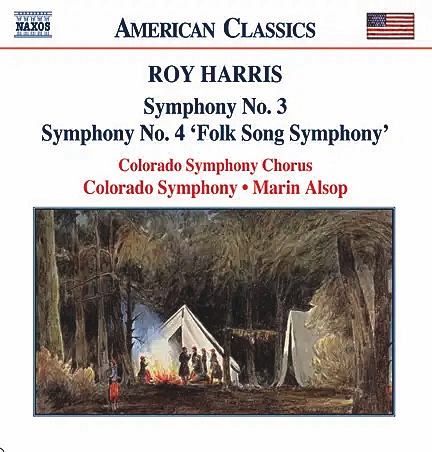
In 2005, Bernstein protégée Marin Alsop recorded the Third Symphony alongside the home-spun ‘Folk-Song Symphony’ Fourth – a rare chance to hear Harris the symphonist in two very different guises. The Third begins slightly tentatively here, but soon develops into a well-sprung, sinewy account. The orchestral balance of the Colorado Symphony is excellent, with some outstanding woodwind contributions, and a superbly crunching denouement completes the task. Overall, a fine realisation of the score in good sound. (Naxos 8.559227)
Neeme Järvi (conductor)
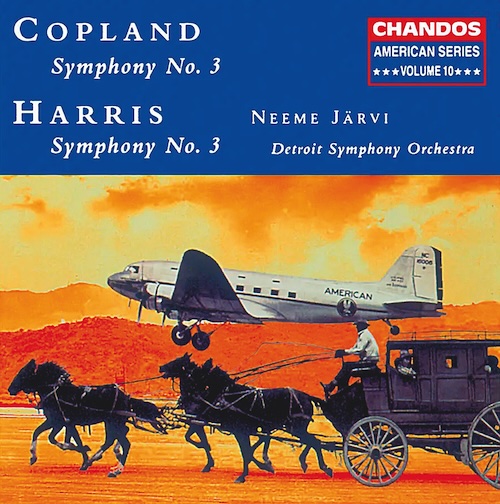
When issued in 1995, this disc received a poor press, with Neeme Järvi criticised for just going through the motions. I don’t feel that. Nor do I hear any signs of sloppiness or lack of interest from the Detroit Symphony Orchestra players – the final section, in particular, is not a dirge but a fiery, angry outburst, the pounding drumbeats bringing the symphony to a shattering climax. I hesitate to call it a great performance, but it is certainly one to take seriously, while the Chandos recorded sound is a little over-resonant but otherwise pretty good. (Chandos CHAN 9474)
Serge Koussevitzky (conductor)
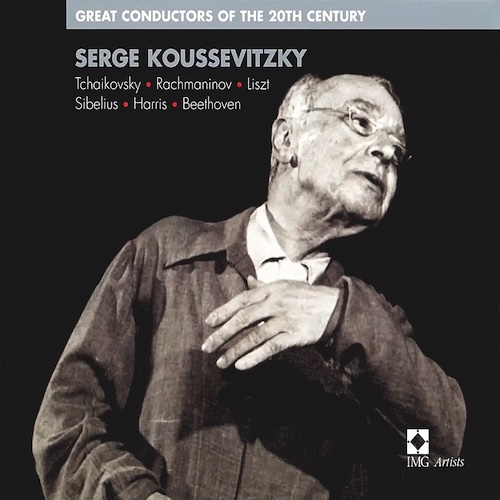
While satisfying all-round accounts in good, modern sound from conductors Eduardo Mata in Dallas and Leonard Slatkin in Detroit deserve a mention, the final choice goes to Harris’s own favourite, the 1939 premiere recording under Koussevitzky – an important musical document, as are all first recordings. At the time, the Boston Symphony Orchestra was famous for its rich string tone, but the restricted sound quality denies us full access to it. However, the performance itself is compelling. (Warner Classics 2435751185)
And one to avoid…
Leonard Bernstein’s 1985 remake for Deutsche Grammophon is a rather tired affair. Overall, there is a lack of urgency, no more apparent than in the underpowered fugal section which goes for virtually nothing in terms of packing a punch. The brass pyrotechnics are also far less spectacular than in Bernstein’s previous version, though this live NYPO performance does at least possess an implacable gravitas which might just save the day. And, to be fair, the sound quality is excellent too.


