The slim screens hanging on our walls look better than the bulky televisions they replaced, but leave manufacturers little room for decent speakers. As a result, even the most spectacular of ultra-high-definition images is typically accompanied by thin voices, weak sound effects and dismal music.
There are exceptions, like the 65-inch Sony Bravia 9 (£2,299; sony.co.uk), but sets like this are rare and expensive. A soundbar, however, gives you the chance to boost TV audio, and these days you don’t need to spend big to hear the difference. I’ve been enjoying some surprisingly good options, all for well under £500.
What is a soundbar and what does it do?
For the uninitiated, a soundbar is a long cabinet containing speaker drivers and amplifiers that connects to your TV and makes voices clearer, music fuller and action scenes more exciting. They’ve evolved from multi-speaker surround-sound systems, which remain the most immersive option but do cause clutter.
Compact all-in-one models such as the Sonos Beam Gen 2 (£449; sonos.com) feature five drivers and digital processing to create broader, more substantial sound. Add Sonos’s discreet Sub Mini (£429; sonos.com) for extra depth and rumble too.
As well as featuring speakers specifically for dialogue, a good soundbar should make whatever you’re watching seem bigger and wider. Angled drivers and digital processing spread music and effects beyond the television, giving films and concerts greater space without adding more speakers. The Sony HT-S2000 (£299; sony.co.uk) does this particularly well.
Where should you place your soundbar?
The soundbar should sit neatly underneath your TV, but it’s worth checking it won’t restrict your view of the screen or block your TV remote control sensor. If the television is wall mounted, most soundbars can also be mounted underneath for a seamless look, although you will need to hide or manage the power and HDMI cables. Check the width too: the bar doesn’t need to match the television exactly, but should look balanced rather than being dwarfed by the screen.
A wireless subwoofer – Richer Sounds (richersounds.com) has options from £129 – handles lower bass frequencies, and you will instantly notice the boost if watching fast action and special effects. That said, it’s also great with musical scores, helping to bring out the depth of a soundtrack while allowing the soundbar to concentrate on voices and detail.
Adding separate surround speakers for a fuller effect
For a fuller surround-sound experience you will need separate surround speakers. Impressively, the Hisense AX5125H (£199; hisense.co.uk) includes a soundbar, wireless subwoofer and two satellites, while the Majority Audio Bowfell Halo Atmos 5.1 (£169; richersounds.com; right) offers the same for even less. Both systems support Dolby Atmos, although they achieve the immersive effect differently. The Hisense has two upward-firing drivers that reflect sound from the ceiling, while the Majority uses digital processing to create a virtual effect. Atmos sounds more cinematic on a premium design such as the KEF XIO (£1,999; uk.kef.com) but the impact, even on budget options, still impresses.
To test your soundbar, the Proms on BBC iPlayer are streamed in stereo, so listen for a wider orchestra, more gravitas and distinct solo passages. John Williams: Live in Vienna on Blu-ray has a Dolby Atmos mix, which paired with the right equipment, lets you hear the hall ambience in remarkable detail.
Connecting your soundbar
Most soundbars connect to the television with one HDMI cable which allows the TV remote to control volume. Older TVs can use an optical cable instead, although control may be less seamless. The highly connected Philips TAB5201 (£109.99; philips.co.uk) is superb value, with HDMI ARC, optical and USB inputs, Bluetooth 5.4, app control and automatic sound adjustment.
Many soundbars offer different modes: voice or dialogue settings bring speech forward, while night mode reduces bass and softens sudden changes in volume. Surround modes can make films more immersive, but for classical concerts start with standard or music mode, as too much processing can exaggerate the acoustics.
Many soundbars also double as music speakers. Bluetooth is convenient, but Wi-Fi can offer better sound quality and often AirPlay, Spotify Connect and voice control. The Bose Smart Soundbar (£399.95; bose.co.uk) combines these features with a balanced, musical sound.
Best TV soundbars: we recommend...
Majority Audio Bowfell Halo Atmos £169
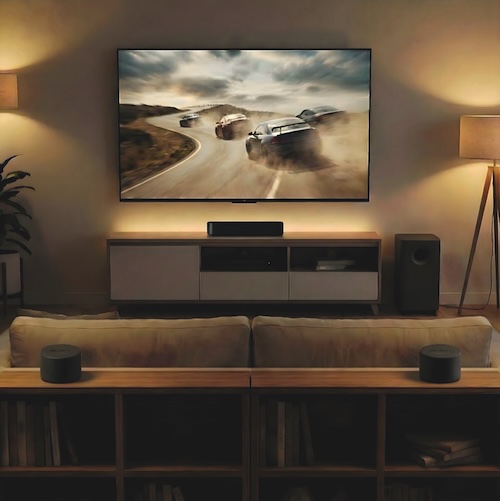
Cambridge-based Majority Audio’s compact Dolby Atmos is just 40.5cm, but it comes with a wireless subwoofer and two rear satellite speakers. Combined, they create a 300W, 5.1-channel system with virtual Dolby Atmos. HDMI eARC, optical, AUX, USB and Bluetooth 5.3 cover the bases, especially for the low price.
Putting aside my snobbish audiophile tendencies and overlooking the cheap feel to the design, I was really surprised by the impact this soundbar had. Dialogue is clear, bass is deeper and more controlled, and the rear speakers add useful scale and direction in smaller rooms. Dolby Atmos is virtual, so don’t expect a swooping, immersive movie experience, but the scale and vibrancy are enjoyable. A great little upgrade to your TV’s speakers.
Creative Stage Pro £129.99
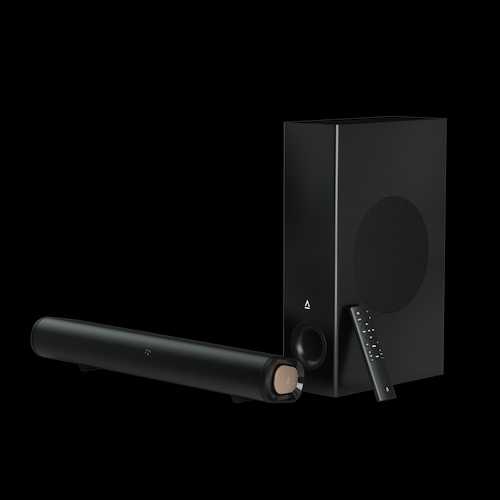
Better known for computer speakers, Creative has made a great TV soundbar for a super-low price. This compact 2.1-channel system makes a bigger impact than its price suggests, with the 55cm soundbar and 5.25-inch subwoofer (80W RMS total) combining to enhance your viewing with surprising ease. Connectivity includes HDMI ARC, optical, USB-C, AUX and Bluetooth 5.3, but remember: the sub is wired, so you’ll need to factor in cabling.
Voices are crisp, while the subwoofer adds gravitas to film scores. And Creative’s built-in processing has separate settings for close-up desktop listening if you are using it with a gaming monitor. Be realistic and avoid cranking up the volume, and you’ll be surprised by the impact of this bargain-priced 2.1 system.
JBL Bar 300 MK2 £350
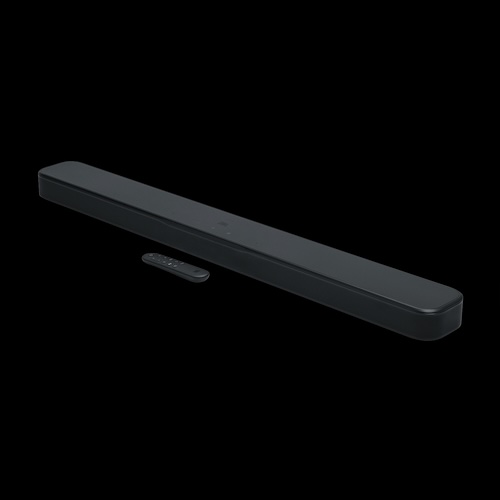
Sonos make seriously good soundbars, like the Beam Gen 2 (£449). But for something cheaper with decent audio connectivity, JBL’s all-in-one model combines Dolby Atmos, smart digital processing, five drivers, 450 watts of power, Wi-Fi and Bluetooth.
Hans Zimmer’s Interstellar score had the depth and scale to match the visuals. Bass was powerful enough that I rarely missed a separate subwoofer, while dialogue cut through chaotic action scenes. JBL’s room-calibrated MultiBeam 3.0 processing spreads sound well beyond the television, and virtual Dolby Atmos adds height.
Wi-Fi, Bluetooth 5.3 and Roon Ready support hi-res streaming; the JBL One app brings Spotify, Tidal and Qobuz together; and room calibration genuinely makes a difference. Though not as refined as the Sonos, it’s impressively musical and versatile.