Rock rivalry can take many forms.
Sometimes it is personal: two musicians who genuinely cannot stand each other, turning old grudges into musical ammunition. Sometimes it is a battle for the same audience, with two bands competing for chart positions, headlines and bragging rights. And sometimes the rivalry is almost entirely creative: two groups hearing the same musical landscape and imagining completely different futures for it.
The results can be extraordinary. The Beatles and The Beach Boys pushed each other towards increasingly adventurous songwriting and production; Metallica and Megadeth turned a bitter falling-out into a remarkably fertile thrash-metal arms race; Nirvana and Pearl Jam represented competing visions of what grunge could become.
Elsewhere, the rivalry was friendlier, more complicated or partly manufactured by the press. But whether the competition was real, imagined or somewhere in between, it often gave great bands an extra reason to raise their game. Here are 10 rock rivalries that pushed the music forward.
1. The Beatles vs. The Beach Boys
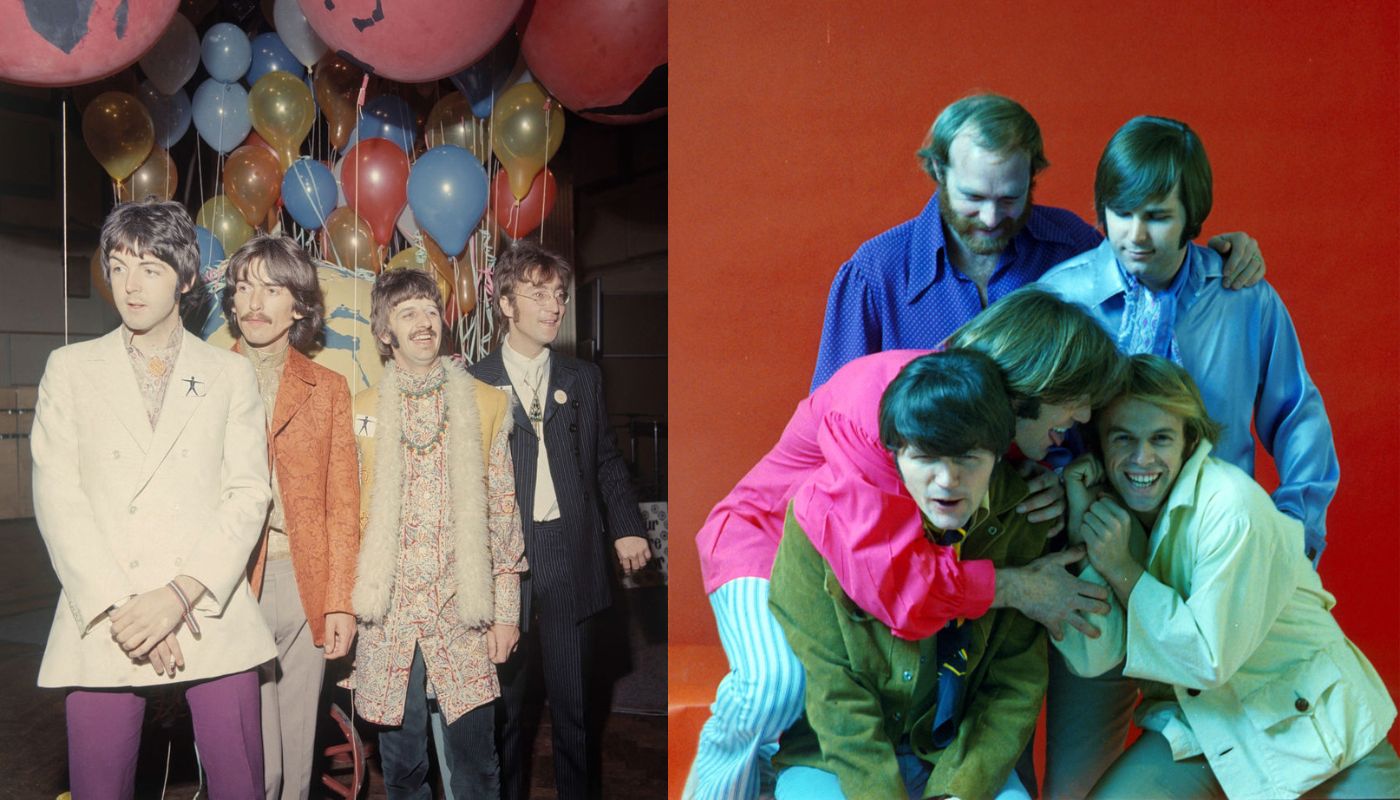
Few musical rivalries were as creatively fruitful.
Brian Wilson was inspired by Rubber Soul, the Fab Four's adventurous 1965 album, to push The Beach Boys beyond their surf-pop beginnings, producing Pet Sounds in 1966. The Beatles were stunned in turn: Paul McCartney has repeatedly described 'God Only Knows' as his favourite song, while Pet Sounds helped inspire the Beatles' own leap towards Sgt. Pepper.
Wilson, meanwhile, heard 'Strawberry Fields Forever' and reportedly felt The Beatles had beaten him to the next level. Yet both sides described the competition as friendly rather than hostile. 'I never felt any competition,' Wilson later insisted. 'I felt a friendly rivalry.'
The result was an extraordinary creative chain reaction: Pet Sounds, 'Good Vibrations', Sgt. Pepper and the unfinished Smile, as two groups continually raised the bar for ambitious pop.
Key track: 'God Only Knows' (The Beach Boys)
2. The Beatles vs. The Rolling Stones
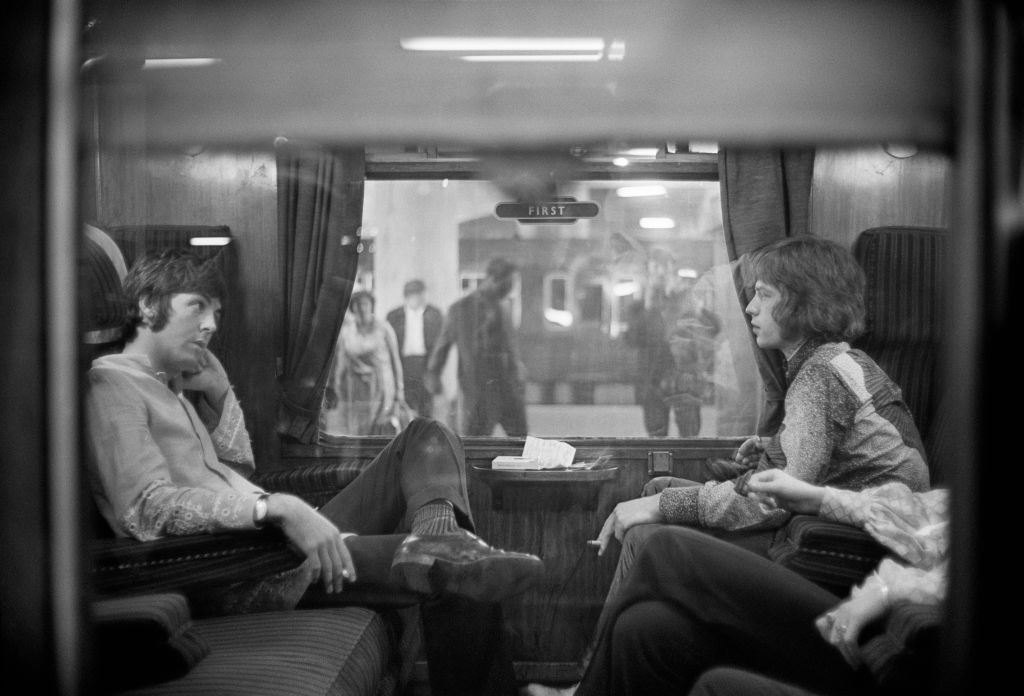
The Beatles and Rolling Stones rivalry was partly a media invention, but that doesn’t mean there was nothing underneath it.
From the mid-1960s, the two bands were routinely presented as opposing camps: Beatles as the lovable, acceptable pop stars; Stones as their darker, more dangerous counterparts. Andrew Loog Oldham actively encouraged that contrast, while the bands themselves occasionally traded barbs.
But there was also genuine musical competition. The Beatles’ Rubber Soul and Revolver raised the possibilities of what a rock album could be; the Stones responded with Aftermath, Between the Buttons and eventually Beggars Banquet, moving decisively beyond their blues-cover beginnings.
The rivalry was also remarkably porous: Lennon and McCartney contributed backing vocals to the Stones’ 'We Love You', while Brian Jones returned the favour by playing saxophone on the Beatles’ 'You Know My Name (Look Up the Number)'. By 1968, the competition had become a particularly fruitful game of one-upmanship, with Beggars Banquet and The Beatles (aka The White Album) arriving in the same extraordinary year.
Key track: 'Street Fighting Man' (Stones)
3. The Kinks vs. The Who
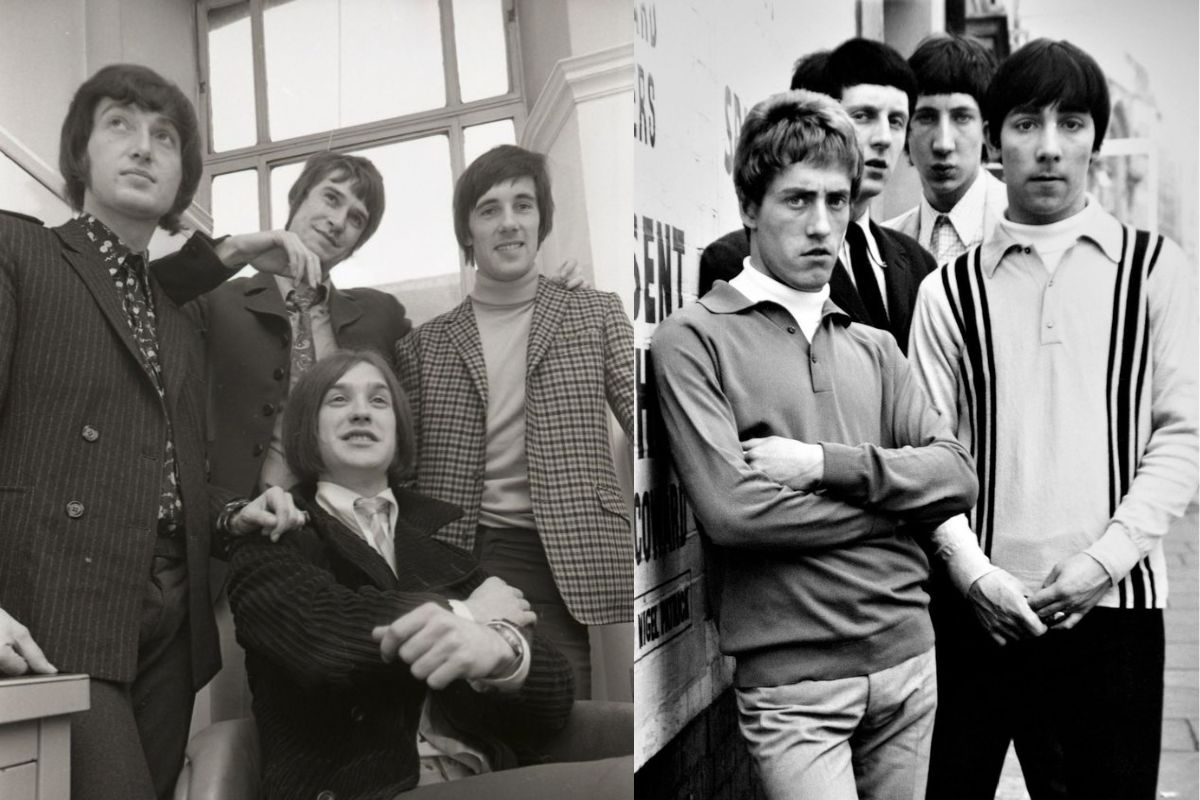
Listen to The Kinks' 1964 hit 'You Really Got Me' and then The Who's own 1964/65 hit 'I Can’t Explain', and you can hear the rivalry forming in real time. The Kinks had already discovered the power of distorted guitar when Pete Townshend decided that The Who could take the idea somewhere of their own. 'I Can’t Explain' was deliberately modelled on The Kinks' breakthrough, Townshend later admitting (to the New Musical Express, in 1970): 'I was influenced more by the Kinks than any other group.'
From there, the competition became less about copying and more about songwriting: Ray Davies established himself as the great observer of English life, while Townshend increasingly matched him with songs about youth, frustration and identity. My Generation, The Who Sell Out and eventually Tommy pushed The Who towards ambitious rock theatre, while The Kinks responded with increasingly sophisticated character studies and albums such as The Kinks Are the Village Green Preservation Society.
Key track: 'I Can’t Explain'
4. Neil Young vs. Lynyrd Skynyrd

'Sweet Home Alabama' sounds like the perfect rock'n'roll riposte: Ronnie Van Zant calling out Neil Young by name in response to his songs about the American South.
But the supposed feud was considerably friendlier than the song suggests. Young's 'Southern Man' and 'Alabama' criticised racism and the South's history; Skynyrd answered with a riff that was almost impossible to resist. 'We thought Neil was shooting all the ducks in order to kill one or two,' Van Zant explained in 1974.
Yet Skynyrd admired Young's music – Van Zant was known to wear Young T-shirts – and Young later conceded that 'Alabama' was 'accusatory and condescending' and that Skynyrd's response was deserved. The rivalry therefore produced something better than a feud: two great Southern songs talking back to each other, with 'Sweet Home Alabama' becoming Skynyrd's signature.
Key track: 'Sweet Home Alabama' (Lynyrd Skynyrd)
5. Led Zeppelin vs. Deep Purple
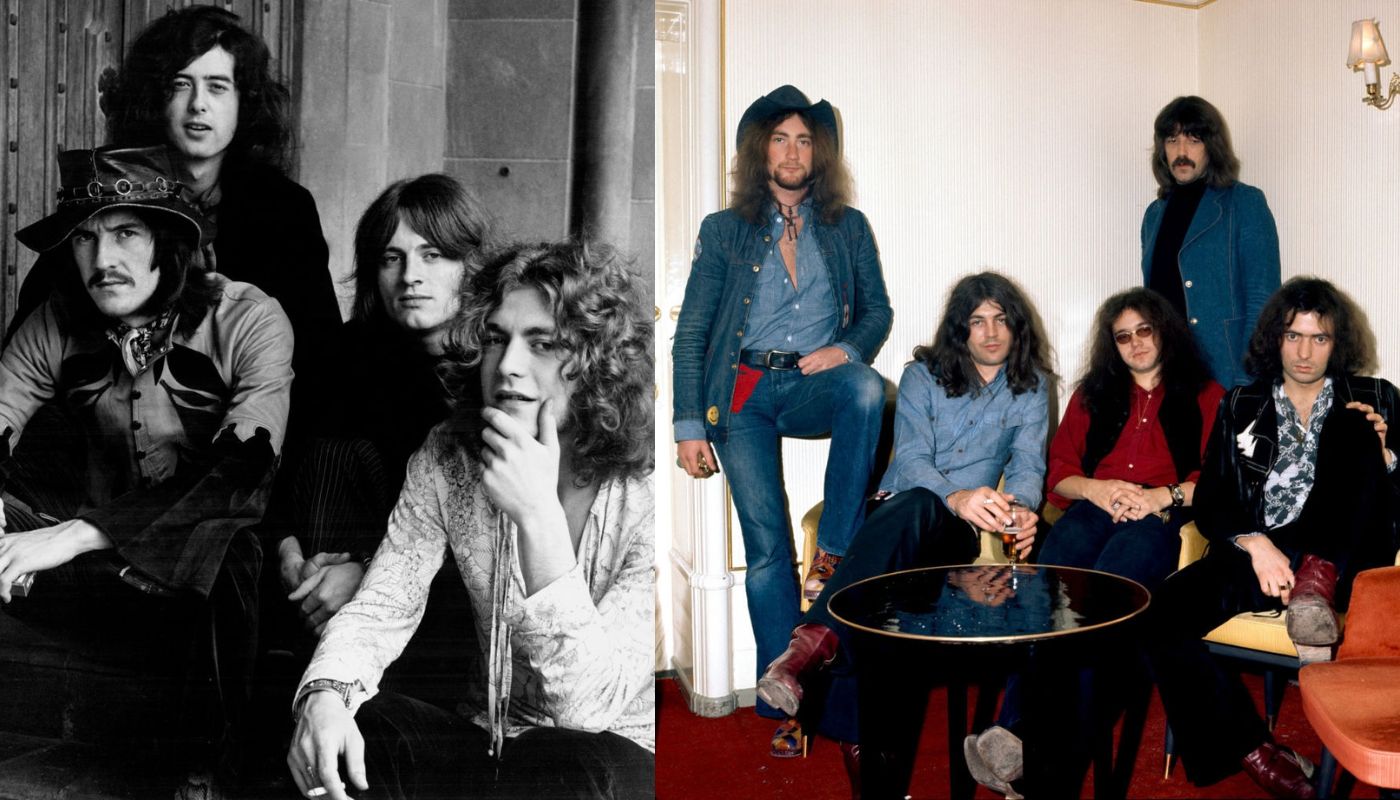
A rivalry that was more competitive than outright hostile. Led Zeppelin and Deep Purple emerged alongside Black Sabbath as hard rock's early 'big three', playing similar circuits and helping establish the vocabulary of heavy rock.
Yet they developed distinctly different identities: Zeppelin pushed towards blues-derived heaviness, atmosphere and increasingly expansive songwriting, while Purple's sound was built around the extraordinary interplay of Ritchie Blackmore's guitar and Jon Lord's keyboards. Their competition helped drive the genre towards greater volume, virtuosity and ambition, with Led Zeppelin II, Machine Head, Led Zeppelin IV and Made in Japan setting increasingly formidable standards.
Key track: 'Highway Star' (Deep Purple)
6. The Clash vs. Sex Pistols
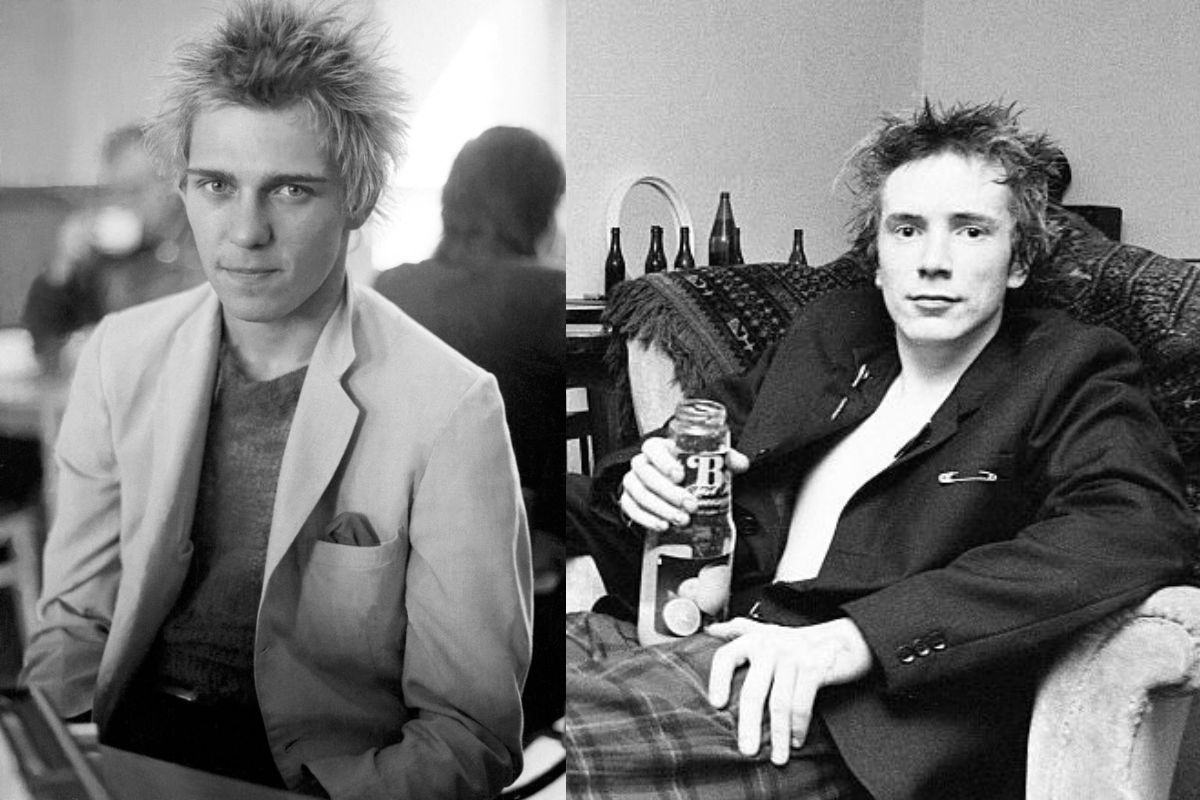
The Clash and Sex Pistols began as rivals because there was barely room for two kings in London's tiny punk kingdom.
The Clash made their debut supporting the Pistols in Sheffield in July 1976, but soon developed a very different idea of what punk could become. Johnny Rotten dismissed The Clash as poor songwriters and accused them of stealing slogans; Joe Strummer largely refused to answer in kind, once calling Rotten 'one of the best poets we have'.
That tension was productive. The Pistols distilled punk into something brutally direct on Never Mind the Bollocks, while The Clash took the original template and expanded it with reggae, soul, rockabilly, funk and politics. Their rivalry gave punk two competing futures: one explosive and self-destructive, the other increasingly adventurous. As The Clash's original guitarist Keith Levene remarked in a 2011 NME interview, the competition gave the scene its own 'Stones/Beatles thing':
'We were in competition with the Pistols, but the Pistols were the best thing for us and we were the best thing for the Pistols. It gave it that Stones/Beatles thing, I guess. The Clash have to be The Beatles if the Pistols are gonna be The Stones.'
Key track: '1977' (The Clash)
7. Van Halen vs. KISS
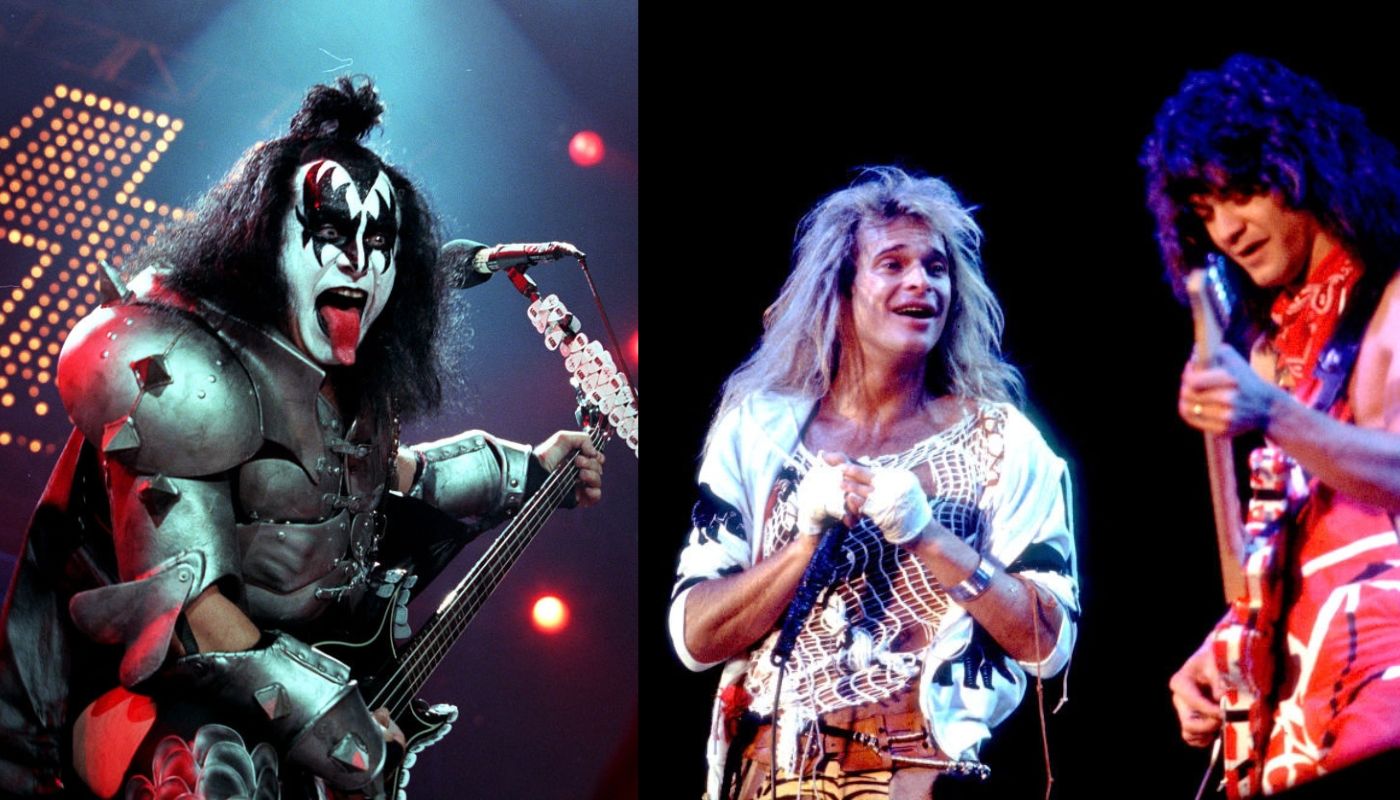
This one is less a conventional rivalry than a fascinating changing-of-the-guard story. KISS were one of the biggest American rock acts when Van Halen arrived, and Gene Simmons actually helped the younger band by financing its early demo sessions.
That makes the relationship more interesting than simple antagonism: KISS represented the theatrical, carefully constructed 1970s rock spectacle, while Van Halen's explosive musicianship and party-rock immediacy pointed towards the next decade. Indeed, KISS frontman Gene Simmons even claimed that in 1982, amid tensions with David Lee Roth circa the Diver Down album, Eddie Van Halen visited KISS in the studio (they were making Creatures of the Night) and floated the idea of joining them.
The story goes that Simmons talked Eddie out of it, telling him that Van Halen was built entirely around his unique guitar style and that joining KISS wouldn't make sense. Meanwhile, KISS's Paul Stanley even disputed that Eddie had made the offer in the first place. Whatever the truth, it further illustrates the creative synergy between these two 70s/80s arena-rock behemoths.
Key track: 'Eruption' (Van Halen)
- Van Halen were one of rock's most self-destructive bands
8. Nirvana vs. Pearl Jam
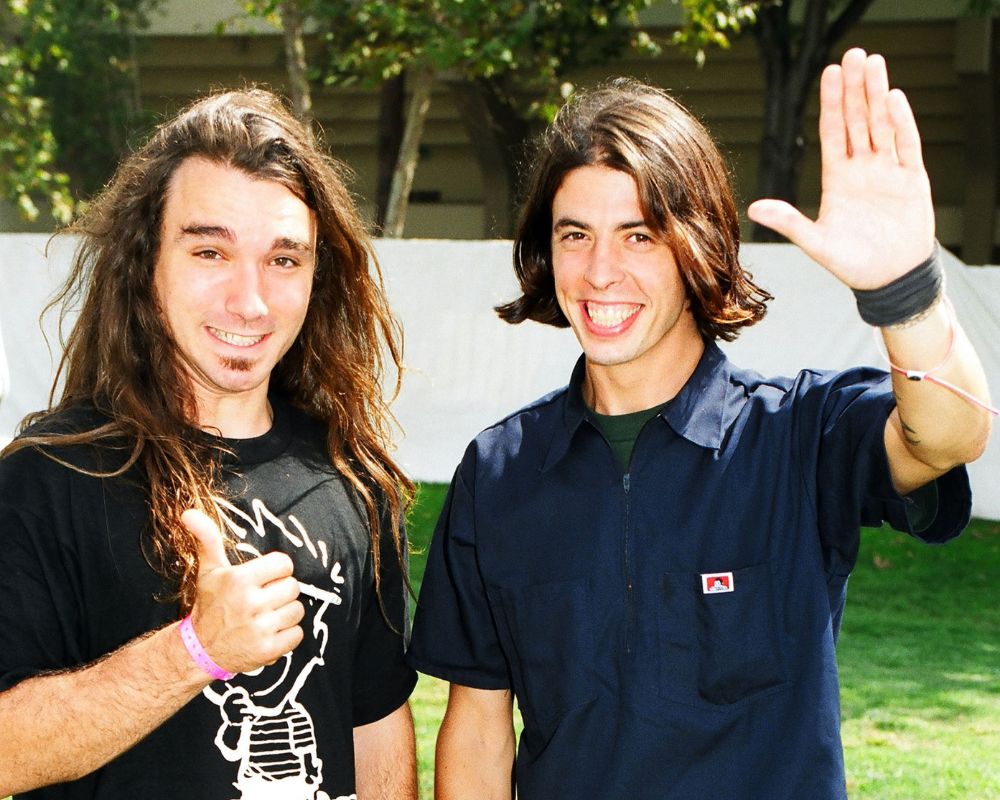
Nirvana and Pearl Jam were natural rivals largely because the music press made them so.
Both emerged from Seattle, both became enormous almost overnight, and Nevermind and Ten effectively became the two records through which mainstream America discovered grunge. But musically they represented quite different possibilities for what the genre might become. Contemporary coverage explicitly contrasted Pearl Jam's classic-rock inheritance with Nirvana's more extreme, mould-breaking approach.
Nirvana's songs were rooted in punk's abrasion, irony and DIY spirit, with Cobain determined not to turn alternative rock into another predictable commercial formula. In Utero deliberately moved away from the polished sound of Nevermind: rawer, more claustrophobic and less interested in giving the audience another Teen Spirit. Cobain even complained that Pearl Jam hadn't challenged its audience in the same way.
Pearl Jam, meanwhile, drew much more openly on classic American rock: big guitars, muscular rhythms, expansive vocals and a more traditional album-rock vocabulary. Ten and Vs. showed how that approach could carry grunge into the mainstream without abandoning its intensity. So the rivalry wasn't really about who could sound more “grunge”; it was about what grunge was for.
9. Oasis vs. Blur
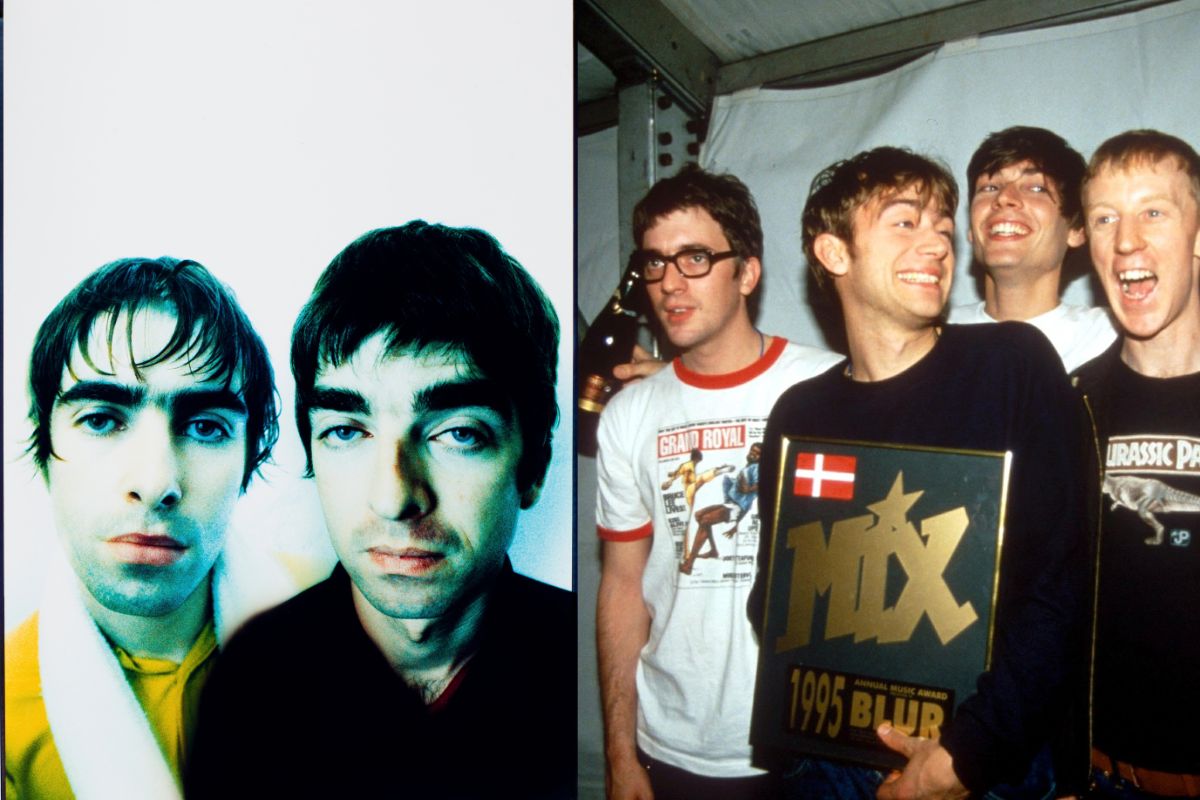
The music was almost incidental to the great Britpop battle. By 1995, Blur and Oasis had become competing visions of British pop: Blur's knowing, art-school Englishness against Oasis's unabashed devotion to classic rock. Initially there was mutual respect – Liam Gallagher even conceded that Blur were 'a top band' – but after Oasis topped the singles chart with 'Some Might Say' in April 1995, the rivalry became personal.
Blur moved the release date for their single 'Country House' to coincide with Oasis's next 45, 'Roll With It', creating the chart showdown that dominated British culture that summer. Blur won that particular battle, selling 274,000 copies to Oasis's 216,000. Yet the real musical payoff was bigger: Parklife, Definitely Maybe and (What's the Story) Morning Glory? helped define Britpop from radically different directions.
Key track: 'Roll With It' (Oasis)
10. Metallica vs. Megadeth
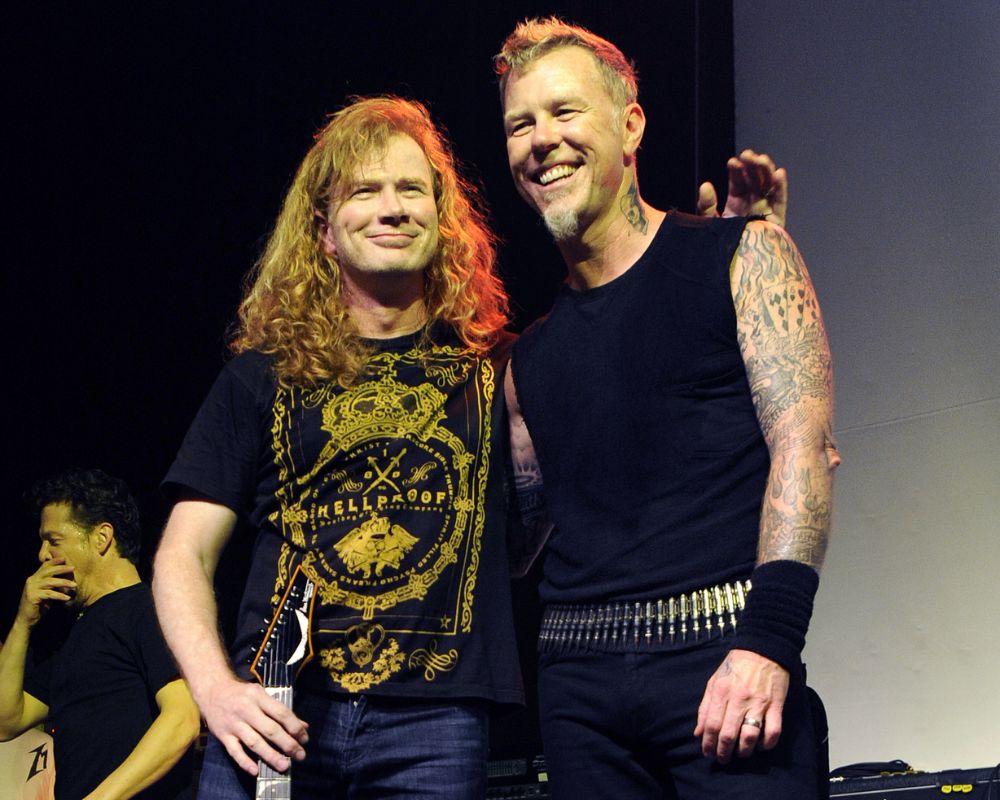
Dave Mustaine didn't need much encouragement to turn professional humiliation into a musical career.
Expelled from Metallica in 1983, he returned to California determined to build a band that could compete with his former one. 'I was driven by revenge,' he later recalled to Metal Hammer magazine. 'I’ll just be faster, I’ll be better, and my songs will be heavier.' Megadeth became exactly that: Metallica’s bitterly competitive counterpart, with Mustaine’s technical guitar playing and intricate songwriting giving thrash a different kind of complexity.
For years, every Metallica success was measured against Megadeth’s progress – and vice versa. Mustaine later admitted he remained obsessed with the comparison even after Megadeth had achieved enormous success. The rivalry produced a remarkable pair of parallel catalogues: Master of Puppets and ...And Justice for All on one side, Peace Sells... But Who’s Buying? and Rust in Peace on the other.
Key track: 'Holy Wars... The Punishment Due' (Megadeth)
- Metallica and Megadeth both finish strongly in our rundown of the best heavy metal albums of all time
Pics Getty Images