The 1970s were the decade when an album cover stopped being merely a sleeve and became part of the experience.
As rock grew more ambitious, so did the artwork: photographs became surreal, paintings became fantastical, typography became adventurous and designers began creating images that seemed to belong to entirely different worlds. Pink Floyd could put a pig above a power station; David Bowie could turn his own face into a lightning-struck alien; Miles Davis could summon an extraordinary Afro-futurist vision.
And there was no Photoshop to make any of it easy. These images had to be photographed, painted, retouched, cut, pasted, airbrushed or painstakingly assembled by hand. Studios such as Hipgnosis effectively turned album art into a new visual language, while artists from Bowie and Elton John to the Beatles and Black Sabbath embraced the sleeve as an extension of their music.
The results could be beautiful, bizarre, provocative or downright baffling – but rarely dull. Here are 21 extraordinary 1970s album covers that pushed the humble LP sleeve somewhere it had never been before.
21. The Nice: Elegy (1971)
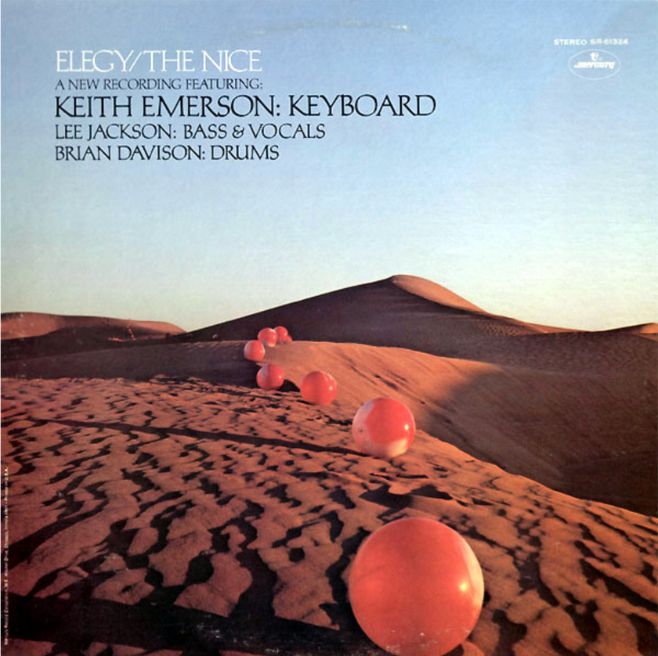
‘I don’t often dream images, but I did dream this one,’ says art director Storm Thorgerson of this album cover for The Nice. ‘I had envisioned a desert where the vastness and atmosphere felt appropriate, but the scene was too empty. An addition was quickly made, namely an unending line of red footballs stretching into the distance as if they might cross the whole desert.’
Because this album cover was designed in the days before digital image editing software, the photo manipulation had to be accomplished manually, with Thorgerson driving to the Sahara in a small van full of red plastic balls. ‘We placed them in a line trying to avoid footprints and took a picture just as the sun went down.’
Thorgerson became known as an art director for rock bands through his work with Pink Floyd, having attended school with some of its members. He was the brains behind such iconic Floyd covers as The Dark Side of the Moon and Animals, as well as for other art for bands including Led Zeppelin, Muse, Black Sabbath and 10cc.
Elegy is the final album by prog rock band The Nice, before the members went on to work on other successful projects (including legendary prog supergroup Emerson, Lake & Palmer). It consists of live versions of earlier songs, including a studio take of Tchaikovsky’s Pathétique Symphony.
20. Joni Mitchell: Blue (1971)
Written in the immediate aftermath of her break-up with singer-songwriter Graham Nash and during an intense relationship with singer-songwriter James Taylor, Blue is now considered one of the greatest albums of all time – a jewel in Mitchell’s output and shaped by the strong emotions she was experiencing at the time. A rumination on sadness and an evocation of these complex emotions, the album features tracks such as the deeply personal ‘A Case of You’.
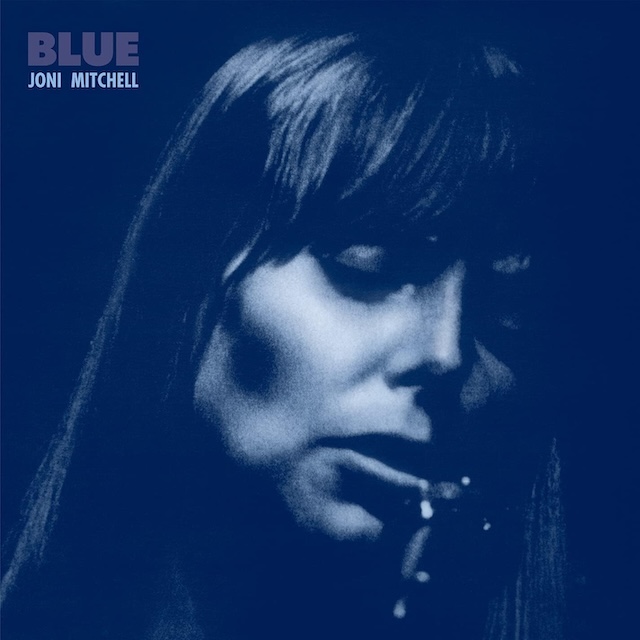
Reflecting the album’s title and mood, its cover is a dark, blue-toned photograph of Mitchell singing into a microphone. The photographer draws in close to create an intimate portrayal of the great Canadian singer-songwriter.
19. Fleetwood Mac: Rumours (1977)
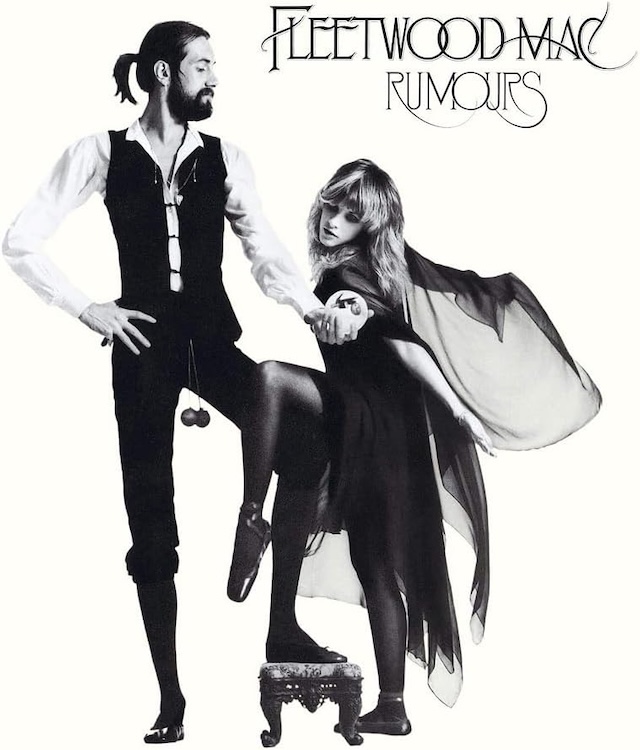
The cover of Fleetwood Mac's iconic 1977 album Rumours is nearly as recognisable as the music within, with a stylised shot of Mick Fleetwood with his foot raised on a stool and Stevie Nicks in her ‘Rhiannon’ stage persona, an image based on the song ‘Rhiannon’ from the band’s eponymous album about the legend of a Welsh witch. Fleetwood is seen holding a crystal ball, with a good-luck charm on his legs, believed to be a stolen old-fashioned toilet chain that he used to decorate his drum kit during live performances.
18. Carole King: Tapestry (1971)
During the 1960s, Carole King made music with her husband, the songwriter Gerry Goffin, until their split in 1968, when she transitioned to a solo performing career and moved to California. Her debut album Writer was released in 1970, with the critically acclaimed Tapestry coming the following year, quickly becoming one of the greatest albums of all time.
The songs on Tapestry continue her musical transformation: and several reflect the emotional upheaval of life after divorce, most notably the resigned heartbreak of 'It’s Too Late'. Then there's 'So Far Away', whose longing for someone who is absent fits the album’s broader themes of separation, independence and rebuilding a life.
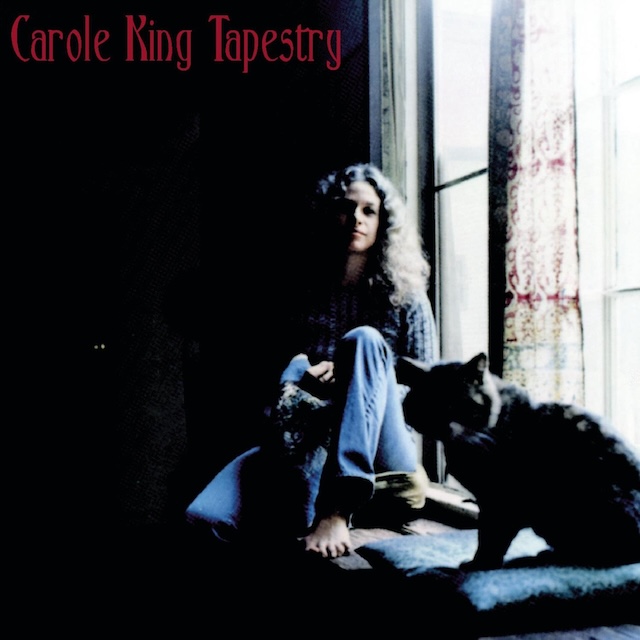
The album’s cover is an intimate portrait of the artist at her home in Laurel Canyon, California. She is seen sitting barefoot on a bench beside a window, holding a tapestry she made herself. In the foreground is King's cat Telemachus, named after the mythological son of Odysseus, which adds to the feeling of an impromptu, at-home snapshot.
17. Elton John: Blue Moves (1976)
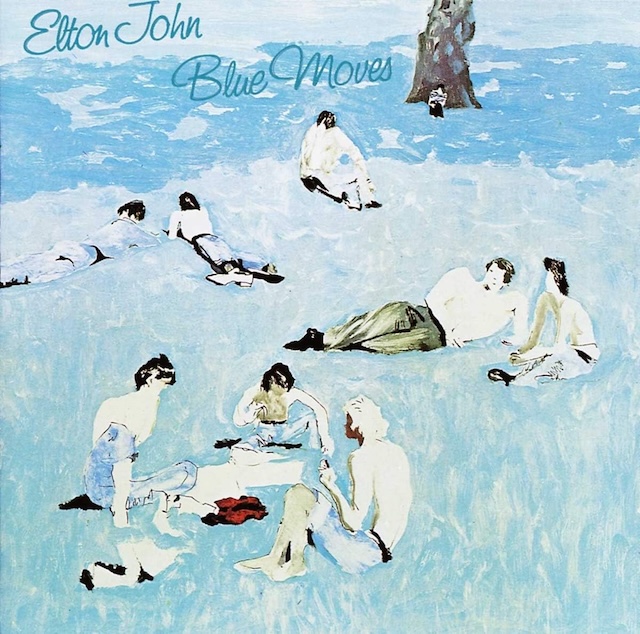
Elton John’s 11th studio album sees him experimenting with other musical genres, including orchestral elements and extended song lengths, with performances by the Martyn Ford Orchestra and London Symphony Orchestra. The first single from it was ‘Sorry Seems to Be the Hardest Word’, indicative of the album’s reflective tone.
The album’s artwork is a painting by British artist Patrick Procktor, titled The Guardian Readers and painted during a 1974 trip to Johannesburg. Its blue hues and melancholy feel perfectly reflect the album’s mood.
16. Peter Gabriel: Scratch (1978)
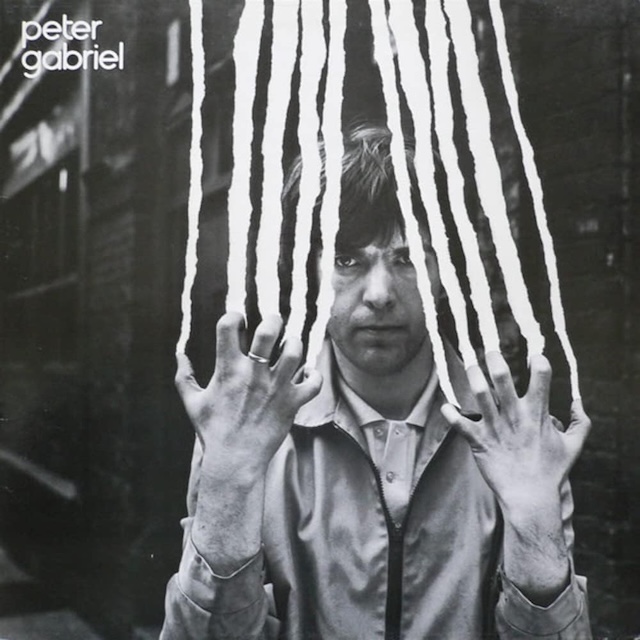
No complicated editing was required for Peter Gabriel’s second studio album. The cover gives the illusion of Gabriel tearing at his own image, but the effect was achieved by gluing strips of torn paper onto a photo of Gabriel who stood in the pose. Tipp-Ex correction fluid was then used to smooth the spots where the strips met his fingers. Like many of the other album covers featured here, the design was masterminded by design agency Hipgnosis.
Technically, the album’s title isn’t Scratch. Gabriel wanted the cover to be associated with its cover rather than its name, so decided against giving it a specific name, just releasing it eponymously again. His wishes were granted, but in doing so, the album has become synonymous with the album, which is now referred to by the name of the artwork to differentiate from Gabriel’s other eponymously titled albums.
15. The Rolling Stones: Some Girls (1978)
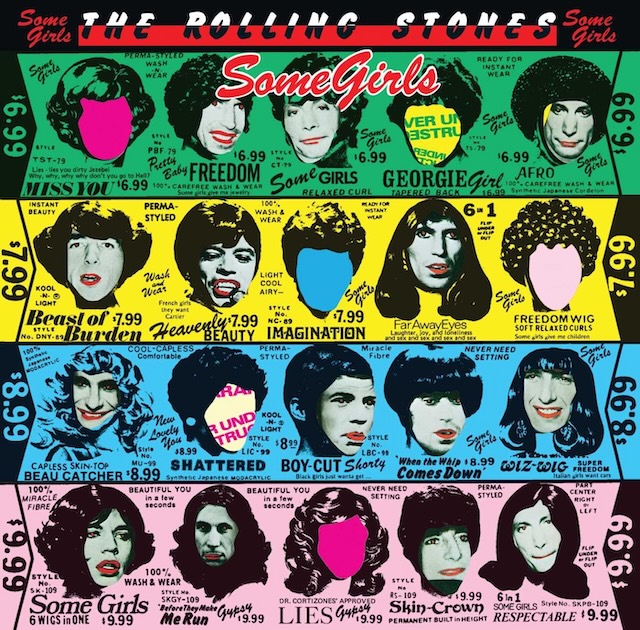
By the time of their 14th studio album, the Stones' popularity was in decline, with newer rock bands dominating the market. Some Girls, though, was a big success. Exploring dance music and disco influences, the album’s vibrant energy is matched by the pop art aesthetics, vivid colours and repeated motifs on the cover.
The cover is designed by Peter Corriston, with illustration by Hubert Kretzschmar, who also worked on the Stones’ following three albums. Using cut-out silhouettes, the bold and graphic cover sees the Rolling Stones’ faces alongside female celebrities in a copy of an old advertisement for wig products by Valmor Products Corporation, a cosmetics company targeted at African-American consumers.
One of the reasons this album cover has made this list is because of the drama that ensued around it. The first printing was censored as the Stones couldn’t get permission to use the actors’ images. Many of the celebrities threatened to sue for the use of their likenesses without permission, including Liza Minnelli (representing her mother Judy Garland), the estate of Marilyn Monroe, Raquel Welch, Lucille Ball and Farrah Fawcett. Valmor also took legal action against the cover.
After this, the album was reissued with a design that removed all celebrities and references to Valmor advertisement.
14. The Who: Who’s Next (1971)
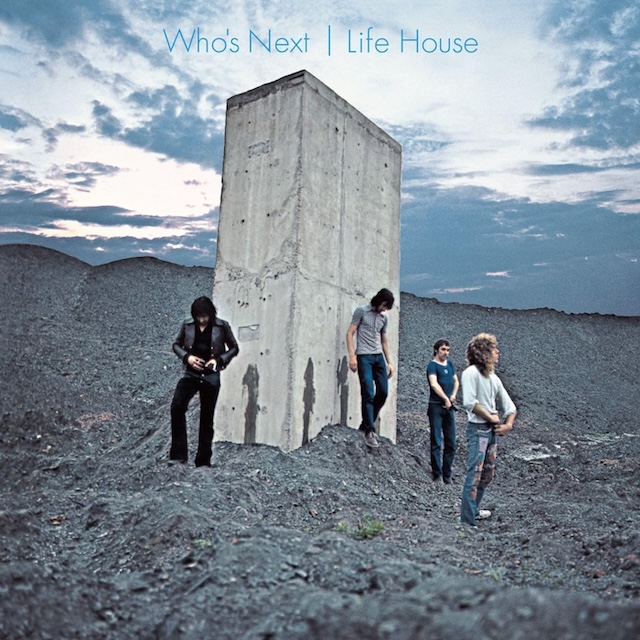
The album cover for The Who’s 1971 album was captured while the band was on tour, taken at a slag heap in South Yorkshire. The band pose against a concrete plinth protruding from the slag heap, a urine mark down the side of it. Referencing the monolith in the 1968 film 2001: A Space Odyssey, the otherworldly image reflects the content of the album, a development from the Lifehouse project the band had been working on – an unfinished science fiction multimedia rock opera.
The cover shot was taken by Ethan Russell, the same photographer as the Beatles’ Let It Be album cover, and the dramatic sky backdrop was added in post-production to create an ominous effect.
13. The Beatles: Let It Be (1970)
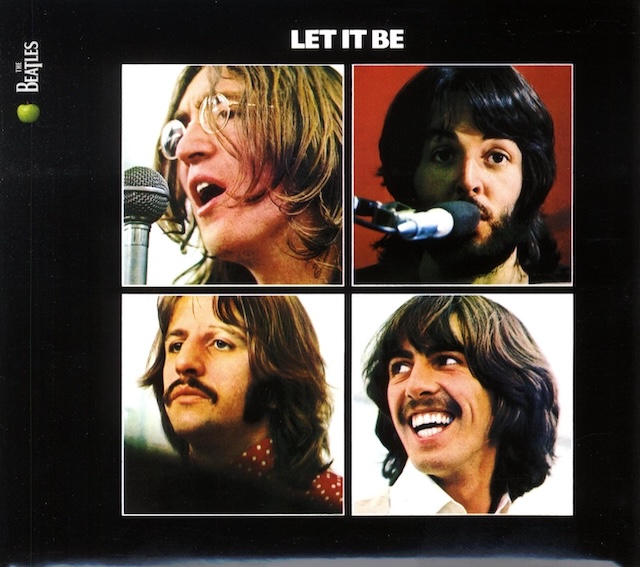
In a story made famous again more recently in Peter Jackson’s film The Beatles: Get Back, the Let It Be album was the Beatles’ 12th and final studio album, released nearly a month after the official announcement of their break-up. Designed by John Kosh, the cover has close-up, cropped-in individual photos of the four band members, taken by Ethan Russell, showcasing their individual looks and features. The photos were taken during the rehearsal sessions at Twickenham Studios.
As is the case with several other Beatles albums, the cover doesn’t feature the band’s name – most likely due to the fact that by this point, the Beatles had global fame and were household names.
12. Black Sabbath: Black Sabbath (1970)
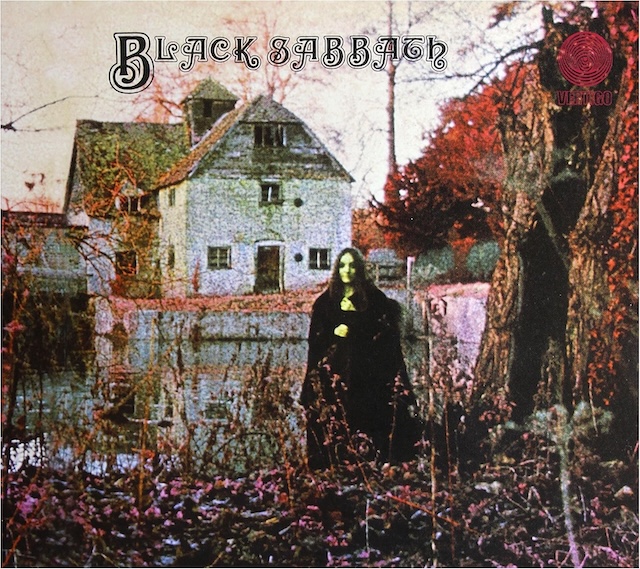
Black Sabbath's debut is considered to be the first true metal album, birthing the heavy metal genre and paving the way for many others working in this dark artform. Its cover is predictably haunting: an image shot by photographer Keith McMillan at Mapledurham Watermill on the River Thames in Oxfordshire.
The model is Louisa Livingstone, whose identity has only been revealed in recent years, and who is seen here wearing a black cloak and shrouded in mist created by a smoke machine. The band’s name is etched in a classic Gothic font, which became synonymous with the genre of heavy metal, and the grainy quality of the image matches the chilling tone of the music.
11. Neil Young: On the Beach (1974)
After the massive global success of Harvest, Neil Young released a trio of albums later referred to as the ‘Ditch Trilogy’, named after the feelings of over-exposure, disillusionment and melancholy Young was grappling with post-Harvest. After Time Fades Away (1973) came On the Beach (1974), followed by Tonight’s the Night (1975).
The mellow mood of the album has been attributed to the homemade concoction of sautéed marijuana and honey Young and his band consumed and nicknamed ‘honey slides’ during production.
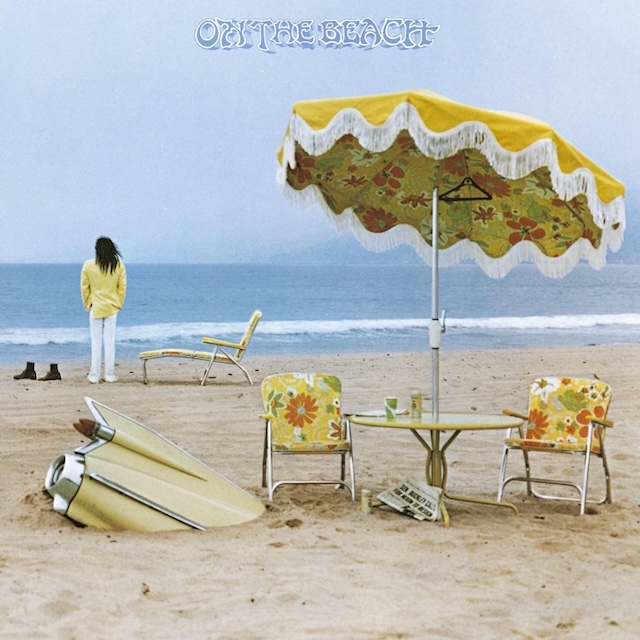
Its cover image features Young facing the ocean at Santa Monica beach with an umbrella and a 1959 Cadillac sticking out of the sand. Young referred to it as one of his favourite album covers, writing about it in Waging Heavy Peace: A Hippie Dream, his first autobiography, published in 2012. ‘Gary [Burden, art director] and I travelled around getting all the pieces to put it together,’ he wrote.
‘We went to a junkyard in Santa Ana to get the tail fin and fender from a 1959 Cadillac, complete with taillights. We picked up the bad polyester yellow jacket and white pants at a sleazy men’s shop. Finally we grabbed a local LA paper to use as a prop. It had this amazing headline: SEN. BUCKLEY CALLS FOR NIXON TO RESIGN. That was the creative process at work.’
10. Emerson, Lake & Palmer: Tarkus (1971)
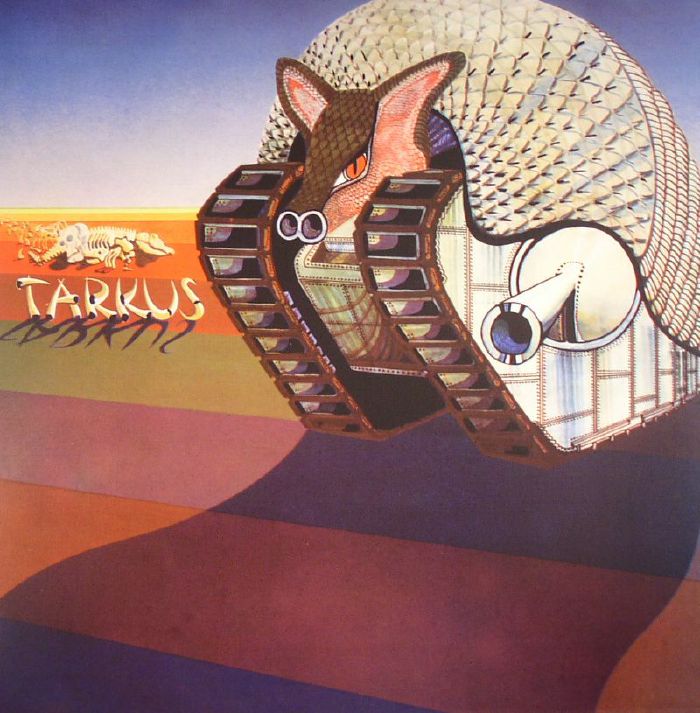
An armadillo with tank tracks. A volcano. A manticore. Several other creatures that appear to have escaped from a particularly feverish science-fiction comic. Emerson, Lake & Palmer’s Tarkus cover is 1970s prog excess distilled into a single image – and somehow it works.
The artwork was painted by Scottish artist William Neal, who had originally doodled the unlikely armadillo-tank almost as an afterthought. Keith Emerson spotted it, liked the image and asked Neal to develop it into a visual story to accompany the album’s epic title track. The resulting gatefold unfolds like a miniature graphic novel, following Tarkus from its emergence beside a volcano through battles with a series of bizarre hybrid creatures, culminating in a confrontation with a manticore.
The imagery was intended to suggest mutated destruction and the futility of war, but its wonderfully eccentric appearance has made Tarkus one of progressive rock’s most enduring visual creations. It is difficult to imagine a better illustration of a decade when rock musicians apparently believed that no idea was too strange to put on an album cover.
9. Electric Light Orchestra: Out of the Blue (1977)
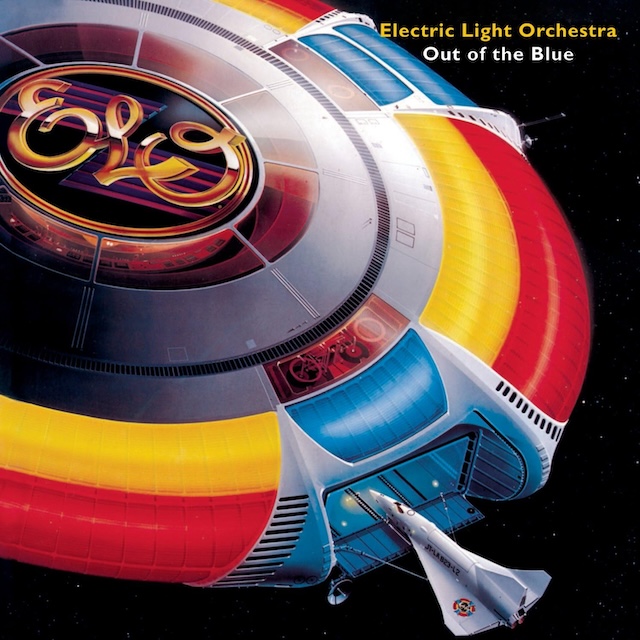
Written in three and a half weeks as ELO’s frontman Jeff Lynne spent a highly productive spell in a chalet in the Swiss Alps, the seventh studio album by British rock group Electric Light Orchestra was one of the band’s most successful – and one of the first pop albums to extensively use the vocoder, an audio processor that transforms sounds and synthesizes them. 'Sweet Talkin' Woman' is a prime example of the vocoder at its best.
The album cover reflects the innovative rock sound and space-age twist within the music of the ELO in its retro-futuristic design. It features a large spaceship, based on the logo featured on the group’s previous album, A New World Record. The number JTLA 823 L2 is written on the shuttle arriving at the space station, which is the original catalogue number for the album. The band continued the space theme onto the live stage, performing inside a flying saucer stage set.
8. Pink Floyd: Animals (1977)
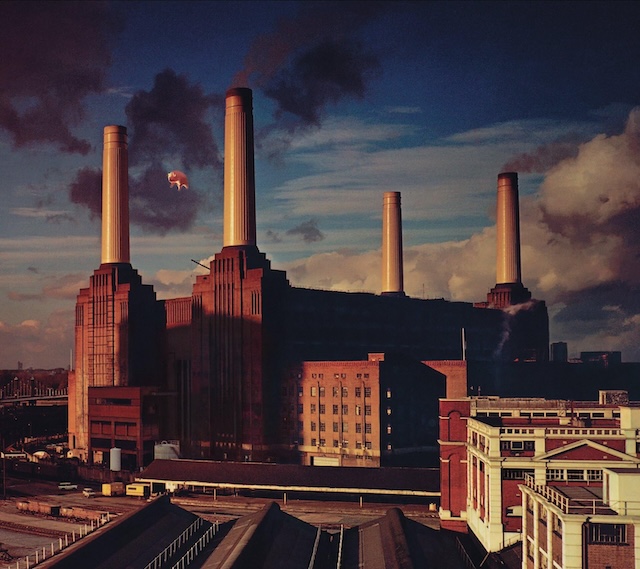
No doubt about it, Pink Floyd and their long-term designer Storm Thorgerson are behind some of the most impactful album covers of the decade. In fact, nearly all their album artworks could have featured on this list. The story behind Animals ranks them particularly highly, however.
A concept album focusing on the sociopolitical conditions of 1970s Britain, Animals is loosely based on George Orwell’s 1945 dystopian novella, Animal Farm.
Bassist Roger Waters lived near Clapham Common, London, and regularly travelled past Battersea Power Station, the familiar skyline that graces this album cover. At this time, the power station was approaching the end of its life. The single building contained two power stations: Battersea A and Battersea B. A was decommissioned in 1975, and in 1980 the structure was given listed status. B was closed three years later. The building remained empty until 2014, falling into ruin, but has since been dramatically redeveloped.
The Animals cover shows Battersea Power Station with an inflatable pig floating between its chimneys. Surprising, perhaps, to today’s listeners, is that the pig was real. Pink Floyd commissioned Balloon Fabrik – a German company that had previously made Zeppelin airships – and Australian artist Jeffrey Shaw to build a 12m pig balloon, known as Algie. He was then inflated with helium and moved into position.
They hired a marksman who could fire if the pig escaped, but only for one day – and difficult weather conditions meant they had to work into the second day, and the pig escaped. (There’s even an urban legend that says that flights from London's Heathrow Airport were grounded that day, as the enormous porcine simulacrum roamed free). The pig eventually landed in Kent, where it was discovered by a local farmer.
Eventually though, the photos from the earlier days were deemed to be better – so the pig ended up being superimposed, making the entire process redundant (but very amusing). In the years since, Pink Floyd has used the pigs as protest figures, marked with political statements and slogans.
7. 10cc: Deceptive Bends (1977)
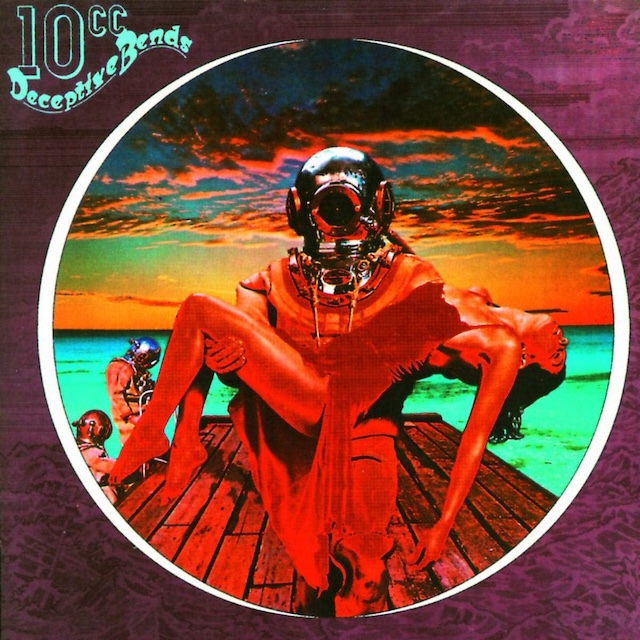
The fifth studio album by English rock band 10cc was the first released after the departure of founding members Kevin Godley and Lol Creme. The title of the album, Deceptive Bends, was taken from a sign on the southbound A24 between Leatherhead and Dorking in Surrey, symbolising the band’s unexpected shifts in direction.
The cover artwork was designed by Hipgnosis, Storm Thorgerson’s agency with several other highly respected graphic designers. The agency provided other famous rock album artworks including Electric Light Orchestra’s debut self-titled album.
6. Yes: Tormato (1978)
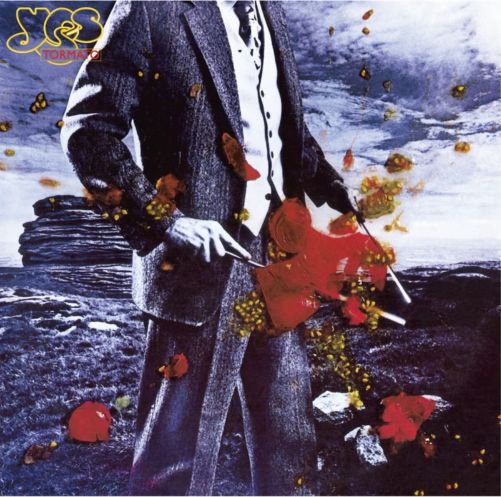
Sometimes the best album covers are the result of meticulous planning. Sometimes someone throws a tomato at them. Yes’s Tormato belongs firmly in the second category.
The cover was originally supposed to feature photographs taken around Yes Tor in Devon, reflecting the album’s original working title, Yes Tor. But the band and Hipgnosis struggled to agree on the artwork, and a tomato was thrown at one of the rejected images. Exactly who threw it remains disputed – Rick Wakeman, guitarist Steve Howe and Hipgnosis designer Aubrey Powell have all been credited with different versions of the story – but the resulting splattered image was photographed and became the sleeve.
It was an inspired accident. The tomato streaking across the picture gives the otherwise rather solemn image of a man with divining rods a wonderfully ridiculous quality, while the title Tormato turns the whole episode into an elaborate prog-rock in-joke. Even Hipgnosis, masters of carefully constructed surrealism, occasionally arrived at something extraordinary by simply throwing fruit at it.
5. Wishbone Ash: Argus (1972)
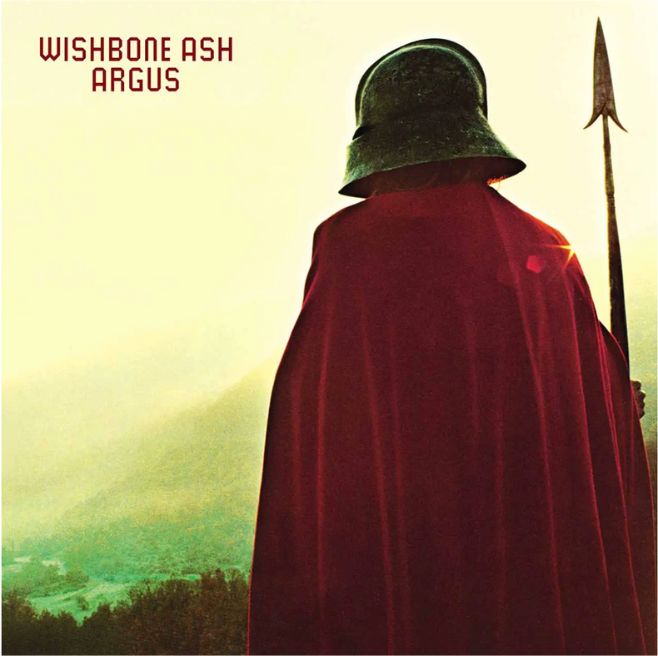
The cover of Wishbone Ash's greatest album is a masterpiece of atmospheric mystery, featuring a lone warrior in a helmet and cape overlooking the misty Gorges du Verdon in France. Designed by the legendary Hipgnosis studio, the image perfectly captures the album’s 'medieval-progressive' spirit without relying on literal fantasy tropes.
Its cinematic scale and haunting sense of watchfulness made it an instant classic, reflecting the dual-lead guitar harmonies and epic storytelling found within the grooves. Even decades later, the silent, sentinel figure remains a definitive visual shorthand for the grandeur and mystic exploration that defined 1970s British rock.
4. Deep Purple: Deep Purple In Rock (1970)
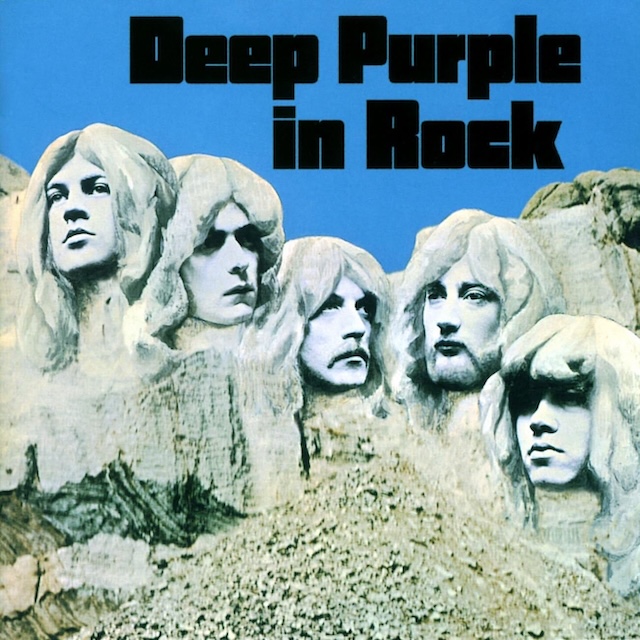
By the time Deep Purple released their fourth album in June 1970, they'd enjoyed commercial success in the US, but were yet to break Europe. This album changed things, helping them peak at No. 4 on Uk charts and remaining in the charts for more than a year, cementing their popularity with European audiences.
This album cover depicts the features of Mount Rushmore, with photos of the band’s faces superimposed over those of the US presidents. An iconic cover, the artwork and music on this album cemented the band’s newly won rock-gods status.
3. Meat Loaf: Bat Out of Hell (1977)
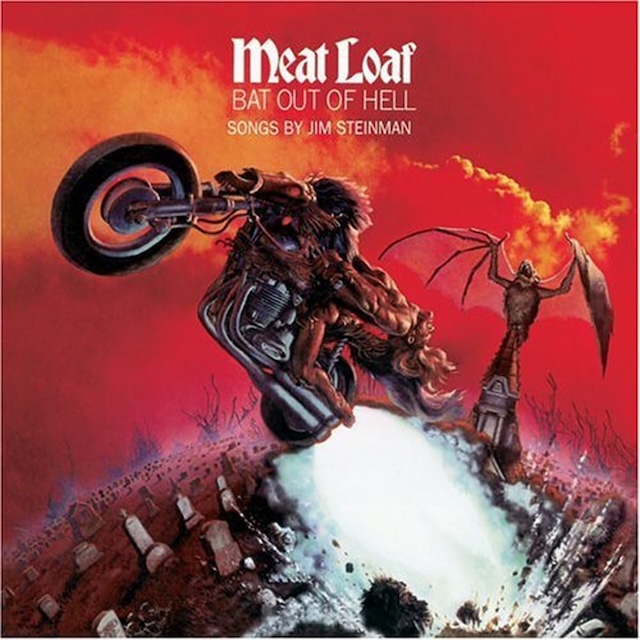
Talk about arriving with a bang. Meat Loaf’s debut set the standard for the epic album covers he would become known for across his career. The design features a long-haired man riding a motorcycle, bursting out of the ground in a graveyard, with a bat in the background sitting atop a mausoleum. The image explodes with movement and dynamism, the very embodiment of Meat Loaf's high-octane, theatrical rock.
The album itself was developed from the musical Neverland, a futuristic rock version of Peter Pan, which composer Jim Steinman had written a few years earlier. Steinman then worked with Meat Loaf on this album, bringing some of those songs to life in a very different guise. Meat Loaf’s backing band became known as the Neverland Express.
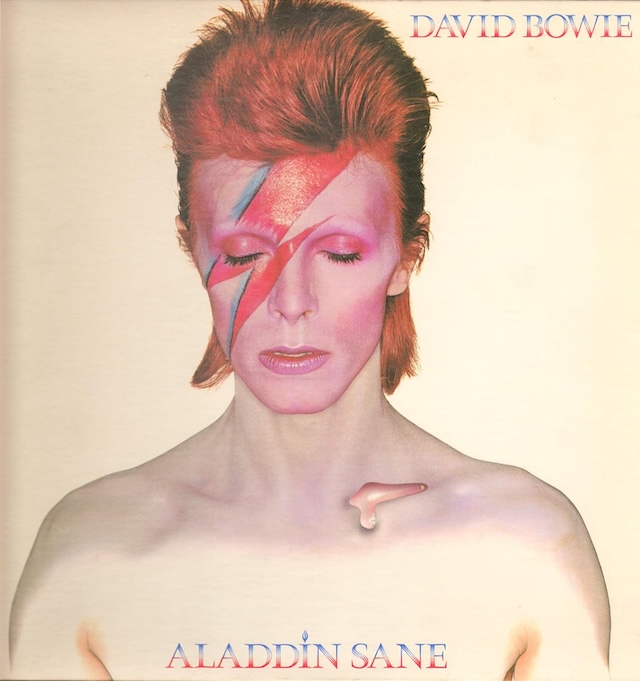
2. David Bowie: Aladdin Sane (1973)
David Bowie’s breakthrough album The Rise and Fall of Ziggy Stardust and the Spiders from Mars was released in 1972, so this subsequent album was his first written as a global icon. Many of the tracks were written on the road while on the Ziggy Stardust tour, so you can hear the influence of American glam rock sounds.
Aladdin Sane was an opportunity for Bowie to have a break from the Ziggy Stardust character, creating a new persona through which to explore a raft of new themes and tackle the complexities of newfound fame. The title is a pun on ‘A Lad Insane’, which is believed to have been the original title of the album.
Shot by Brian Duffy in a North London studio, the Aladdin Sane cover features a topless Bowie with red hair and a red-and-blue lightning bolt splitting his face in two. As with most Bowie covers, it is an exploration of identity and self-expression. A teardrop is seen melting down his collarbone in a death mask-like ghostly silver.
At the time, this was the most expensive cover art ever made, using a seven-colour system rather than the usual four. Bowie’s manager insisted on making it a real statement, so the record label would promote it more extensively after the success of the Ziggy Stardust album. Similarly to the Miles Davis cover, the design is a juxtaposition of calm and drama, Bowie’s serene face with closed eyes set against the electric make-up and design.
1. Pink Floyd: The Dark Side of the Moon (1973)
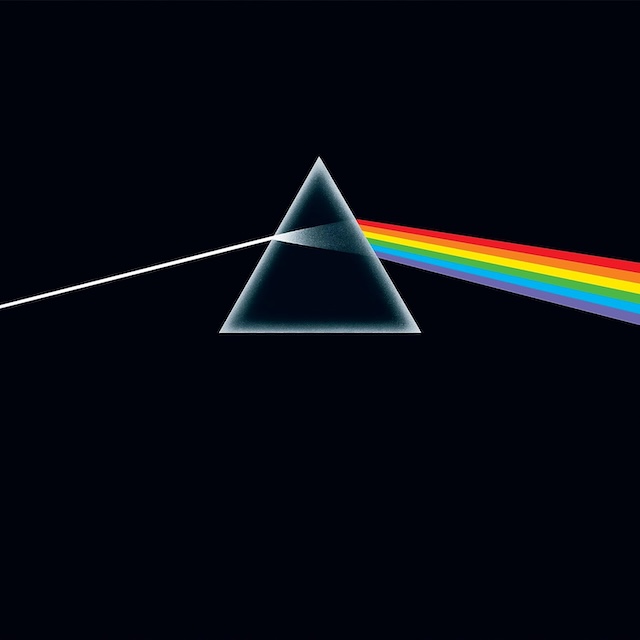
Few album covers are as iconic. Initially conceived as a concept album focusing on the pressures facing the band, Pink Floyd's towering 1973 masterpiece was developed through live performances, exploring themes including greed, fame and mental illness. The hole left in the band by the departure of their mercurial former frontman Syd Barrett also loomed large in the music.
The album sleeve showcases the powerful impact of minimalist design, an enduring symbol of a prism and the colour spectrum projected through it at the centre. Designer and regular Pink Floyd collaborator Storm Thorgerson had seen the visible spectrum in a physics textbook, and was captivated by its effect. A similar theme had also been used on the cover of a New York Philharmonic 1942 performance of Beethoven’s Emperor Concerto, in a design by Alex Steinweiss, the graphic designer heralded with the invention of album cover art as a form.
Pink Floyd had wanted a simple, bold design that represents the themes of the album and their style. The bright design against a backdrop show the diversity of their musicality and approaches and the beautiful complexity that can be created from simplicity.