December 1969: the Rolling Stones plan to close their U.S. tour with a message of unity – staging their very own 'Woodstock West'.
Newspapers had speculated on the feasibility of a free concert in San Francisco’s Golden Gate Park. Mick Jagger, feeling the sting of criticism about ticket prices, declared an open-air gig on December 6 – with Woodstock behind them, a new era beckoned.
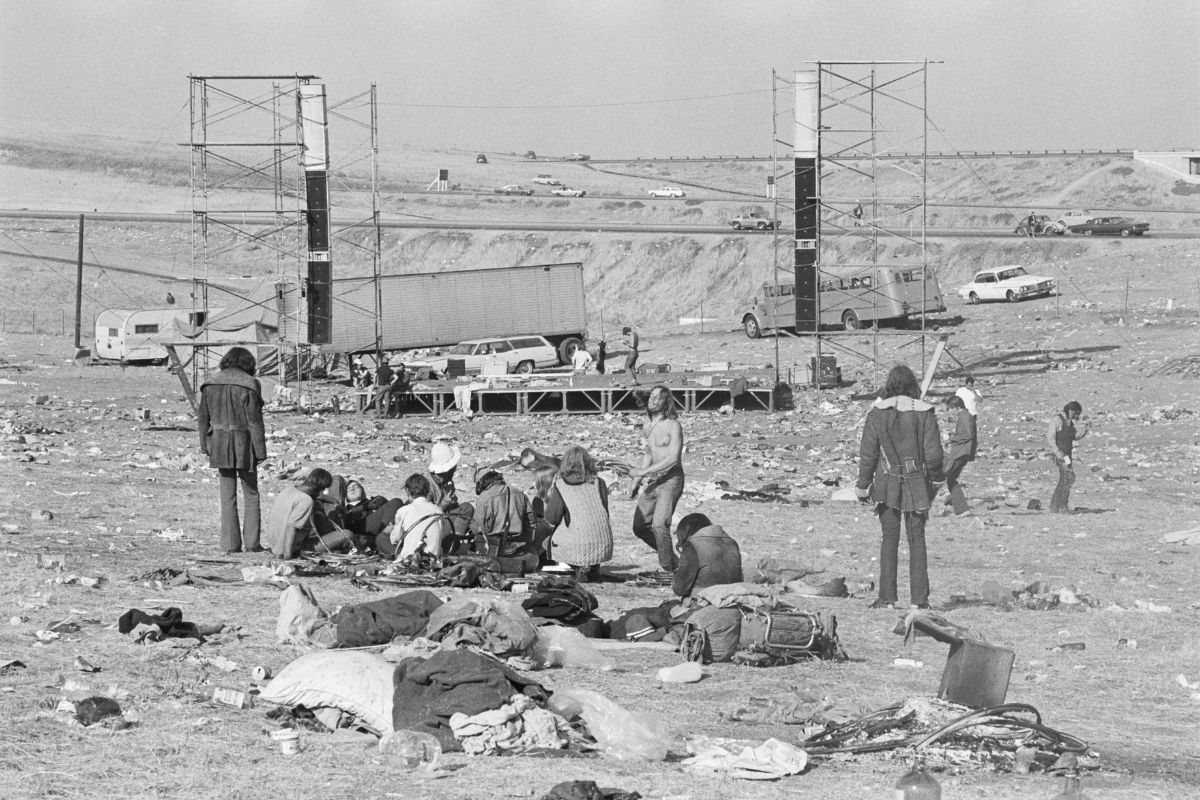
Yet permits fell through, forcing a rapid sequence of relocations. Sonoma Raceway was rejected over logistical disputes, and on December 4, in desperation, the Stones accepted Altamont Speedway – a bleak, rusted racetrack with minimal infrastructure and ambiance. Overnight, crews scrambled to build a stage and sound system, often by flashlight, at the bottom of a slope, with only rope separating performers from the crowd.
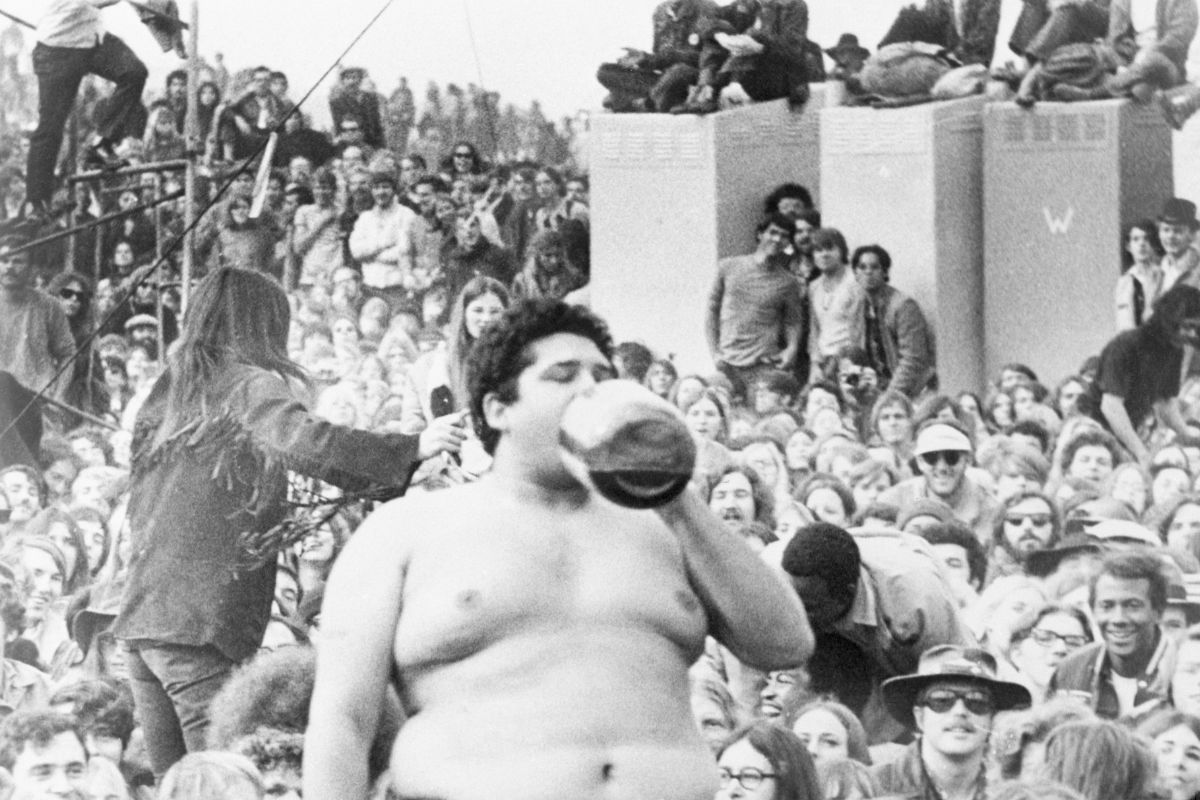
No toilets, no food... and bad acid
The Stones were keen to avoid a police presence at the concert - they had their own reasons to be wary of the police, including an ongoing series of drug busts, plus they felt that a police presence would detract strongly from the concert's countercultural vibe. So, notoriously, the band arranged for the Hells Angels to ‘handle security’ – in return for $500 worth of beer.
The Hells Angels had experience of this sort of thing - they had handled security for earlier free concerts and Be-In-style events in San Francisco, including the famous Human Be-In in January 1967. But what worked as folklore – outsider guardians – proved catastrophic in practice: this was not San Francisco’s polite chapter but a rougher, younger, volatile one.
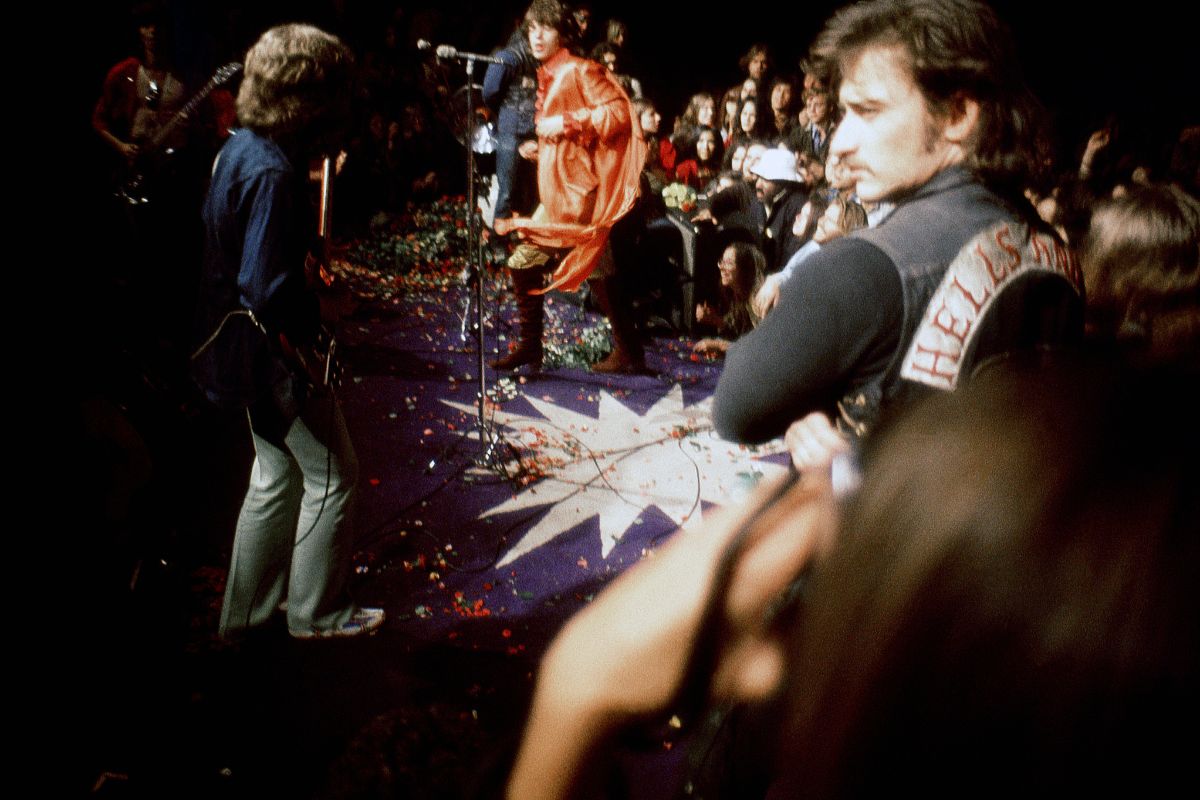
It was a perfect storm of bad preparation. No adequate toilets, no medical tents, no food, no water, a four-foot-high stage barely elevated from the crowd, tens of thousands pressed shoulder to shoulder, and bad acid muddled perception. Cold at night, hot in the day – this was a festival whose infrastructure collapsed before the first chord was struck.
3. Tension, turmoil, and an early bloodshed
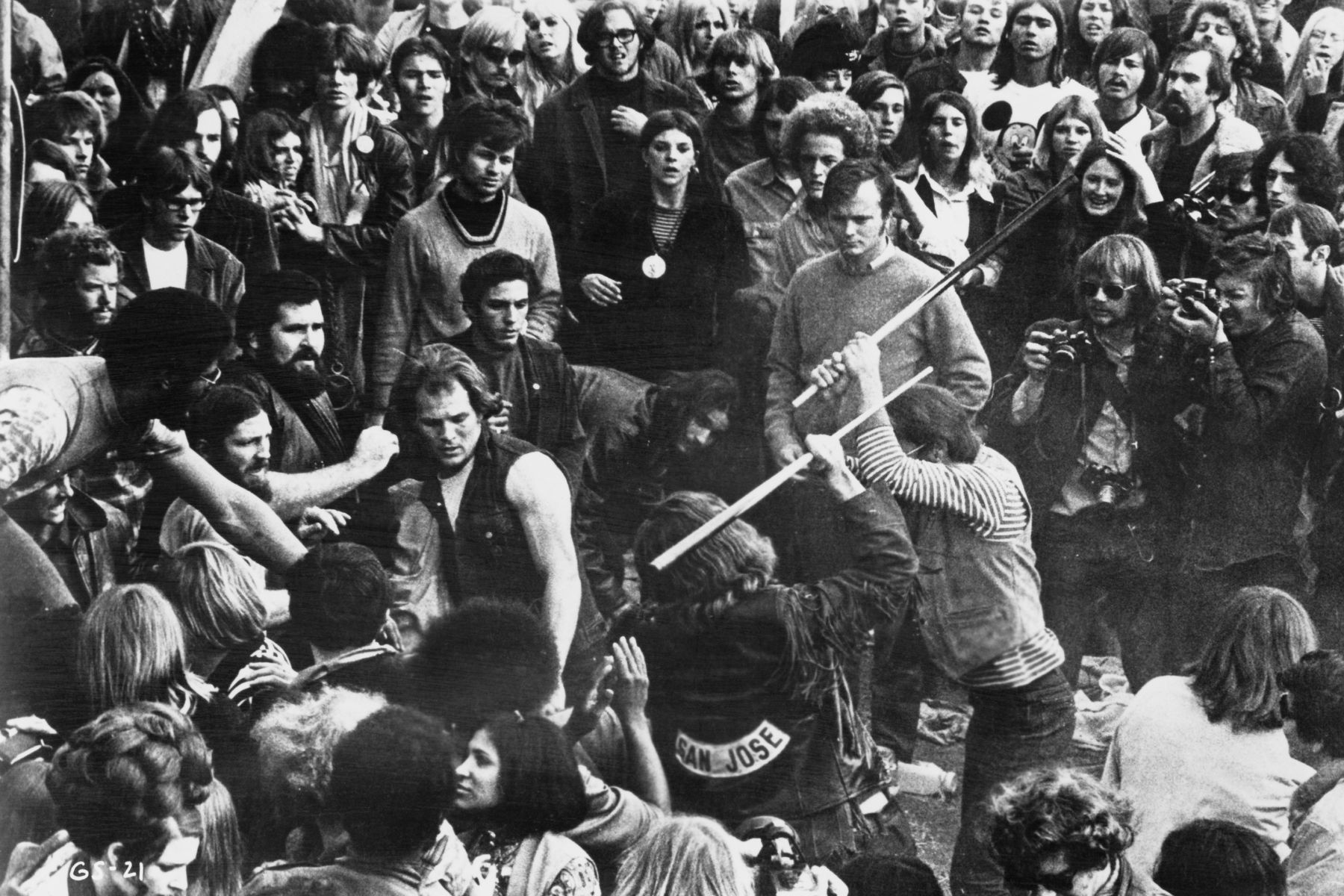
The opening set, from Santana, took place before an already chaotic crowd. Hells Angels, drunk and armed with sawed-off pool cues, fought fans, sometimes driving motorcycles into them. Next up, psychedelic pioneers Jefferson Airplane took the stage. Singer Marty Balin tried to quell the violence - and got knocked unconscious by an Angel for his pains.
Later, during a set by Crosby, Stills, Nash & Young, Stephen Stills was repeatedly stabbed in the leg with a sharpened bike spoke by a frenzied Hells Angel. The Grateful Dead wisely withdrew, unwilling to perform among the escalating danger.
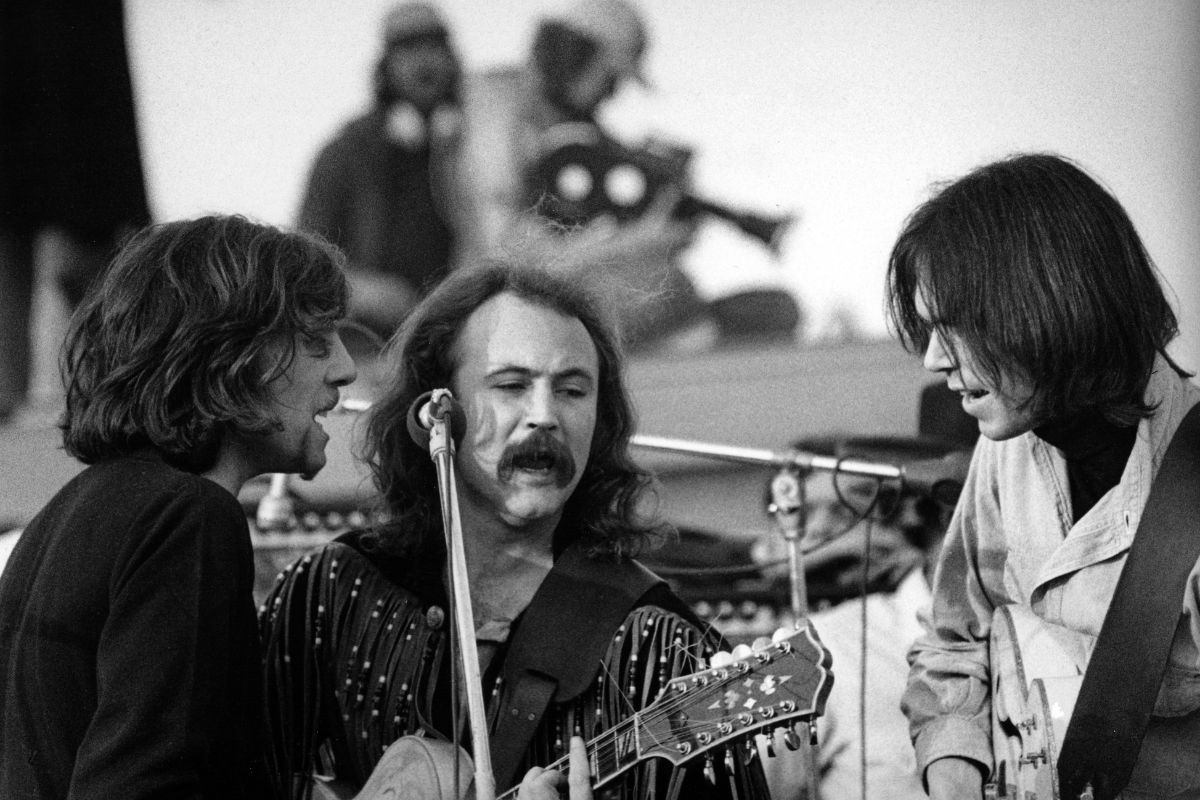
As dusk fell and the temperature dropped, the atmosphere turned toxic – heads slammed, minds altered, tensions snapping in a volatile crucible primed for tragedy.
Stones on stage: a prelude to disaster
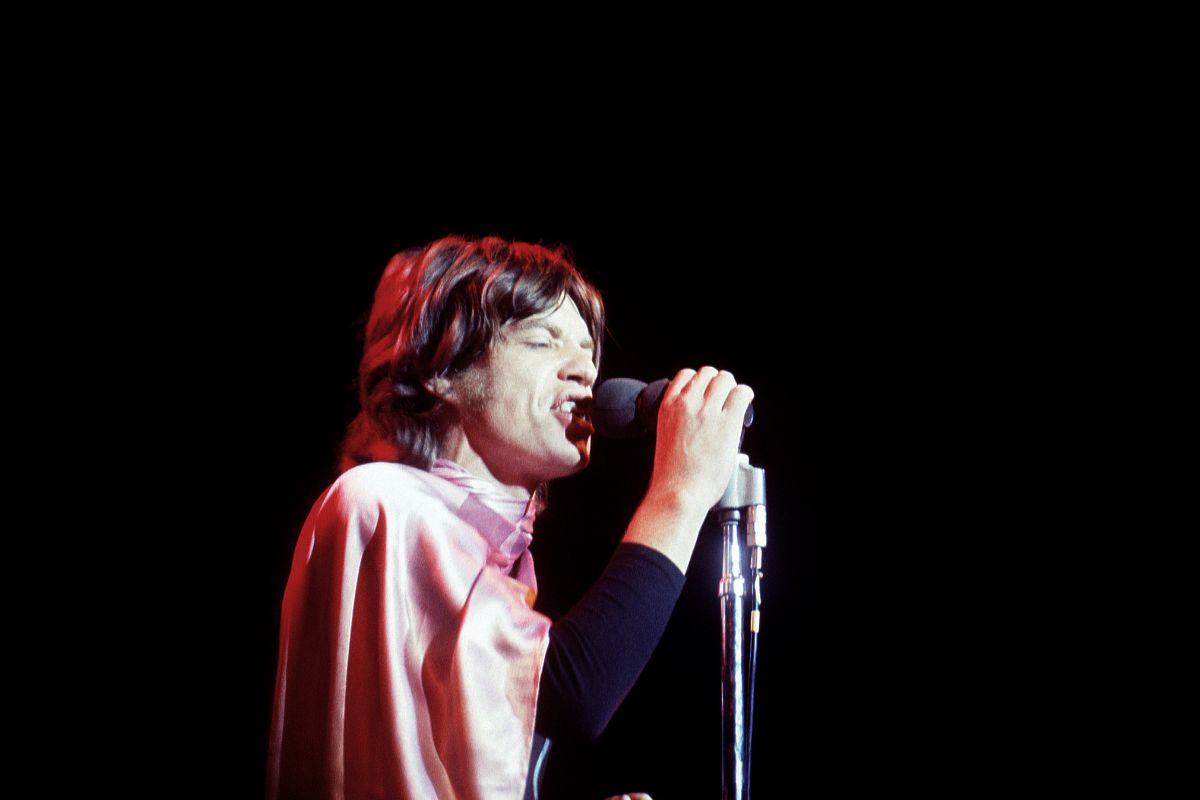
The Stones finally appeared, emerging through the chaos. Jagger, dazzling in his bat-winged shirt, danced under dim backlights, his face occasionally twisting in concern as violence swirled. Mick Jagger, having been struck in the head by a concertgoer moments after arriving by helicopter, appeared clearly unnerved by the chaos and called out, “Just be cool down in the front there, don’t push around.” The band began 'Jumpin’ Jack Flash', then attempted 'Sympathy for the Devil', only to be interrupted by skirmishes. The band tried to calm things; an Angel seized the mic to warn, “Cool it, or no more music.”
The Stones launched into 'Under My Thumb', but chaos resumed. Meredith Hunter, an 18-year-old from Berkeley, California, approached the stage and was forcefully pushed back by Hells Angels members hired to keep fans off the stage. Hunter then returned, drew a revolver, and was fatally stabbed and beaten by Hells Angels member Alan Passaro.
Gimme Shelter: darkness captured on film
Filmmakers Albert and David Maysles shot footage of the chaos at Altamont and incorporated it into their 1970 Stones documentary Gimme Shelter (incidentally, one of the greatest rock movies of all time). The film tellingly juxtaposes Jagger’s idealism (“This could be really something beautiful”) with the chaos and bloodshed that actually ensued.
The film did not spare the audience the chaos – nor did it erase the Stones’ culpability in their poor planning. Rolling Stone magazine’s scathing 20,000-word editorial described the concert as a blend of “diabolical egotism, hype, ineptitude, money manipulation, and … a fundamental lack of concern for humanity.”
6. The Final Blow to Idealism
Altamont was not Woodstock’s free, peace-driven mirror – it was its inversion. Violence, chaos, indifference, and death became the ledger that closed the chapter on the 1960s’ optimism. TIME’s photographer Ethan Russell, present amidst terror, later called it “the death knell of the peace-and-love dream.”
The event exposed the myth of countercultural brotherhood, revealing fault lines of violence, racial tension, class friction, and failed hubris. The long-haired youth and their dream died along with Hunter; the dream’s collapse was televised and distributed.
Aftermath: trials, denials, and long shadows
Passaro was arrested but acquitted in 1971; the jury ruled self-defence after viewing footage showing Hunter drawing his gun. The official case was closed decades later – he acted alone.
Public reaction was mixed. The Stones claimed ignorance – Jagger said they weren’t aware of the killing. Some band members initiated lawsuits. The Angels' chapter president, Sonny Barger, poured cold water on the “end-of-the-’60s” narrative, shrugging that for them it was “just another Hells Angels event.”
Then, rumours surfaced of an assassination attempt on Jagger – Angels demanding compensation for their beer-based ‘security,’ allegedly even plotting to blow him up via pontoon boat explosives. The plan failed, drowning conspirators rather than Jagger.
Did the 1960s die with Altamont?
Altamont’s legacy is indelible: it signaled the violent breakdown of an idealism built on music, youth, and peace. It remains etched as rock’s darkest day – a cautionary emblem of unchecked chaos: poor logistics, bad actors, and a dream abandoned.
Historian and journalist grieved the moral chasm that Altamont revealed. Ethan Russell likened being there to “being underwater… it was surreal.” Photos from that day are haunting portraits of fear, apathy, and a dream gone wrong.
In the decades since, Altamont has served as a warning: that rock’s utopian dreams demand far more than faith – they require structure, foresight, humanity, and respect for the crowd. The 1960s didn’t end with a flower tucked behind an ear – they died under the smeared blood, battered ideals, and failing optimism of Altamont.
Five more rock festivals that turned sour
While Altamont marked the dark end of the "Peace and Love" era, it was certainly not the last time a major festival descended into chaos. From logistical nightmares to genuine violence, here are five other rock festivals that went infamously wrong.
1. Woodstock ’99 (USA, 1999)
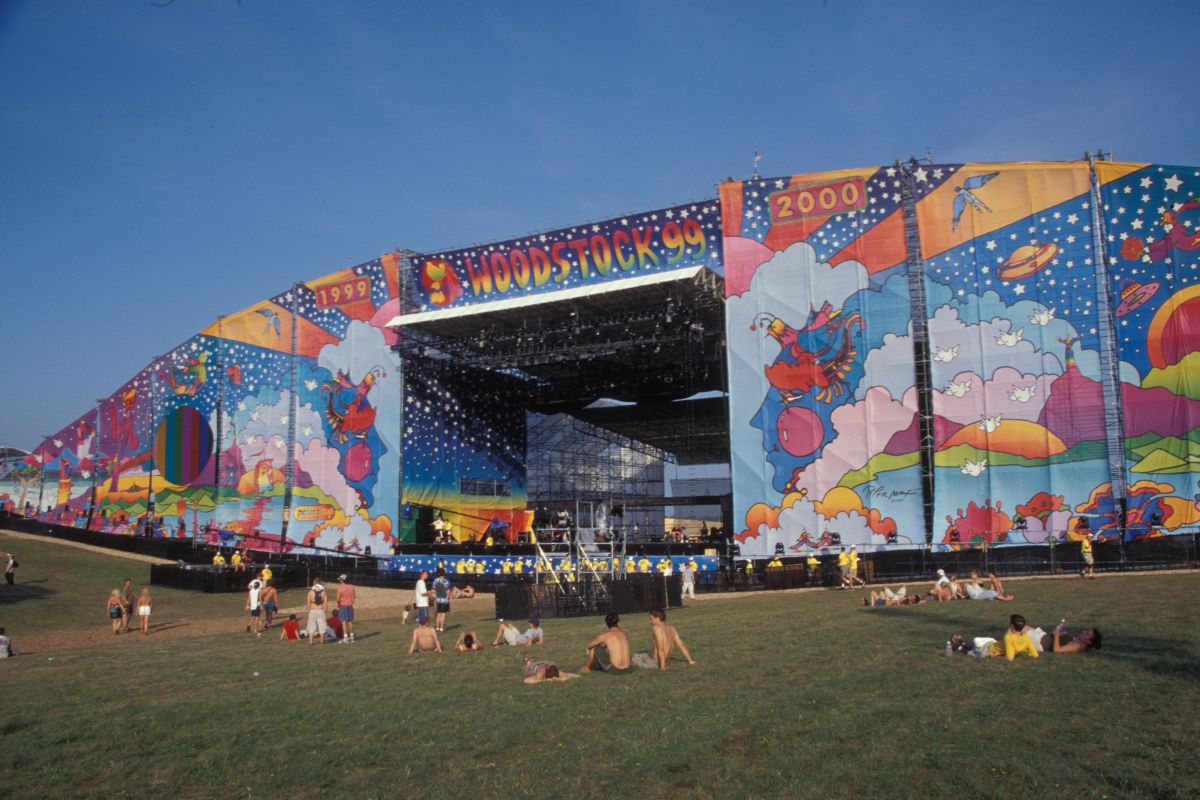
Intended to celebrate the 30th anniversary of the original 1969 "Summer of Love," Woodstock ’99 instead became a symbol of late-90s corporate greed and toxic aggression. Held on a scorching concrete airbase with almost no shade, attendees faced $4 water bottles and overflowing portable toilets.
The frustration boiled over during sets by Limp Bizkit and the Red Hot Chili Peppers, leading to widespread arson, looting, and multiple reports of sexual assault. By the final night, the site looked more like a war zone than a music festival.
2. Isle of Wight Festival (UK, 1970)
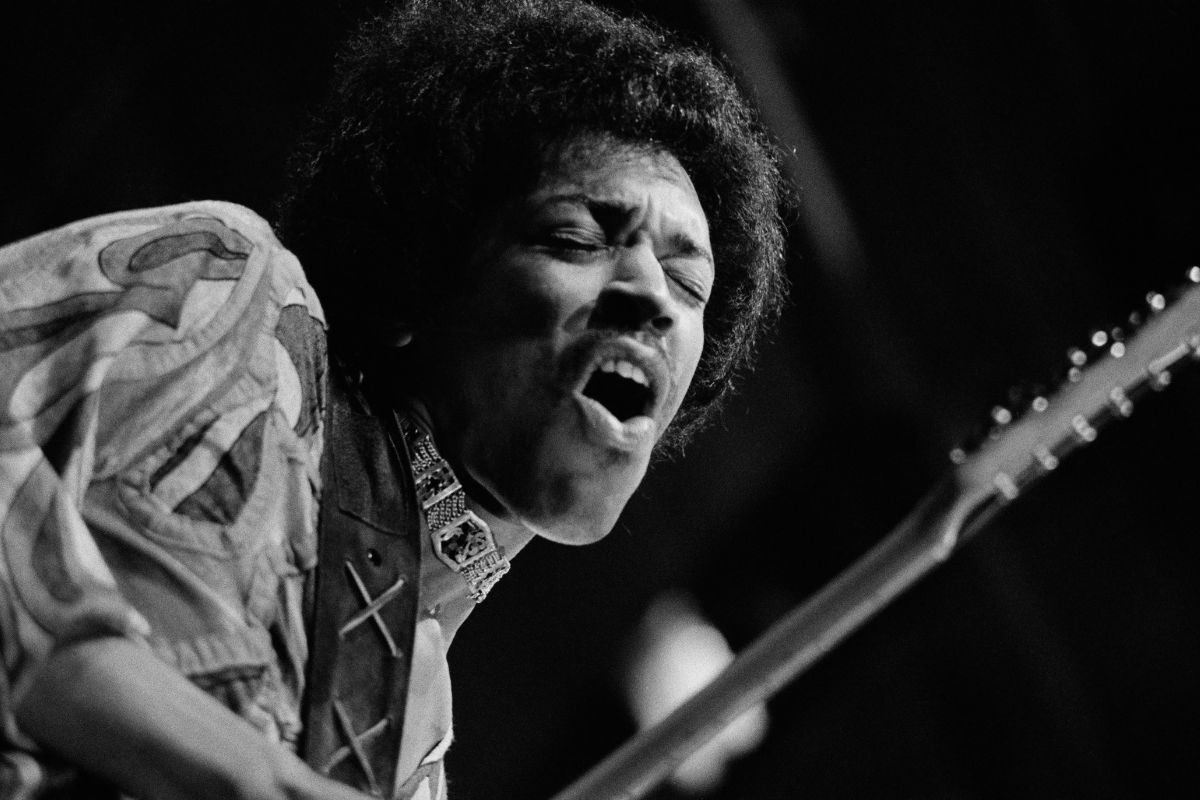
While the lineup was legendary – featuring sets from The Who, The Doors and Joni Mitchell, plus Jimi Hendrix’s penultimate performance – the festival was a logistical and social disaster. An estimated 600,000 people descended on an island equipped for a fraction of that number. Tensions flared between promoters and "anarchist" groups who demanded the music be free, leading to fans tearing down perimeter fences.
Joni Mitchell was famously reduced to tears on stage as she begged the rowdy, fence-crashing crowd for "a little respect." The chaos was so great that Parliament passed a law effectively banning large-scale festivals on the island for 32 years.
3. Powder Ridge Rock Festival (USA, 1970)
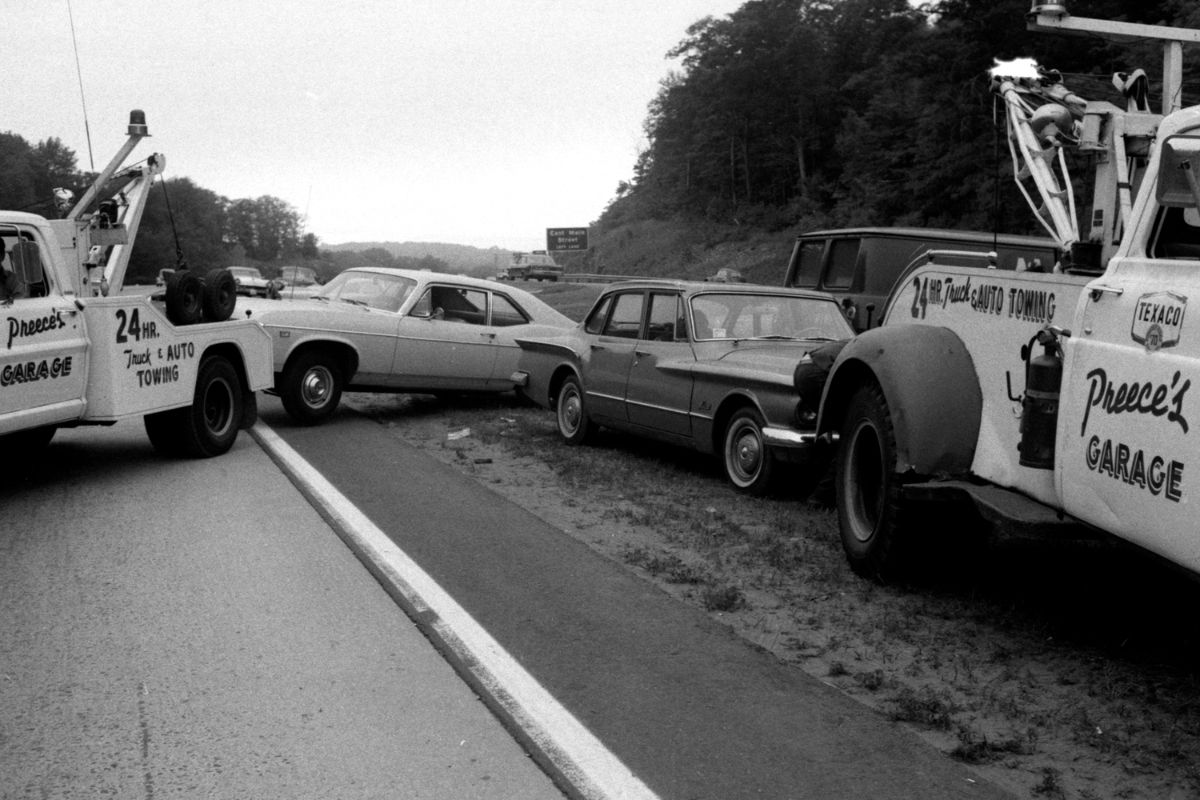
Powder Ridge is famous for being a "rock festival without the rock." The lineup was set to include such 1970 luminaries as Fleetwood Mac, Van Morrison, Janis Joplin, Allman Brothers and Little Richard. Just days before the event, though, a legal injunction banned the music. Some 30,000 fans showed up anyway – to find a ski resort with no food, no plumbing, and no bands. The result was a three-day, drug-fuelled non-event where volunteers treated hundreds of 'bad trips' per hour.
Only one artist, Melanie, managed to perform by using a Mr. Softee ice cream truck’s generator for power. It serves as a bizarre testament to the era's determination to congregate, even when the stage was empty.
4. Glastonbury: The 'Battle of Yeoman's Bridge' (UK, 1990)
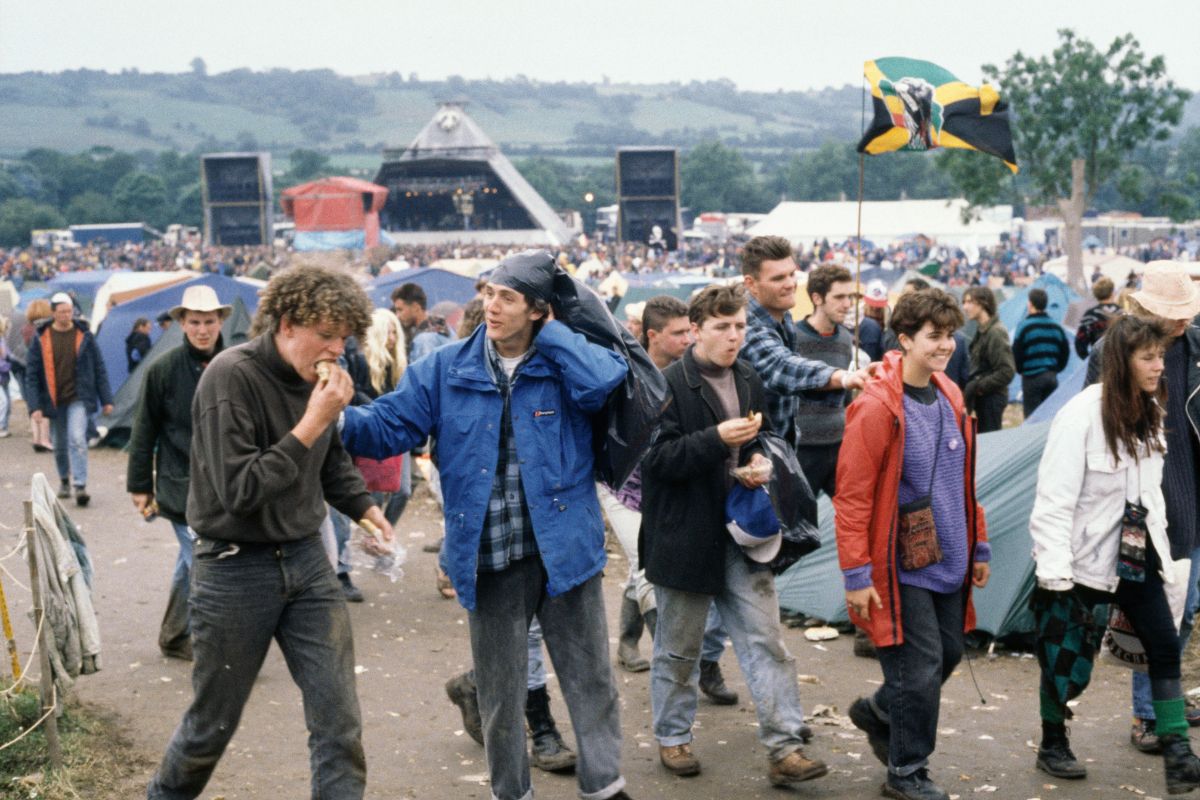
Glastonbury is usually a beacon of festival culture, but 1990 ended in a literal riot. After the music finished, a violent confrontation erupted between the festival's security teams and a group of New Age travellers. The clash involved stones, iron bars, and the burning of vehicles, leading to 235 arrests and over £50,000 in property damage. The violence was so severe that Michael Eavis was forced to cancel the 1991 festival to rethink security and the event's relationship with the local community.
5. Erie Canal Soda Pop Festival (USA, 1972)
Marketed as "bigger than Woodstock," this Indiana festival was doomed by triple the expected attendance and torrential rain that turned the grounds into a swamp. Food and water ran out almost immediately, leading to a Lord of the Flies-style atmosphere. When most of the headliners (including Joe Cocker and Black Sabbath) failed to show up due to the conditions, the enraged crowd rioted, eventually setting fire to the equipment trucks and the stage itself. It remains one of the most complete breakdowns of order in music history.
Pics Getty Images