Released on 22 November 1968 on the Beatles’ self-titled double album forever known simply as The White Album, ‘Sexy Sadie’ may not be one of the Beatles’ most well-known songs, but the story of its origin is one of the darkest of any song by the group who became synonymous with peace and love.
John Lennon discussed the song’s background in 1980: 'That was inspired by Maharishi. I wrote it when we had our bags packed and were leaving. It was the last piece I wrote before I left India. I just called him "Sexy Sadie" instead of "Maharishi, what have you done, you made a fool..." I was just using the situation to write a song, rather calculatingly but also to express what I felt. I was leaving the Maharishi with a bad taste. You know, it seems that my partings are always not as nice as I'd like them to be.'
But what had the Indian guru done to invoke John Lennon’s ire? Who was this mystic under whose spell the world’s four most famous faces had fallen, and is there any truth in the story that ‘Sexy Sadie’ was inspired by an alleged sexual assault? To find out, it’s necessary to go back to a year earlier.
The Beatles' greatest year
In many ways, 1967 was the Beatles’ annus mirabilis. Having said goodbye to the pressures of live performance that had dominated much of their lives since John Lennon and Paul McCartney had met at a Liverpool church fete some 10 years previously, the band were able to take the time to enjoy the fruits of their labours. Choosing to spend as long as they liked in the studio, they emerged triumphant as the famous Summer of Love broke with Sgt Pepper’s Lonely Hearts Club Band, which met with universal acclaim.
They were assured of their rightful place at the head of not just the music world, but the cultural revolution that was sweeping the western world. Their performance in July on the groundbreaking global Our World TV special saw them singing their new anthem ‘All You Need Is Love’ to an estimated 700 million people around the world.
But all was not as rosy as it may have seemed. After years of drug experimentation, and despite seemingly having everything four young men could wish for, the endlessly curious Fab Four were looking for answers. And so it was that they came across an unlikely teacher in the form of Maharishi Mahesh Yogi.
Who was Maharishi Mahesh Yogi?
Born in what is now Madhya Predesh, India in around 1911, the Maharishi had spent over a decade in solitary mediation in the Himalayas. Coming down from the mountains in the mid-1950s, he founded the Spiritual Regeneration Movement to promote Indian teachings to a wider audience. When he gave a lecture on the concept of Transcendental Meditation at the Hyde Park Hilton in London on 24 August 1967, John, Paul and George Harrison were in attendance and met with the Maharishi afterwards.
As John explained, 'He was doing a lecture in London, at the Hilton, so we all went and we thought "What a nice man," and we were looking for that […] And then we met him and he was good, you know. He’s got a good thing in him and we went along with him.'
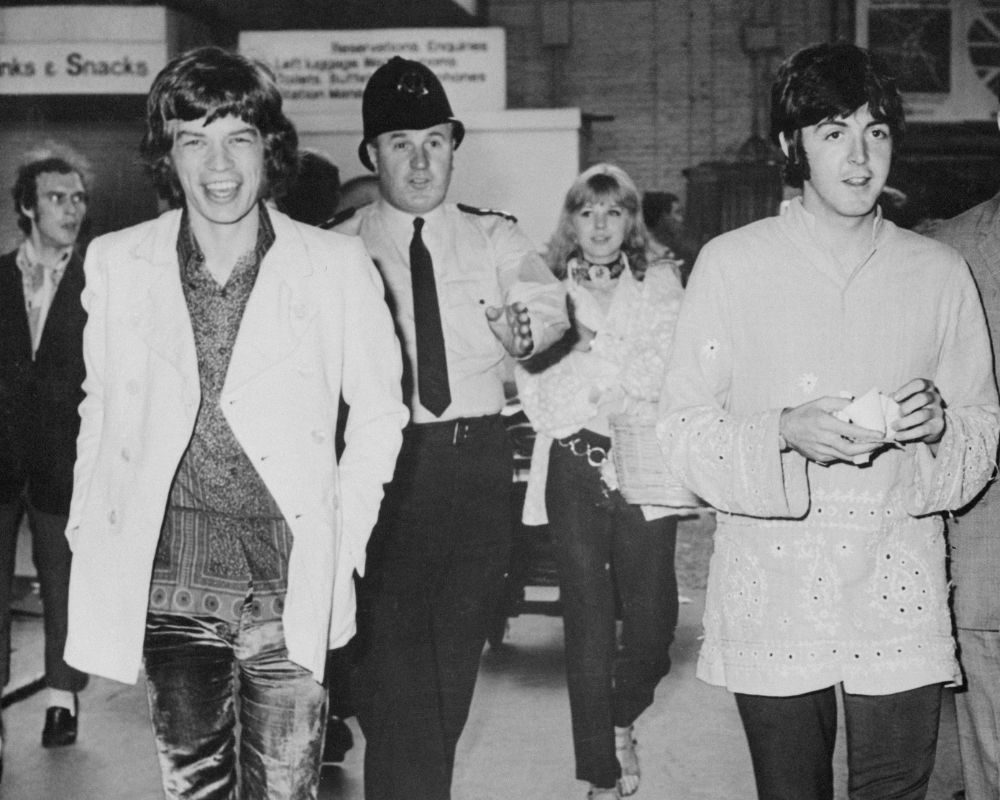
Maharishi invited them to join him at a retreat at the University of Bangor, North Wales, beginning the next day. But their education was cut short when, on the morning of 27 August, their manager and friend Brian Epstein was found dead in his London home from an accidental overdose of barbiturates and alcohol. He was just 32.
Out of sight of the world
Fast forward to February 1968, and the Beatles and their partners were ready to resume their education under the Maharishi. Only this time, they planned to go much further – both geographically and spiritually. The group and their entourage decamped to the Maharishi’s ashram in Rishikesh, India, on the banks of the Ganges in the foothills of the Himalayas.
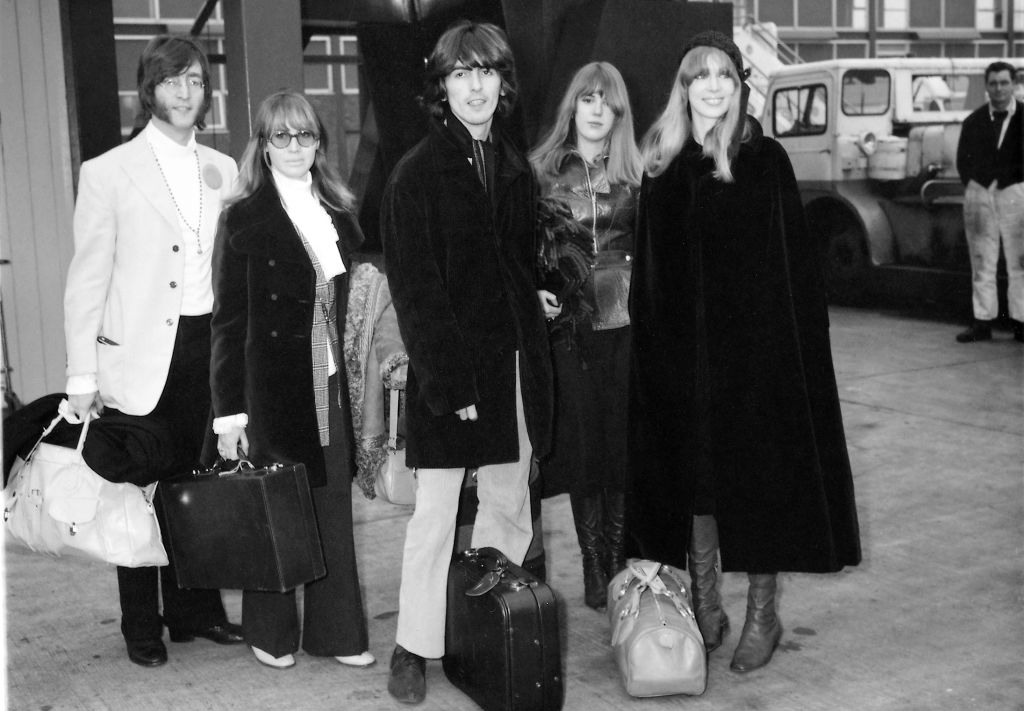
Eating simple foods, meditating, and attending lectures, the Beatles were largely out of sight of the world for the first time since Beatlemania exploded five years previously. They could reflect and consider their place in the world, and they spent much of their spare time writing songs on the acoustic guitars they’d brought with them.
Among the songs they wrote in India were such wonders as ‘Blackbird’, ‘Julia’, ‘Revolution’ and ‘Ob-La-Di, Ob-La-Da’. Paul’s ‘Back In The USSR’ was written as a Beach Boys pastiche, inspired by hanging out with fellow devotee and Beach Boy Mike Love at the ashram.
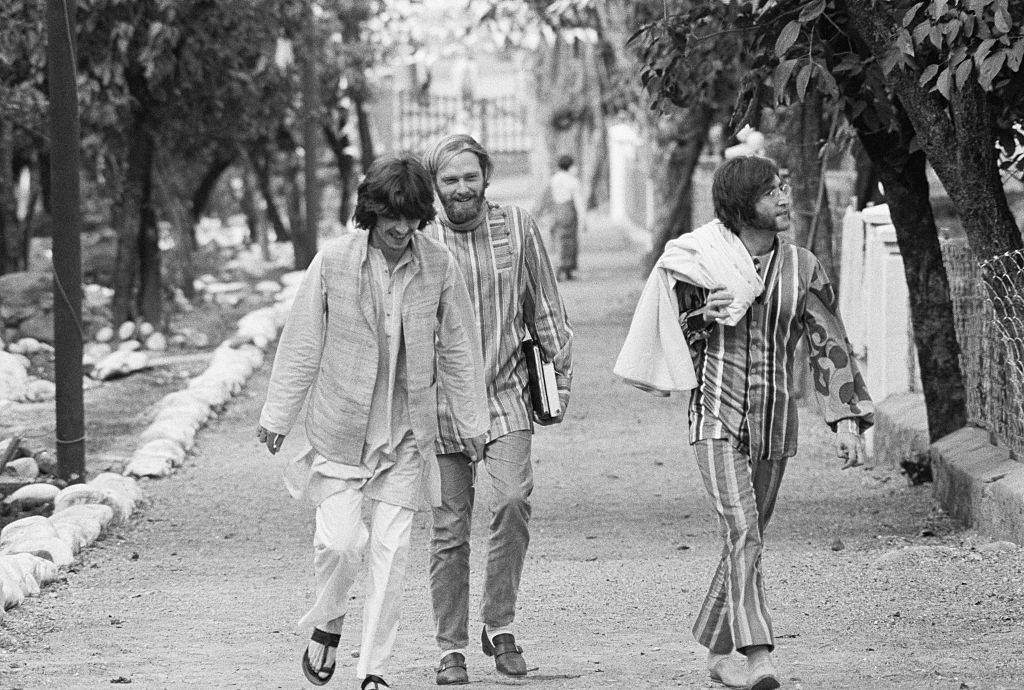
As well as Love, whose attendance alongside the Beatles was, according to the Beach Boy, purely coincidental ('I walked into my living quarters, looked up and saw Paul McCartney,' he wrote in his 2016 autobiography Good Vibrations), also staying at the ashram were the Beatles’ partners, the Scottish folk singer Donovan, and American actress Mia Farrow with her sister, Prudence. Indeed, John’s beautiful ‘Dear Prudence’ was written about Prudence, who had elicited concern for her seemingly endless meditation sessions in her hut and not joining the others socially – 'Won’t you come out to play?'
Ringo didn't get on with the food
Ringo returned home after two weeks, complaining that the food wasn’t good for his delicate digestive system (the result of a childhood overshadowed by extended hospital stays of years at a time), and that he and wife Maureen were missing the children. Paul lasted a little longer, staying for a month. George and John remained, immersed in Transcendental Meditation, until one day in mid-April, things turned sour.
John’s friend, an eccentric Greek inventor and self-proclaimed electronics wizard Alexis Mardas – known to all as Magic Alex – had joined the party but, according to some devotees, his motives were far from spiritual.
As George’s wife Pattie wrote in her book Wonderful Tonight, 'When we had been there for four weeks, Magic Alex arrived. He was a young Greek who had attached himself to The Beatles [...] He came because he didn't approve of The Beatles' meditating, and he wanted John back.'
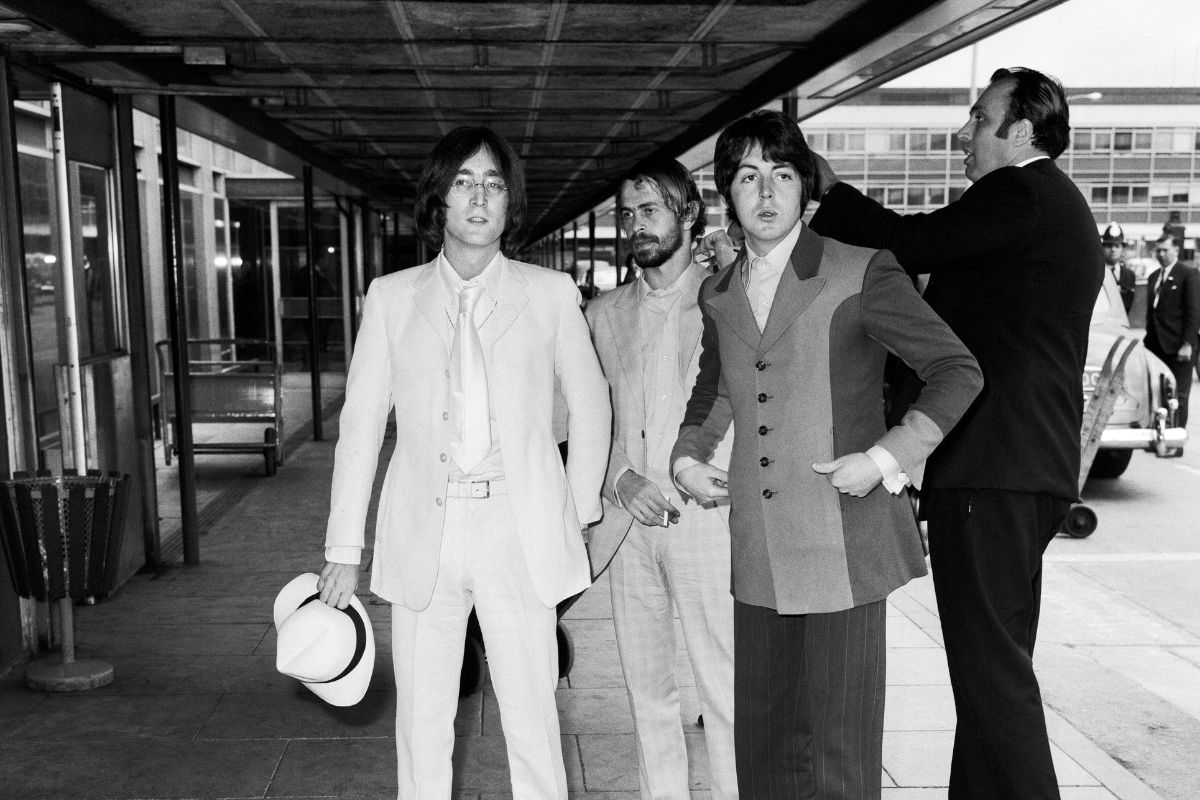
It has since been suggested by many who were close to the Beatles in India, including both George and John’s wives, that Magic Alex was at the root of rumours that the Maharishi had behaved inappropriately towards a female member of the camp. According to Pattie, 'Everything went horribly wrong. Mia Farrow told John she thought Maharishi had been behaving inappropriately.
'I think he made a pass at her. John threw a hissy fit. "Come on, we're leaving." Then Magic Alex claimed that Maharishi had tried something with a girl he had befriended. I am not sure how true that was.
'Black magic'
'I think Alex wanted to get John away from Rishikesh – he seemed convinced that Maharishi was evil. He kept saying, "It's black magic." And perhaps John had been waiting for an excuse to leave – he wanted to be with Yoko. Whatever the truth, they left.'
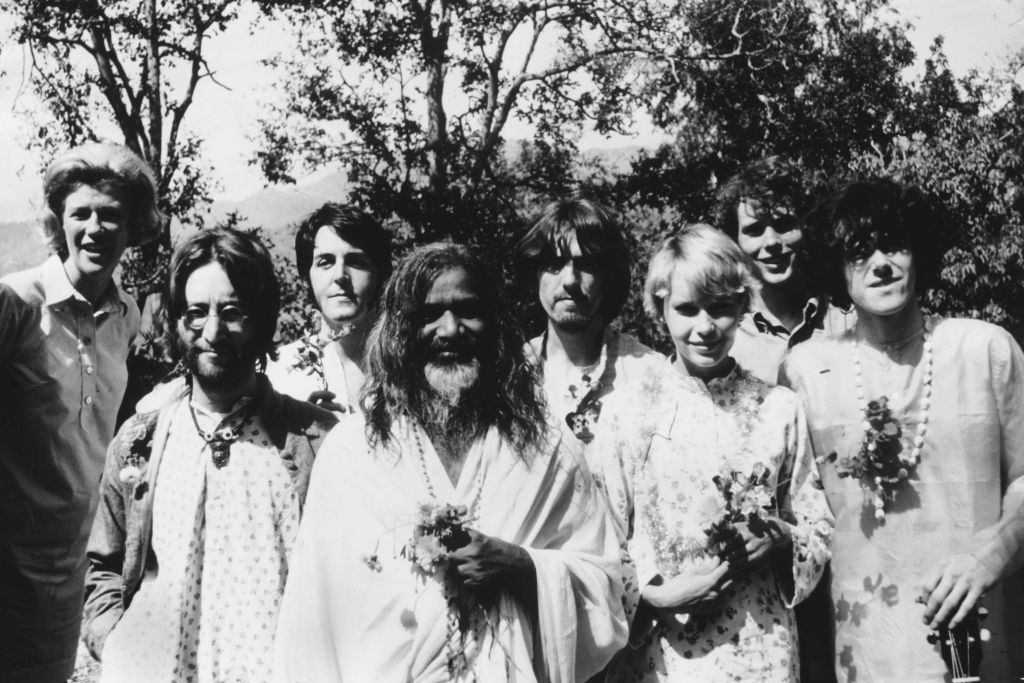
Cynthia Lennon agreed: 'Alexis and a fellow female meditator began to sow the seeds of doubt into very open minds... Alexis's statements about how the Maharishi had been indiscreet with a certain lady, and what a blackguard he had turned out to be, gathered momentum. All, may I say, without a single shred of evidence or justification. It was obvious to me that Alexis wanted out and more than anything he wanted the Beatles out as well.'
John’s own recollection in 1970 differs. 'There was a big hullabaloo about him trying to rape Mia Farrow, and things like that. So we went to see him. I was the spokesman, as usual whenever the dirty work came. I said, "We're leaving." He asked, "Why?," and all that, and I said, "'Well, if you're so cosmic, you'll know why.”'
'There were a lot of flaky people there'
For George, the whole episode felt fabricated, as he explained in the Beatles’ Anthology: 'Someone started the nasty rumour about Maharishi, a rumour that swept the media for years... Just go ask Mia Farrow. There were a lot of flakes there; the whole place was full of flaky people. Some of them were us.'
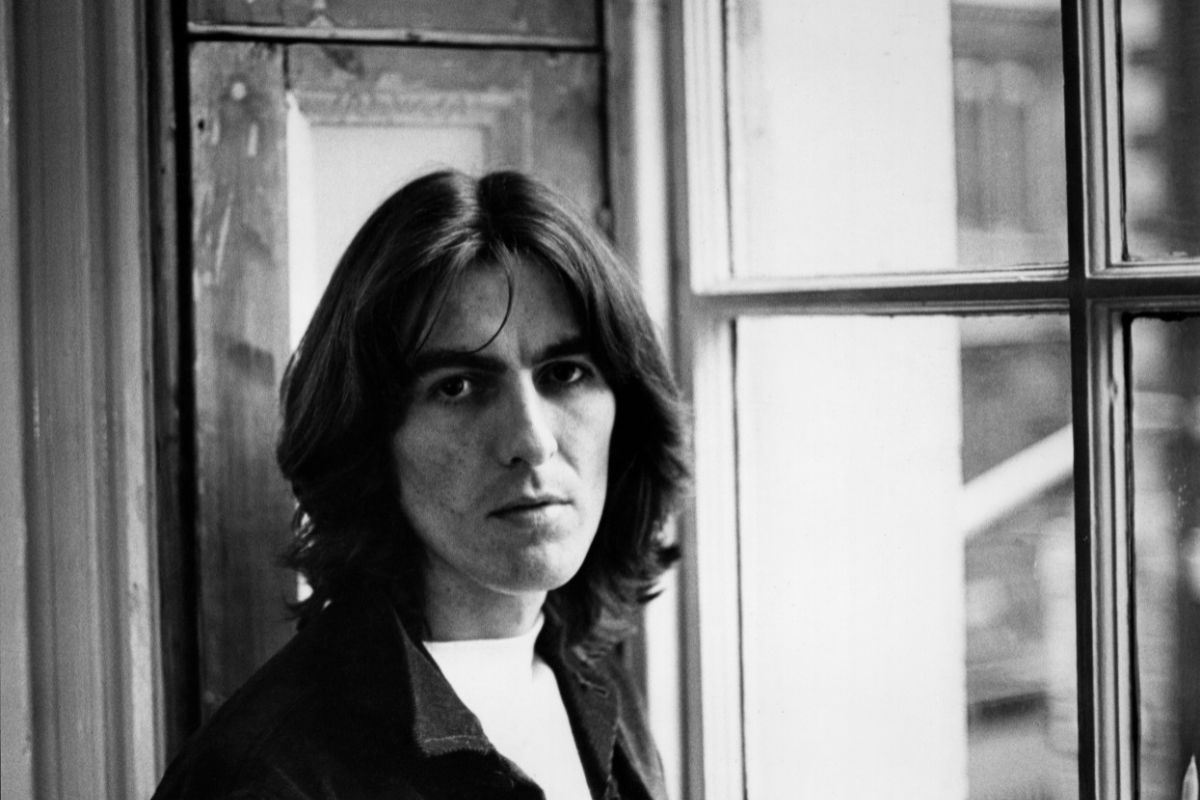
Regardless of the truth, the magic was broken, and the remaining members of the Beatles’ entourage packed their bags and called for cars to the airport. As they made their escape, John began to compose a song about the incident and his feelings towards the Maharishi.
'[Sexy Sadie] was written just as we were leaving,' John said in 1974, 'waiting for our bags to be packed in the taxi that never seemed to come. We thought: "They’re deliberately keeping the taxi back so as we can’t escape from this madman’s camp." And we had the mad Greek with us who was paranoid as hell. He kept saying, "It’s black magic, black magic. They’re gonna keep you here forever." I must have got away because I’m here.'
The song began 'Maharishi, what have you done? You’ve made a fool of everyone'. George complained to John that he shouldn’t sing that, and suggested 'Sexy Sadie' as an alternative.
Paul recalled John coming round to his house on Cavendish Avenue in London after he’d got back, telling him how Maharishi had made a pass at somebody. 'They were scandalized. And I was quite shocked at them; I said, "But he never said he was a god. In fact very much the opposite. He said, 'Don't treat me like a god, I'm just a meditation teacher.'" There was no deal about 'you mustn't touch women,' was there? There was no vow of chastity involved.'
The Beatles began work on the song at EMI Studios on Abbey Road in July 1968, returning to it again a month later. One unreleased take sees John revisiting his fury, singing 'Who the **** do you think you are?'. The song would prove one of the hardest to commit to tape, with the eventual finished master being labelled take 117.
As for the Maharishi, John later admitted to Rolling Stone magazine: 'I was a bit rough on him. I always expect too much. I’m always wanting my mother and don’t get her.'
An interesting coda comes 25 years later when, according to author Deepak Chopra, George visited the Maharishi in the Netherlands and asked for forgiveness from the guru for all the negative publicity. The Indian replied 'There’s nothing to forgive – you’re angels in disguise.'
Pics Getty Images