By the beginning of the 1970s, one of America's biggest rock bands had a problem.
Its records were selling in huge numbers, its songs were all over the radio and its sound was instantly recognisable. But behind the success, relations between the four musicians were becoming increasingly strained.
At the centre of the trouble was an unusually dominant frontman. He wrote the songs, arranged the music, produced the records and sang almost all the lead vocals. His instincts had served the group extraordinarily well: a remarkable run of hit singles and albums had established them as one of the most dependable acts in American rock. But the other members were beginning to wonder whether they were really a band at all, or simply the backing group for one exceptionally talented individual.
'Risky'
The first casualty was the frontman's older brother, who left in 1971 after years of frustration at his limited creative role. With the group reduced to a trio, the remaining musicians faced an uncomfortable question: could they carry on working together if the balance of power changed?
The band was Creedence Clearwater Revival, the frontman was John Fogerty, and the album that attempted to resolve the situation was Mardi Gras, released in April 1972. Its title suggested a party. The atmosphere surrounding its creation was rather less celebratory.
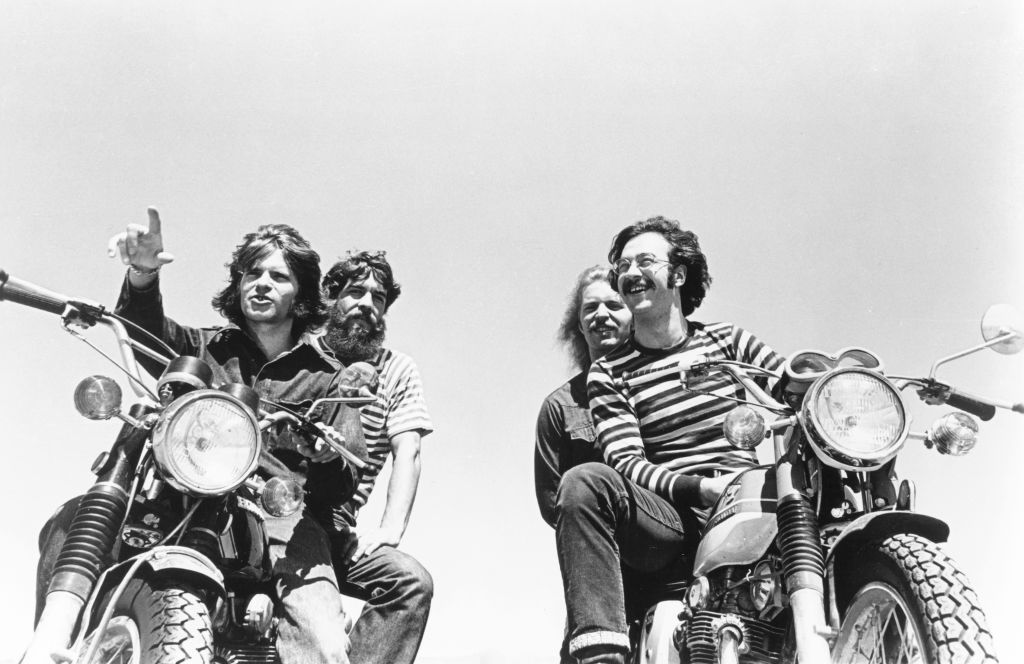
For years, Fogerty had been the group's principal songwriter and musical director. Now bassist Stu Cook and drummer Doug Clifford wanted a proper share of the creative work. The compromise was a more democratic arrangement, with all three members contributing songs, singing lead and taking responsibility for production.
On paper, it seemed reasonable enough. In practice, it was a risky proposition for a band whose identity had been so closely tied to one man's songwriting.
The recording process became another battleground
The results were uneven. Fogerty contributed three original songs, including the sturdy rocker 'Sweet Hitch-Hiker' and the reflective 'Someday Never Comes'. He also sang a lively version of Ricky Nelson's 'Hello Mary Lou'. Cook and Clifford each supplied three songs of their own, among them Cook's 'Sil Away' and Clifford's 'Tearin' Up The Country'.
There were moments of interest, but the album lacked the consistency and distinctive character of Creedence's earlier work. Cook and Clifford were capable musicians, but their songwriting and singing were never going to be an easy substitute for Fogerty's. The different voices and approaches made the record feel less like a unified band and more like three musicians taking turns at the microphone.
Fogerty's own attitude did little to smooth matters. The new arrangement was not the creative liberation his bandmates had hoped for, and the recording process became another battleground. Each side later offered a different account of how the agreement had come about and who was responsible for its failure. What was clear was that the trust between them had largely evaporated.
'Humiliating'
Mardi Gras was released to a bruising critical reception. One review in Rolling Stone described it as the worst record ever made by a major group. Fogerty later admitted that he thought the verdict was justified. The album nevertheless reached No. 12 in the US charts, so it wasn't a commercial catastrophe. But it was a conspicuous artistic disappointment from a band that had previously seemed almost incapable of putting a foot wrong.
There was one final tour, but little appetite for carrying on. Fogerty later recalled audiences throwing money at the band during performances, a humiliating indication of how far things had fallen. In October 1972, just six months after Mardi Gras appeared, he announced that Creedence Clearwater Revival was finished.
The album didn't single-handedly destroy the group. The tensions had been building for years, and Tom Fogerty's departure had already exposed the cracks. But Mardi Gras was the moment when the band's internal argument became audible. Creedence had tried democracy, and discovered that its greatest strength had always been the very thing its members had come to resent: John Fogerty's control.
Pics Getty Images
Top pic: Creedence Clearwater Revival drink a toast at press conference, February 1972. L-R Doug Clifford, John Fogerty, Stu Cook