
Not all rock lawsuits are about money, songwriting credits and band names.
Every so often, a legal dispute becomes so bizarre that it sounds like something from a rock’n’roll fever dream. Musicians have been sued for sounding too much like themselves, or conversely for not sounding enough like themselves; in turn, they have hit back at stage shows, tech giants and, oddly, a soft-drinks behemoth.
Some cases dragged on for years; others produced courtroom spectacles almost as entertaining as the music. Here are 11 of the strangest legal battles ever to involve rock stars.
1. John Fogerty was sued for sounding like himself, 1988
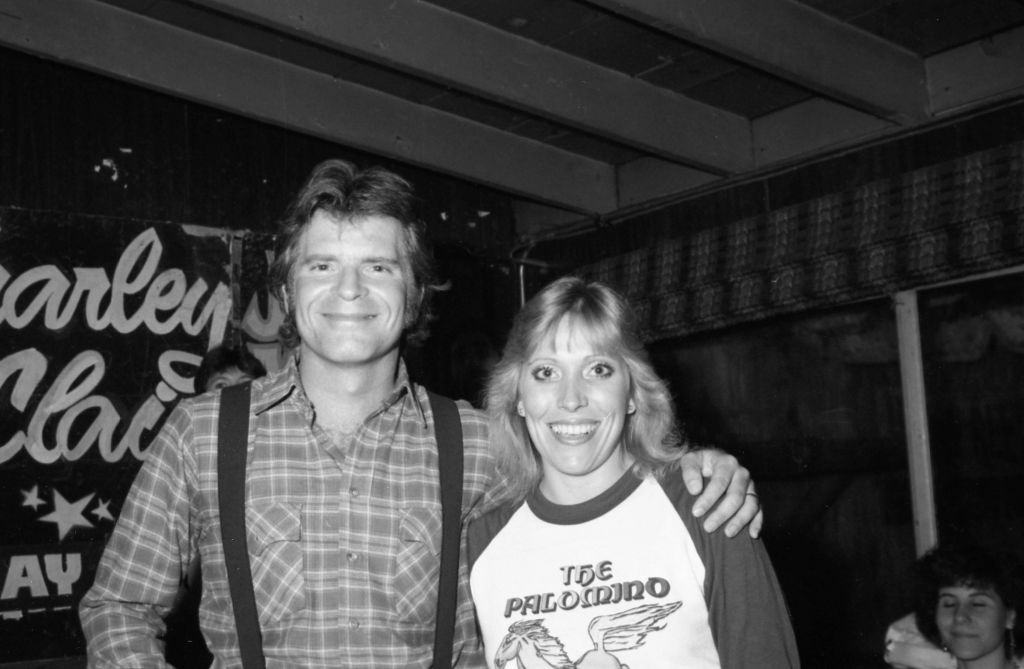
John Fogerty had a particularly strange problem after Creedence Clearwater Revival split: the record company that owned some of his old songs thought his new music sounded suspiciously like... John Fogerty. Fantasy Records sued him in 1988, claiming that his solo song ‘The Old Man Down the Road’ was essentially ‘Run Through the Jungle’ – a CCR song that Fogerty himself had written in 1970. The implication was extraordinary: Fogerty had allegedly infringed his own former work.
Fogerty went to court and defended the song, eventually winning the case. But the legal battle didn't end there. He sought reimbursement for his legal costs, setting up another dispute that eventually reached the US Supreme Court. In 1994, the Court ruled that successful defendants could recover attorneys' fees under the same standard as successful plaintiffs.
It remains one of rock's great legal absurdities: a songwriter being taken to court because he sounded too much like himself. In marked contrast to our next story...
2. Neil Young was sued for NOT sounding like himself, 1983
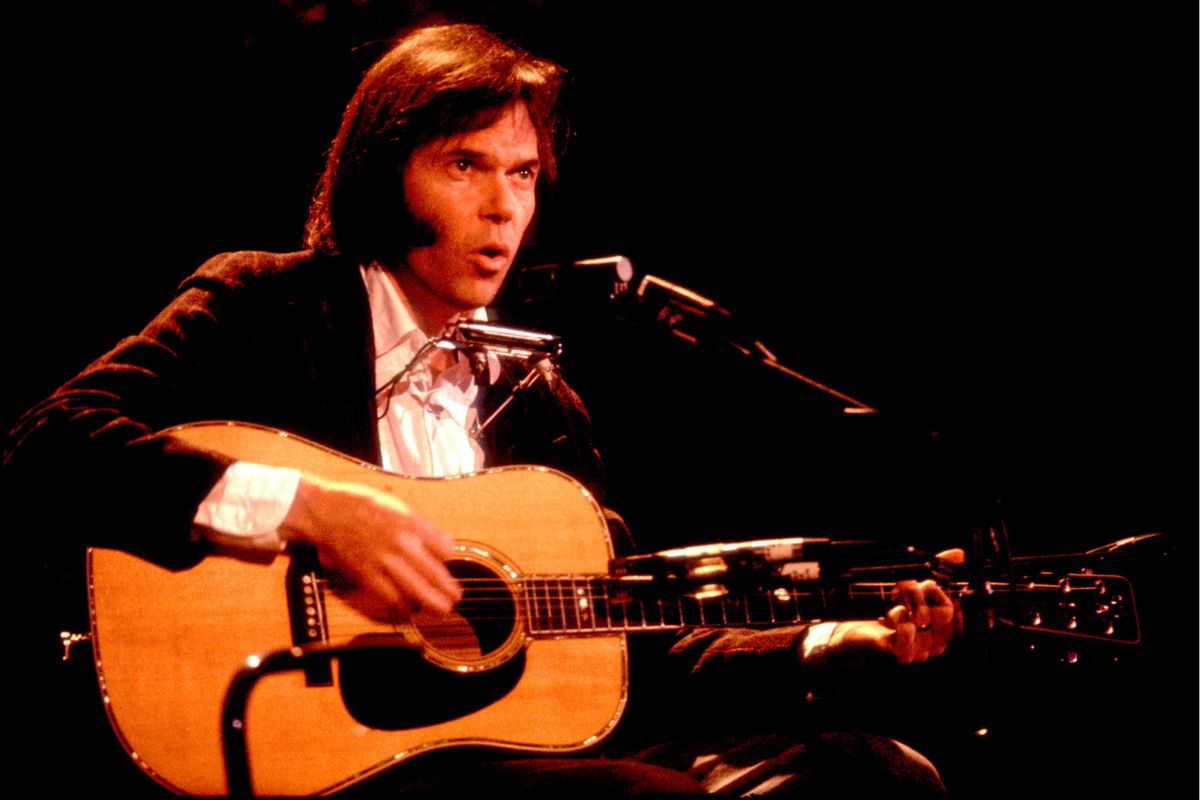
Neil Young's reputation for artistic unpredictability eventually collided with the record industry in spectacular fashion. After signing to Geffen Records, Young released Trans, an eccentric mixture of rock songs and electronic experiments, followed by Everybody's Rockin', a deliberately retro rockabilly album recorded with the Shocking Pinks.
Geffen wasn't amused. In 1983, the label sued Young for $3.3 million, arguing that his recent recordings were 'not commercial' and 'musically uncharacteristic' of his previous work. Young responded with a $21 million countersuit, arguing that the label had interfered with the creative freedom promised in his contract.
It was an extraordinary situation: a record company had effectively signed one of rock's most unpredictable artists, then taken him to court for being unpredictable. The dispute was eventually settled, with Geffen apologising to Young. Years later, Young could afford to look back on the whole episode with a little humour. The lawsuit had become almost a perfect illustration of the collision between artistic freedom and commercial expectations.
3. George Harrison was guilty of subconscious plagiarism, 1971
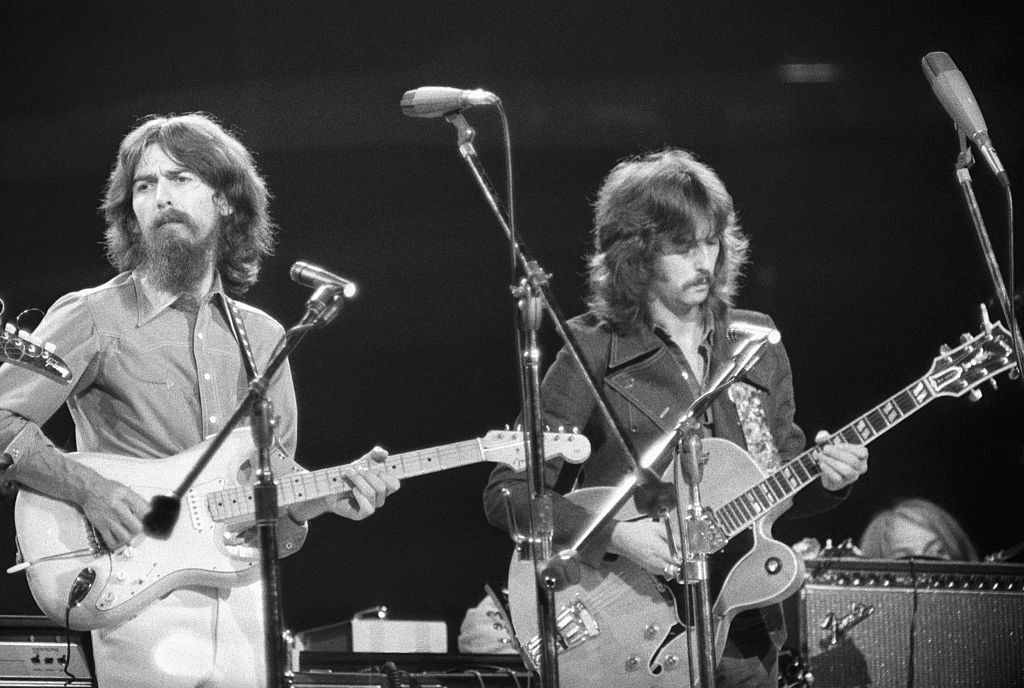
George Harrison's ‘My Sweet Lord’ became one of rock's most famous copyright cases after Bright Tunes Music, which controlled the copyright to The Chiffons' ‘He's So Fine’, sued over the similarity between the two songs.
The extraordinary part was the court's conclusion: Harrison *had* infringed the copyright, but the judge found that he had done so subconsciously. In other words, the evidence suggested that Harrison had not deliberately copied the song, but had absorbed its melody and later reproduced something substantially similar without realising it.
Harrison's legal troubles then became even more complicated when his former manager Allen Klein became involved in the business surrounding the disputed copyright. What began as a question about whether two melodies sounded alike turned into a much larger battle over ownership, money and business relationships.
It is one of the strangest outcomes in rock law: you can apparently copy a song without knowing you've copied it.
4. Courtney Love fought Nirvana over Kurt Cobain's unfinished legacy, 2001-02
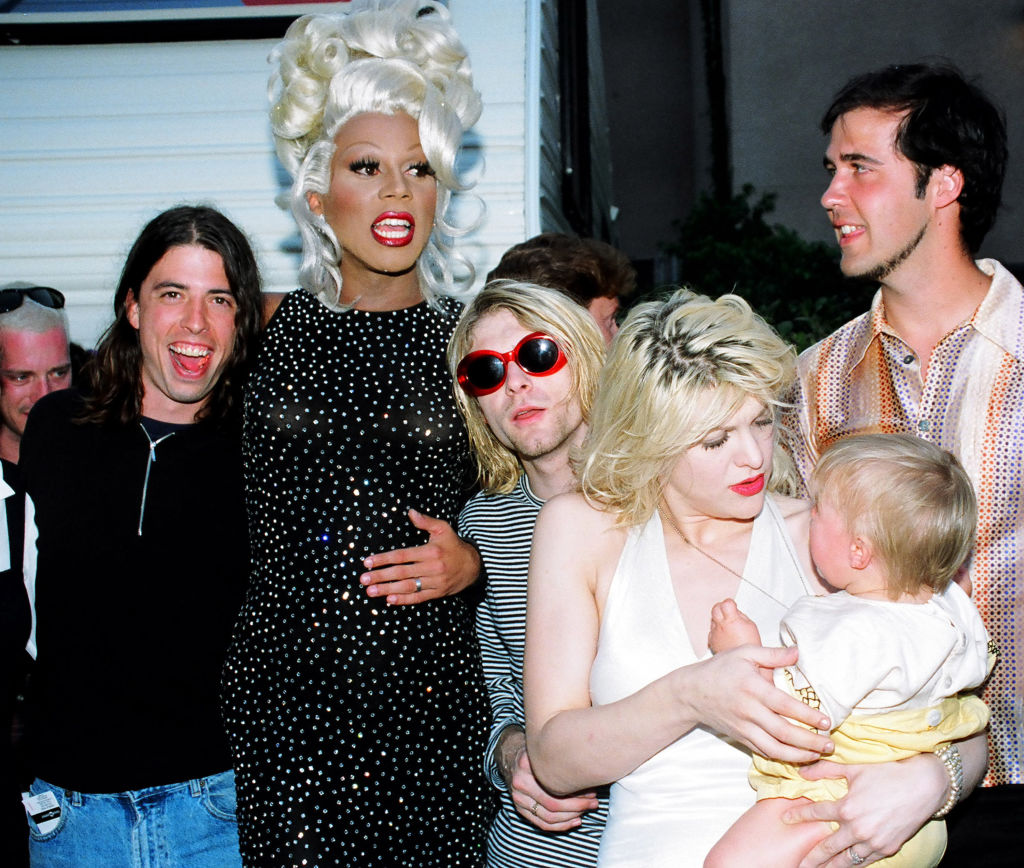
After Kurt Cobain's death, Nirvana's surviving members Dave Grohl and Krist Novoselic found themselves in a bitter legal battle with his widow, Courtney Love, over control of the band's catalogue. One particularly strange dispute centred on the unreleased ‘You Know You're Right’, which Grohl and Novoselic wanted to include in a Nirvana box set while Love opposed its release.
The argument became increasingly personal. Grohl and Novoselic sought to have a contract challenged on the grounds that Love had allegedly been incapacitated when she signed it, while Love fought for greater control over Nirvana's music and legacy. The dispute was eventually settled, and ‘You Know You're Right’ was released in 2002, but not before Nirvana's remaining members and Cobain's widow had spent years fighting over what should happen to the music he had left behind.
It was less a conventional copyright battle than a posthumous power struggle over who had the right to decide what Nirvana meant after Kurt Cobain was gone.
5. The Smiths fought over who got the money, 1989

When The Smiths split, the band's internal harmony didn't exactly improve. In 1989, drummer Mike Joyce and bassist Andy Rourke began legal proceedings against Morrissey and Johnny Marr over the division of the band's earnings. Morrissey and Marr had been receiving 40% each of recording and performance royalties, leaving 10% apiece for Joyce and Rourke. Rourke settled early; Joyce carried on.
After a lengthy legal battle, Joyce won his claim to a 25% share and was awarded substantial back-payments.
But the judge's description of Morrissey became almost as famous as the case. Judge John Weeks described him as 'devious, truculent and unreliable', a phrase that Morrissey responded to with characteristic hostility.
6. The Beatles sued a show called Beatlemania, 1979
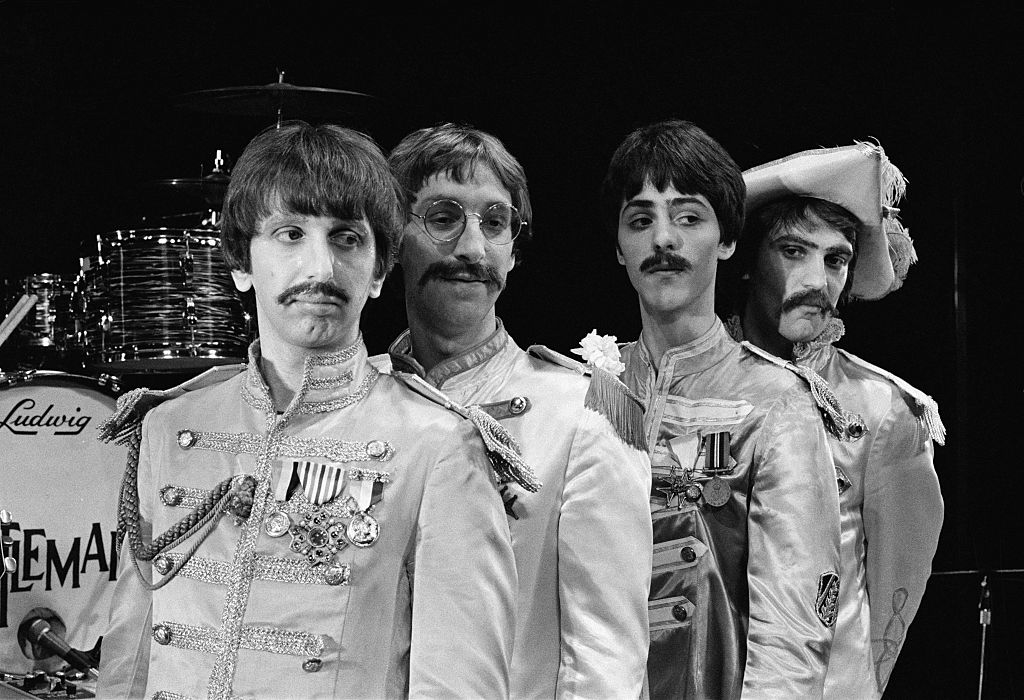
In 1979 the former Beatles took legal action against the producers of the hugely successful stage production Beatlemania, objecting to the way the show used their names, images and identities. The band sought millions of dollars in damages and attempted to prevent further exploitation of the Beatles' identity through stage, film and television versions.
Beatlemania was essentially a Beatles tribute show with a storyline: a roughly chronological, multimedia journey through the band's career and the turbulent 1960s, stitched together with 29 songs and very little dialogue. It had opened in Boston in April 1977 before moving to Broadway, where it ran for more than two years; productions also appeared in cities including Los Angeles, Chicago, Cincinnati and London, before a touring version continued into the early 1980s.
It was an early example of the problem that would increasingly accompany rock stardom: when does paying tribute to a band become commercially exploiting the band?
For the Beatles, who had spent years turning their own image into one of the most valuable brands in popular culture, the answer was something to be settled in court.
7. The Beatles' Apple fought Steve Jobs' Apple, 1978
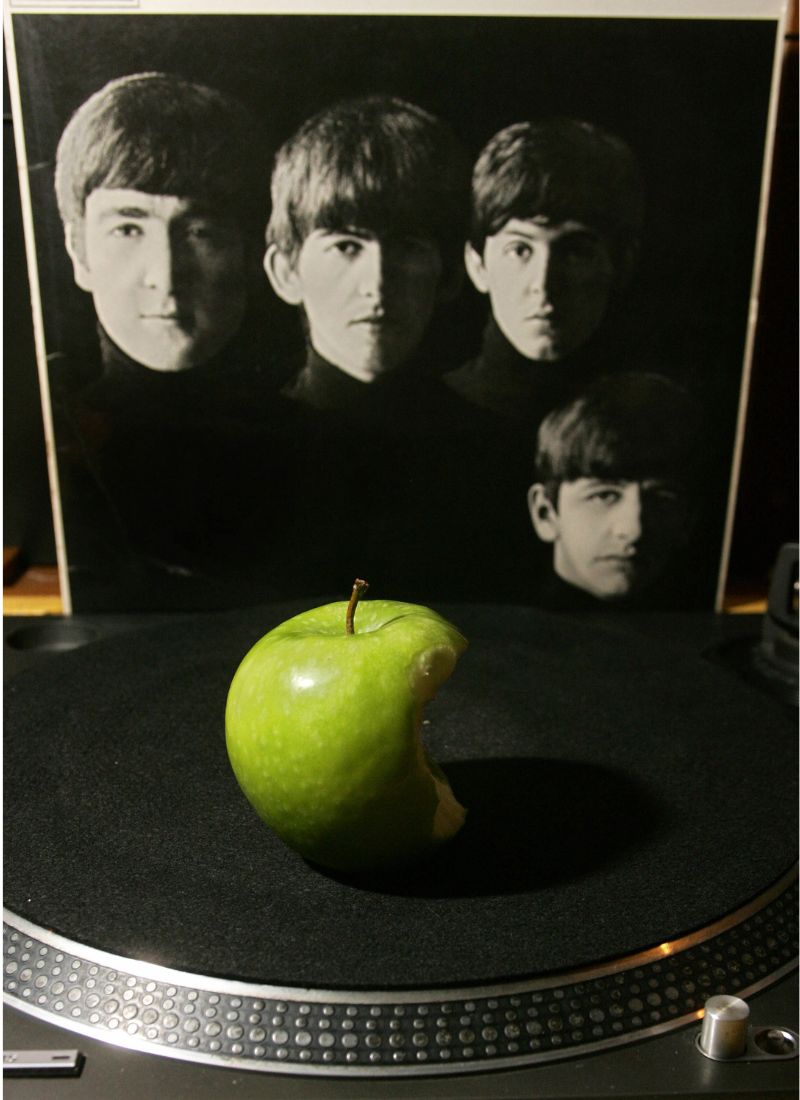
Two Apples entered the music and technology industries. There could only be one trademark.
The Beatles' Apple Corps and Silicon Valley's Apple Computer Company began fighting over the Apple name in 1978, and the dispute resurfaced repeatedly as Steve Jobs' company expanded into music. The crucial problem was obvious: the Beatles' company was associated with recorded music, while Jobs' Apple was becoming increasingly involved with music technology.
The argument eventually became particularly awkward when Apple launched iTunes and the iPod. Apple Corps objected, leading to another major legal confrontation. The two sides finally reached a settlement in 2007: Apple Inc took ownership of the trademarks and licensed some rights back to Apple Corps.
It was an unusually rock'n'roll corporate feud, involving the Beatles, Steve Jobs, trademarks, computers and the increasingly blurry boundary between music and technology.
8. Judas Priest were accused of hiding suicide messages in their music, 1990
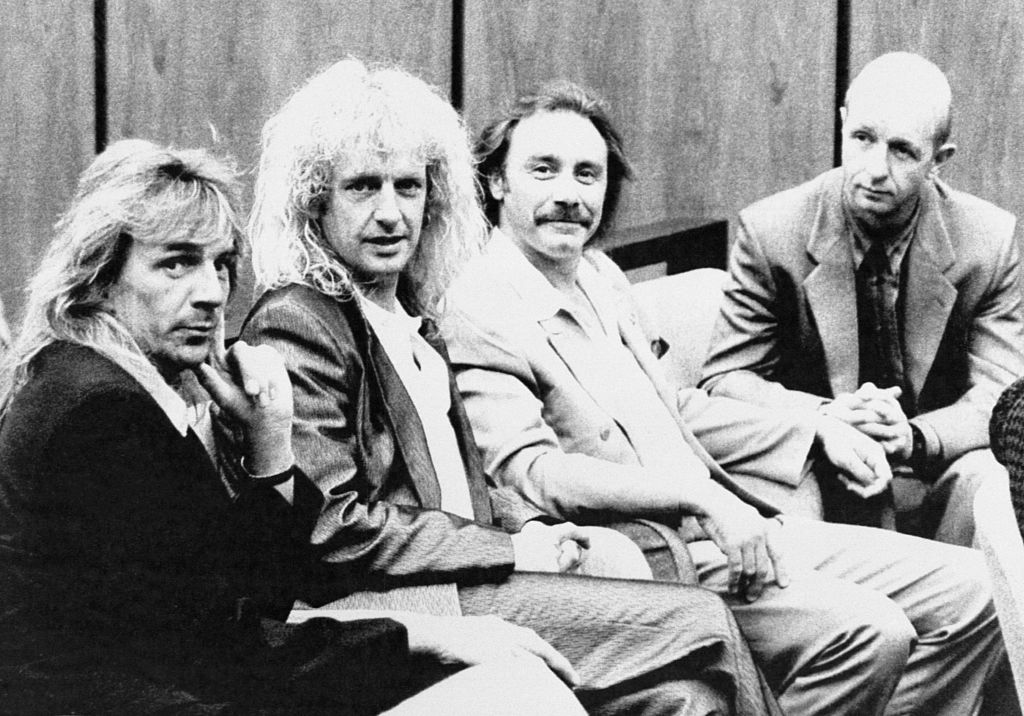
In one of the strangest music-industry trials of the 1990s, Judas Priest were accused of planting subliminal messages in their songs. The parents of two young men who had shot themselves argued that the band's music had encouraged their sons to attempt suicide, focusing particularly on alleged hidden messages in the album Stained Class.
The case became a bizarre courtroom examination of whether supposedly subliminal words could influence listeners. Songs were played and analysed in forensic detail, while lawyers argued over whether phrases such as 'do it' could actually be heard in the recordings.
The judge ultimately ruled in Judas Priest's favour, finding that the alleged messages had not been shown to have caused the shootings or to have been deliberately inserted by the band.
The case became a landmark episode in the long-running debate over whether rock music could corrupt young listeners – and one of the strangest examples of a rock band being asked to answer for messages that it said it had never put there.
9. Radiohead's ‘Creep’ came back to haunt them
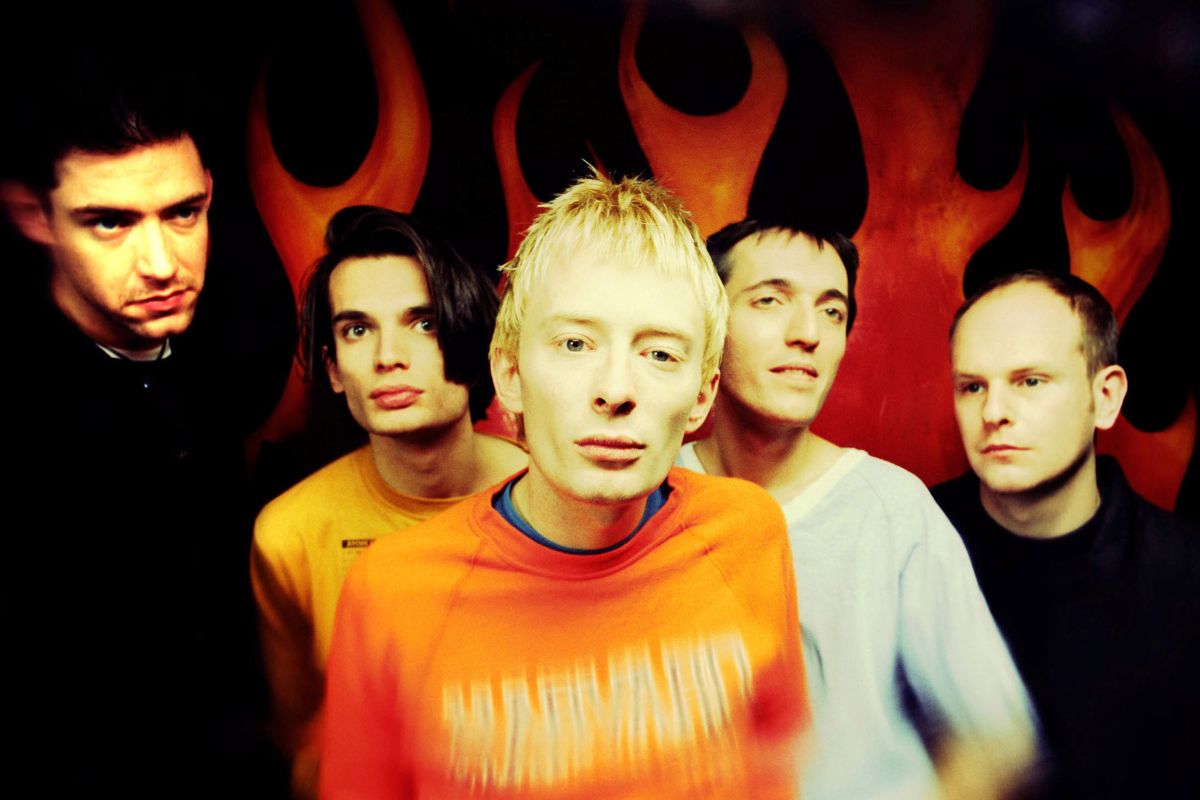
Radiohead's ‘Creep’ has an unusually complicated legal history. The song became a massive hit in the early 1990s, but its resemblance to The Hollies' ‘The Air That I Breathe’ resulted in Albert Hammond and Mike Hazlewood receiving songwriting credits and a share of royalties.
Decades later, Radiohead found themselves on the other side of a remarkably similar dispute. Lana Del Rey's 2017 song ‘Get Free’ was accused of resembling ‘Creep’, and Radiohead's publishers sought songwriting royalties. Del Rey denied copying the song and the dispute was eventually settled.
The circularity is delicious: Radiohead's most famous song had itself been the subject of a plagiarism dispute, only for the band to become plaintiffs in another one decades later.
It is also a neat reminder that rock's strangest lawsuits don't always involve millions of dollars or courtroom drama. Sometimes they are simply about the peculiar question of where one song ends and another begins.
10. Led Zeppelin's ‘Stairway to Heaven’ ended up in court, 2014
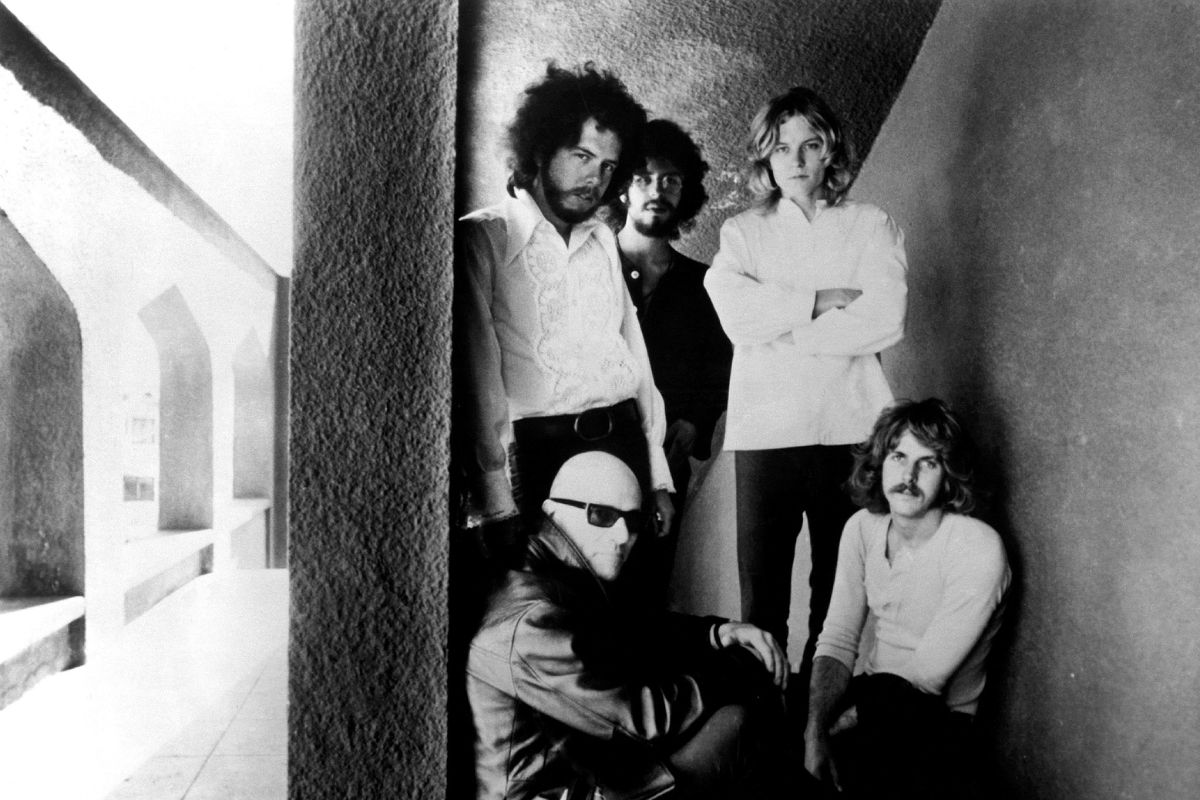
Few songs seem less likely to need a courtroom than ‘Stairway to Heaven’, but in 2014 the estate of Spirit guitarist Randy Wolfe, known as Randy California, sued Led Zeppelin. The claim was that the song's famous opening passage had been copied from Spirit's ‘Taurus’.
The case produced years of legal wrangling and a fascinating trial. Zeppelin won at first instance, but the case was later reheard by an 11-judge panel of the US Ninth Circuit Court of Appeals. In 2020, the appeals court reinstated the verdict in Zeppelin's favour, ruling that the copyright in the 1967 unpublished composition covered only what appeared in its deposited sheet music, and that the jury had been entitled to find no infringement.
The weirdness lies partly in the sheer scale of the dispute: one of rock's most recognisable guitar introductions became the centre of a painstaking legal argument about descending chromatic scales, arpeggios and what exactly can be protected by copyright. The court ultimately concluded that ‘Stairway to Heaven’ did not infringe ‘Taurus’.
See what you think:
11. Axl Rose v Dr Pepper, 2008

In March 2008, Dr Pepper promised everyone in America (minus Guns N' Roses guitarists Slash and Buckethead) a free soda if Axl Rose finally released the long-postponed G N' R album Chinese Democracy. When the album dropped that November, Dr Pepper’s redemption site crashed, locking out millions of fans.
Axl’s lawyers called it a 'disastrous PR stunt' and demanded full fulfilment. Facing legal heat, Dr Pepper caved, extending redemption windows and running public apology ads.
While technically settled via corporate surrender rather than a jury trial, Axl proved his leverage extended past record labels into fast-food marketing. Years later, Dr Pepper even famously mailed Slash a can anyway, officially closing the weirdest cross-promotional standoff in rock history.
In a letter to the soft drinks giant, Rose's lawyer Alan Gutman said, 'The redemption scheme your company clumsily implemented for this offer was an unmitigated disaster which defrauded consumers and, in the eyes of vocal fans, ruined Chinese Democracy's release'.
12. The Nirvana baby sued over Nevermind, 2021
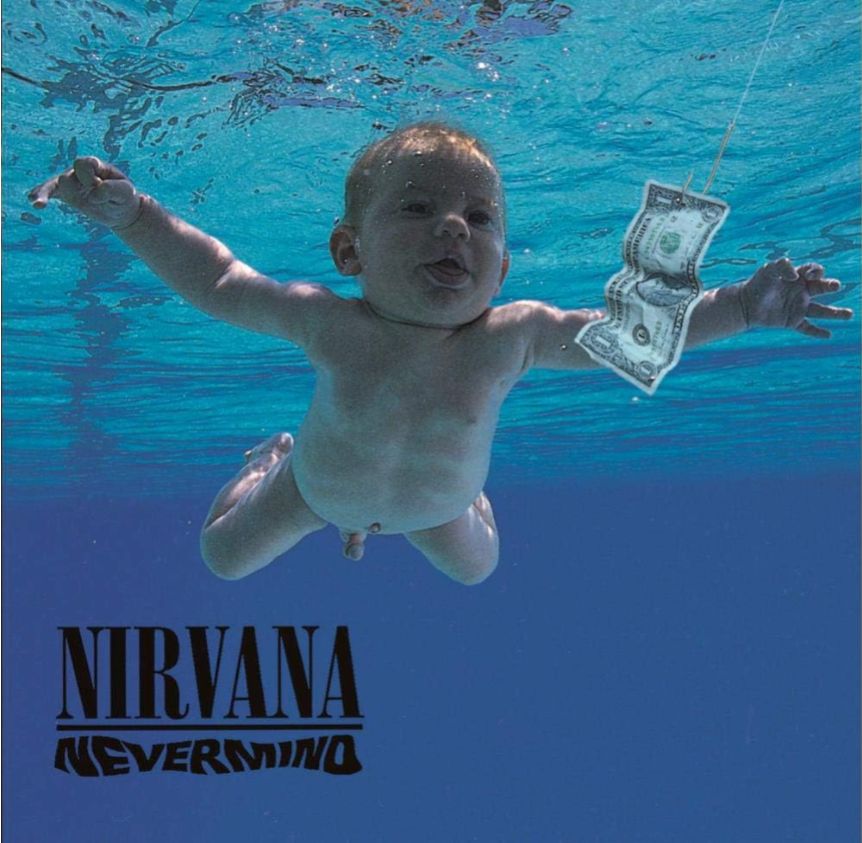
Spencer Elden was four months old when photographer Kirk Weddle photographed him naked in a swimming pool for the cover of Nirvana's Nevermind. Three decades later, Elden sued Nirvana, its surviving members, record companies, photographer Weddle and others, claiming that the famous image constituted child sexual exploitation and pornography and had caused him lifelong harm.
The case became an extraordinary collision between rock mythology and modern legal arguments. Elden had repeatedly recreated the photograph for Nevermind anniversaries, had the album title tattooed on his chest and had publicly embraced his unlikely status as “the Nirvana baby”. His lawsuit nevertheless argued that he had never consented to the image's use and that its continuing commercial exploitation had harmed him.
The case was eventually dismissed with prejudice in 2022 because the judge found that it had been filed outside the applicable statute of limitations. The Ninth Circuit later revived the case on appeal in 2023, ruling that republication of the image could potentially constitute a new injury and sending it back for further proceedings.
Whatever the legal arguments, it remains probably the strangest lawsuit to grow out of an album cover.
13. Axl Rose took on Texas Guns and Roses, 2022

Some lawsuits are strange because of their legal complexity. Others are strange because somebody appears to have thought, 'surely nobody else will have thought of that name'.
Axl Rose sued the owners of a firearms business called Texas Guns and Roses, arguing that the name infringed the Guns N' Roses trademark. It was an almost perfect collision of rock branding and literal firearms: Guns N' Roses versus Guns and Roses, with the latter actually selling guns.
The dispute demonstrated just how valuable a rock band's name can become after decades of touring, merchandising and licensing. For Rose, the issue was not simply whether another business happened to share a similar phrase; it was whether that similarity could cause confusion with the Guns N' Roses brand.
Few rock lawsuits have a more inherently absurd headline. Guns N' Roses versus Texas Guns and Roses sounds less like a court case than the title of a particularly ill-advised country-rock tour.
Pics Getty Images


