
Got £10 million to spare? Fancy popping around Paul McCartney’s place to borrow a cup of sugar?
If the answer to both of those questions is ‘Yeah, yeah, yeah’, you’re in luck as a property on Cavendish Avenue is now on the market a stone’s throw from the McCartney residence.
But 7 Cavendish Avenue is more than just McCartney’s London pad. It was the epicentre of Swinging London and crucial to The Beatles’ story; a place where pop royalty and avant-garde artists congregated and where some of the greatest songs of all time were written. Actually, thinking about it, £10 million’s a bit of a steal – best start looking for loose change down the back of the sofa.
McCartney bought the three-story regency house on 13 April 1965 for £40,000 – according to the Bank Of England’s inflation calculator, that’s £706,673.59 in today’s money, which feels a bargain in today’s climate. The house is a short walk from Lord’s cricket ground, situated in the upmarket, leafy, village-like St John’s Wood, in easy reach of the bustling West End and – more importantly – Abbey Road Studios.
‘He wanted to be right above the shop,’ The Beatles’ press officer Tony Barrow later said. ‘He wanted to do that for the purposes of self-achievement, further climbing up the ladder. You can’t do that if you are stuck out in the country.’
'He wanted the smell of cabbage coming up from the basement'
At this point, McCartney had been living with the family of his girlfriend, the actress Jane Asher, for two-and-a-half years at 57 Wimpole Street, Marylebone, a five-story townhouse where he’d come of age as a songwriter. Looking to recreate the feeling of Wimpole Street, he hired John and Marina Adams, the architects who’d worked on the Asher family house.
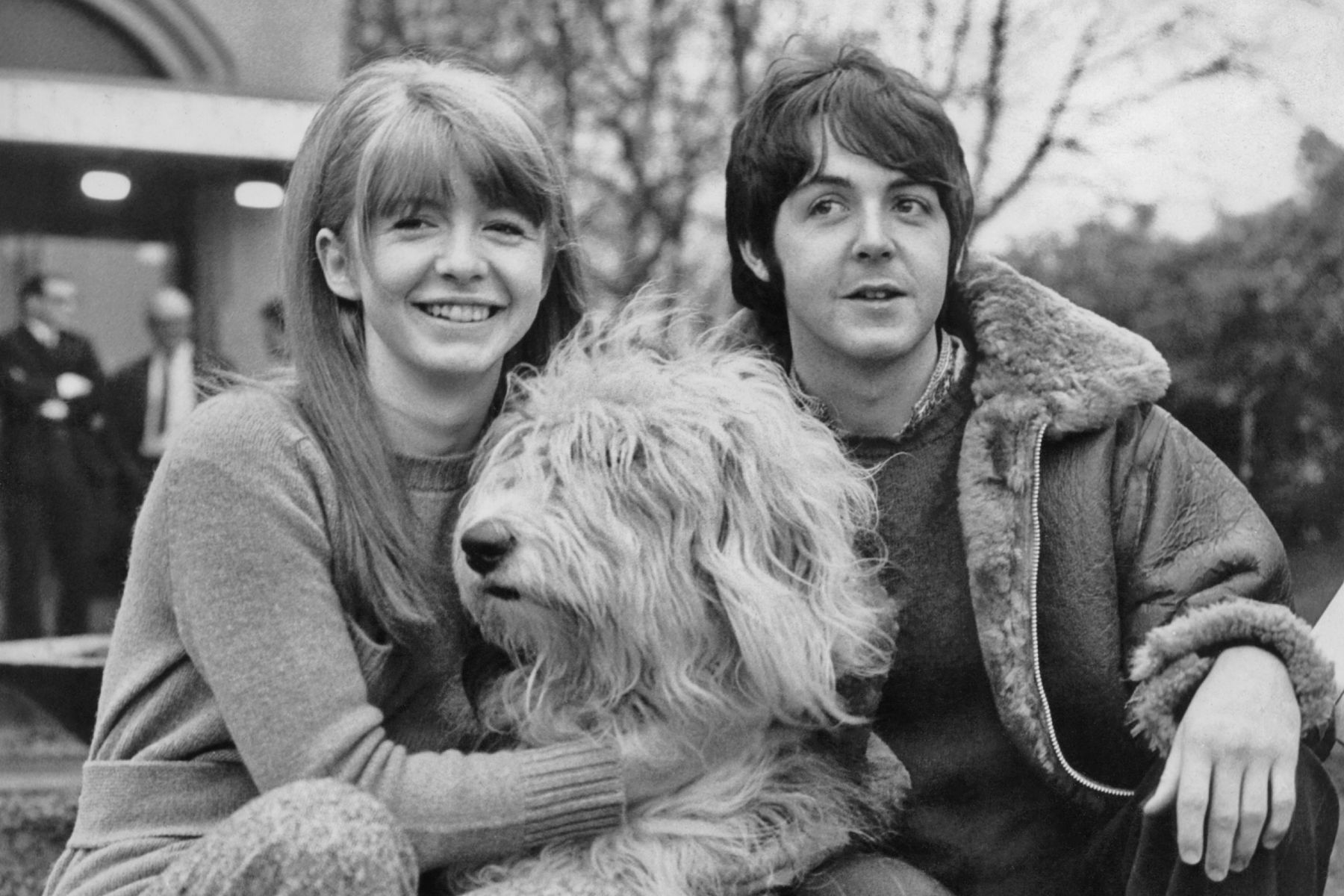
‘It was the strangest briefing I’d ever had,’ John Adams said in Many Years From Now, Barry Miles’ 1997 Macca biography. ‘Paul said he wanted to have the smell of cabbage coming up from the basement, which was obviously something he associated with the Asher house.’
McCartney originally budgeted £5,000 for renovations; they ended up costing £20,000 and taking much longer than planned. He eventually moved in to 7 Cavendish Avenue in March 1966 – whether the architects succeeded in creating an airflow conducive to the wafting of leafy greens is lost to history.
It featured a hessian wall – very chic at the time
Unsurprisingly, given that McCartney and The Beatles were at the peak of their fabness – sessions for the supreme Revolver album began the following month – the house was decked out with all mod cons, including colour TV, motorised curtains and an en-suite bathroom with sunken tub. McCartney’s music room featured a hessian wall (very chic at the time).
It was also stocked up with more guitars, bongos and drums than you could shake a yellow submarine at, as well as a state-of-the-art Revox A77 tape recorder. This room became Lennon and McCartney’s creative home away from Abbey Road, where they worked together on the songs that became Sgt Pepper’s and where McCartney wrote ‘Penny Lane’, ‘Eleanor Rigby’, ‘Hey Jude’ and so many more.
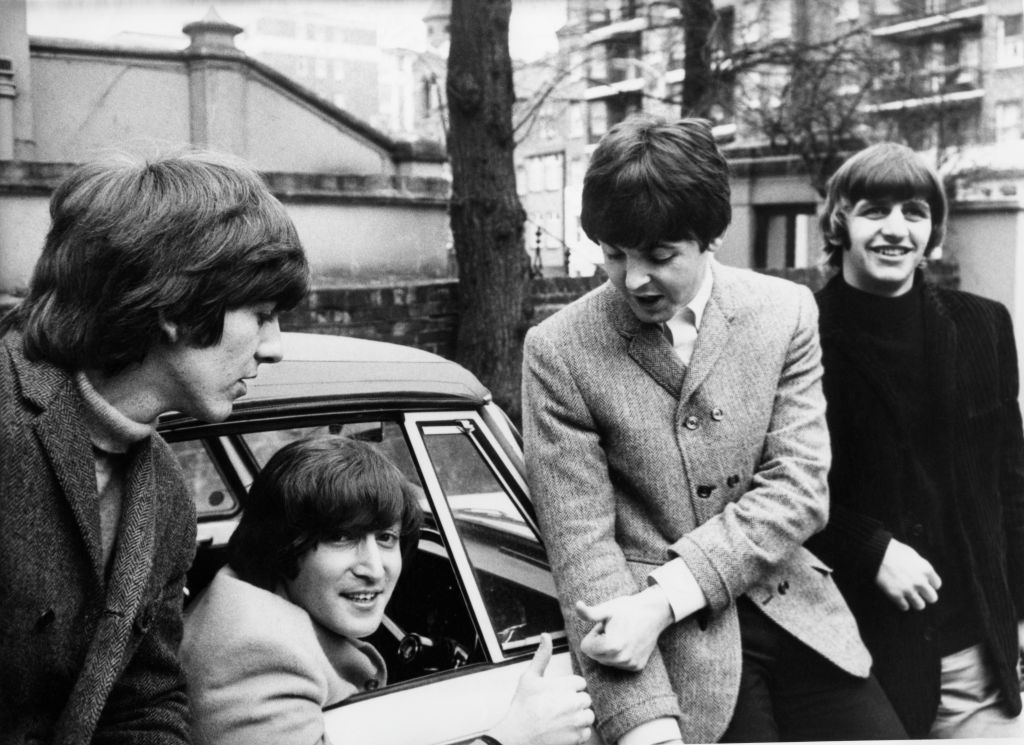
The music room also housed McCartney’s trusty upright piano, which had been moved from Wimpole Street. Towards the end of the year, the piano was customised by hipster art group BEV, three young artists from the North of England – Douglas Binder, Dudley Edwards and David Vaughan – who covered the instrument in multi-coloured psychedelic lightning bolts. The young artists became part of McCartney’s inner circle, which also included influential art dealer Robert Fraser.
It was Fraser who accompanied McCartney on a trip to Paris in early 1966, where he bought a couple of paintings from René Magritte’s agent – Gloria and The Countess Of Monte Cristo. McCartney would later regret not buying more on the trip, remembering seeing a painting called Ceci n’est pas une pipe, but ‘being a sensible lad I only chose two oils… the most expensive of which was £3,000’. Ah well, you win some, you lose some.
'You’ve just put your cup of tea on a Magritte painting'
That wasn’t the end of McCartney’s Magritte collecting – a couple of years later, he acquired Au Revoir, which inspired The Beatles’ Apple logo. In the mid-80s, his wife Linda bought him the painter’s old easel, some brushes and a small a painting table with various paraphernalia included. McCartney also owns a pair of Magritte’s paint-splattered glasses, ‘which are a very powerful prescription; they’ll give you a headache’.
In early 1976, Aubrey Powell of design collective Hipgnosis met with McCartney at Cavendish Avenue to discuss cover ideas for Wings At The Speed Of Sound, the new LP from Macca's post-Beatles outfit Wings. ‘I remember him sitting at the piano,’ Powell said, ‘He was always playing the piano – and I remember he put his cup of tea on the piano.
'I happened to glance at it, and it was [sitting on] a Magritte painting. I said, “Paul, you’ve just put your cup of tea on a Magritte painting.” He said, “Magritte won’t mind.” I’ll never forget that; Magritte was one of my heroes.'
There was a glass meditation dome at the end of the garden
But back in the Cavendish Avenue of the mid-60s, the Magrittes took pride of place, along with one of the two drum faces made for the cover of Sgt Pepper’s (not the one on the cover) and a Peter Blake pastiche of Edward Landseer’s Monarch of The Glen. The music room, meanwhile, was dominated by Solo, a large chrome sculpture by the Scottish-Italian artist Eduardo Paolozzi, one of the leading figures in the British pop art movement who coincidentally – or perhaps not – had taught Stuart Sutcliffe at Hamburgh State College in 1961-62 after the latter left The Beatles.
McCartney had also developed a taste for antiques, including a huge clock, built for the Great Exhibition of 1851, which hung in the dining room and a Victorian streetlamp, which was erected in the front garden. Meanwhile, he had a glass meditation dome built at the end of his back garden, though in later years it housed a large round bed that was given to the McCartneys as an engagement present by Alice Copper… who’d been given it by Groucho Marx. The mind boggles.
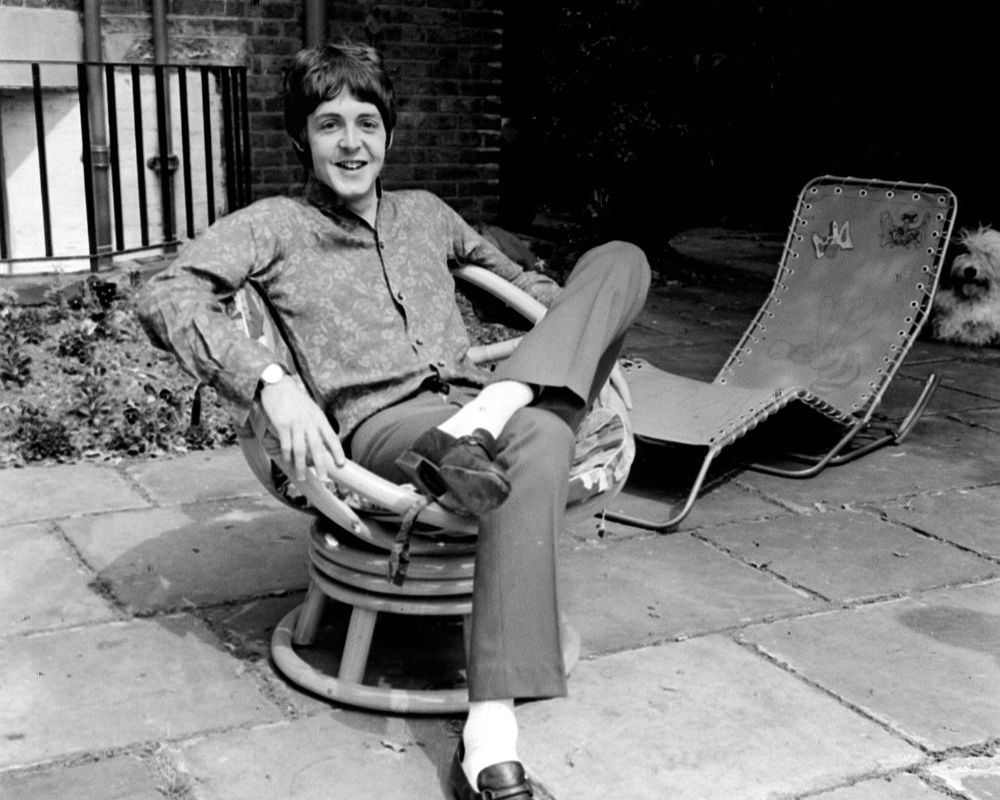
It wasn’t just McCartney’s art collection that made his Cavendish Avenue home one of the hottest places in town for art lovers. Around this time, David Vaughan turned up with Andy Warhol and his entourage to show McCartney one of the artist’s more challenging films. ‘We watched Empire,’ McCartney said in Many Years From Now, ‘Which is something like three hours of one building, which is pretty tough going – it’s a good job we were [in a certain state of mind], because we couldn’t have handled it otherwise.
'It was daring but laborious to watch… It was nice to have Andy there. He was a very shy, quiet guy. I got the impression he didn’t want to say too much in case it came out stupid. I hate to say it, but it created an air of incredible mystery.’
McCartney’s place became the place to be, especially after he and Asher broke up. ‘Cavendish Avenue became what I used to think of as my bachelor pad,’ McCartney said. ‘There would be lots of people around there. If you wanted to hang out and you were living in London and couldn’t think of anything to do, you’d ring me and say, “What are you doing?”
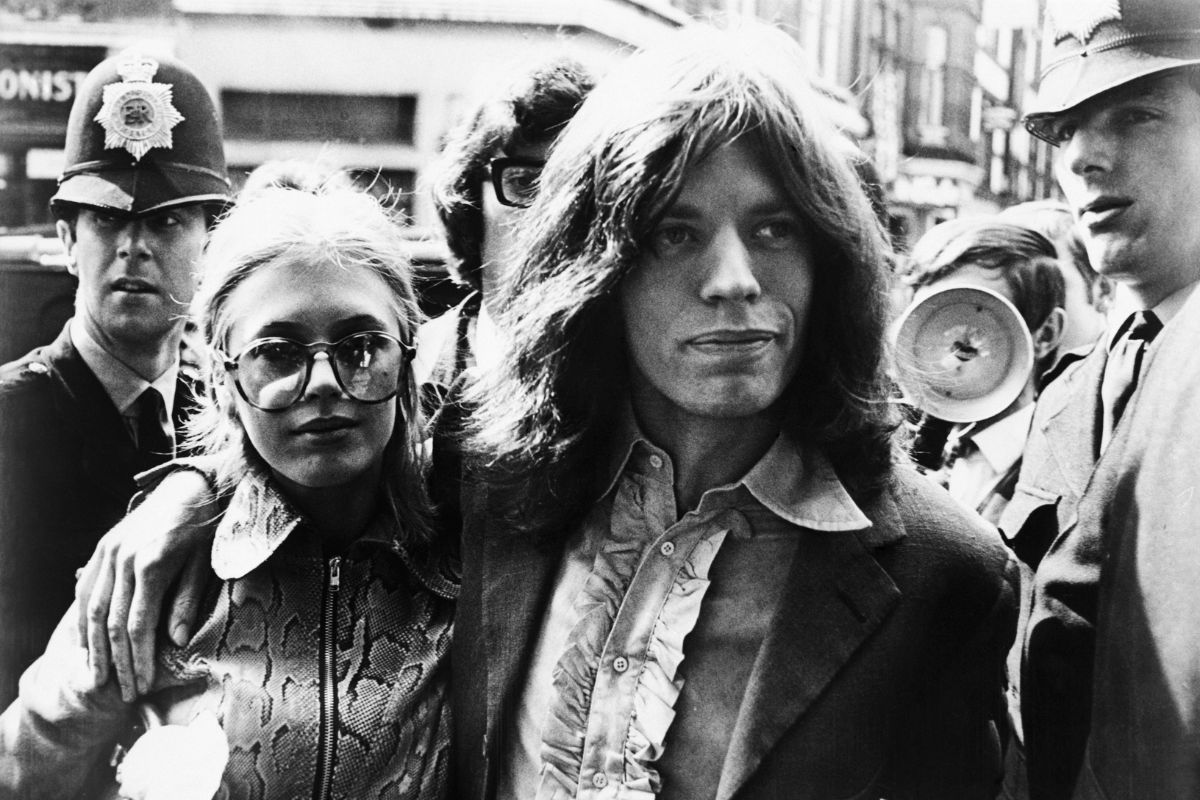
'So a strange assortment of people came through here. Some of my relatives might be staying upstairs, then there might be Mick [Jagger] and Marianne [Faithful], just because it was a good place to hang. It was a cool place.’
'There was always rivalry. Not from Paul, but from Mick'
Jagger and Faithful became regular visitors to Cavendish Avenue. ‘Mick always had to come to his house because he was Paul McCartney and you went to him,' says Faithful in Many Years From Now, ‘there was always rivalry there. Not from Paul, none at all. Paul was oblivious, but there was something from Mick. It was good fun. It was like watching a game on the television.’
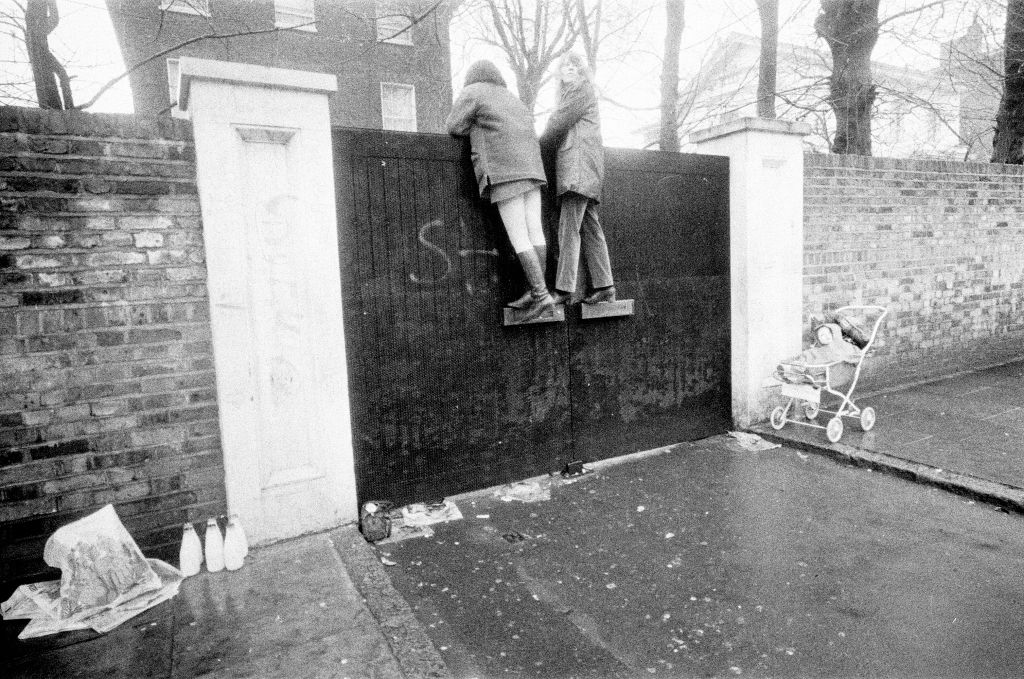
One of the consequences of McCartney’s address being so widely known was that hardcore Beatles fans, known as Apple Scruffs, thought nothing of camping outside – and even breaking in. One such occasion proved the inspiration for a track on Abbey Road. McCartney wrote ‘She Came in Through the Bathroom Window’ in response to a couple of Apple Scruffs, named Di and Carol, who, having scaled McCartney’s garden wall, climbed a ladder into his bathroom then ran downstairs to let their pals in.
The gang grabbed armfuls of the McCartneys’ clothes, photos and slides and ran off. When McCartney got wind of the break-in, he approached some of the Scruffs and asked for word to be put around that he’d like the photos to be returned but they could keep the clothes. Some found their way back to him, including a framed photograph of him and his dad that was of sentimental value, but many remained missing.
Another Beatles song directly inspired by the house was ‘Your Mother Should Know’. ‘I wrote it in Cavendish Avenue, on the harmonium I have in the dining room there,’ McCartney recalled in Many Years From Now.
‘My Aunty Jin and Uncle Harry and a couple of relatives were staying and they were in the living room just across the hall, so I just went to the dining room and spent a few hours with the door open listening. And I suppose because of the family atmosphere, "Your Mother Should Know" came in. It’s a very music hall kind of thing, probably influenced by the fact by Aunty Jin was in the house.’
McCartney’s Cavendish Avenue home was also the site of more trying Beatle moments. The four Beatles convened there for a meeting on 1 September 1967, four days after the death of their beloved manager Brian Epstein. With McCartney taking the lead, the shellshocked band decided to press on with the previously sidelined Magical Mystery Tour project, working through their collective grief but not necessarily addressing it.
And legend has it that a couple of years later, during the early 1969 sessions for what became Let It Be, McCartney missed a session, resulting in Lennon scaling the gate, hammering on the door and having a screaming match with his bandmate.
Other accounts claim Lennon threw a brick through a window and damaged a painting. Meanwhile, some claim that the incident actually happened in 1971 after McCartney won the first round of his legal process against the other Beatles. Only McCartney truly knows what went down.
While Cavendish Avenue had once been the hippest bachelor pad in town, the arrival of McCartney’s new beau, Linda Eastman, straightened the place out. Before long, it was home to a growing family, not to mention a menagerie of animals, which didn’t endear the McCartney clan to their moneyed neighbours – at one point, McCartney was reported to the RSPCA by an elderly neighbour for mistreating his dogs, a claim he vehemently denied.
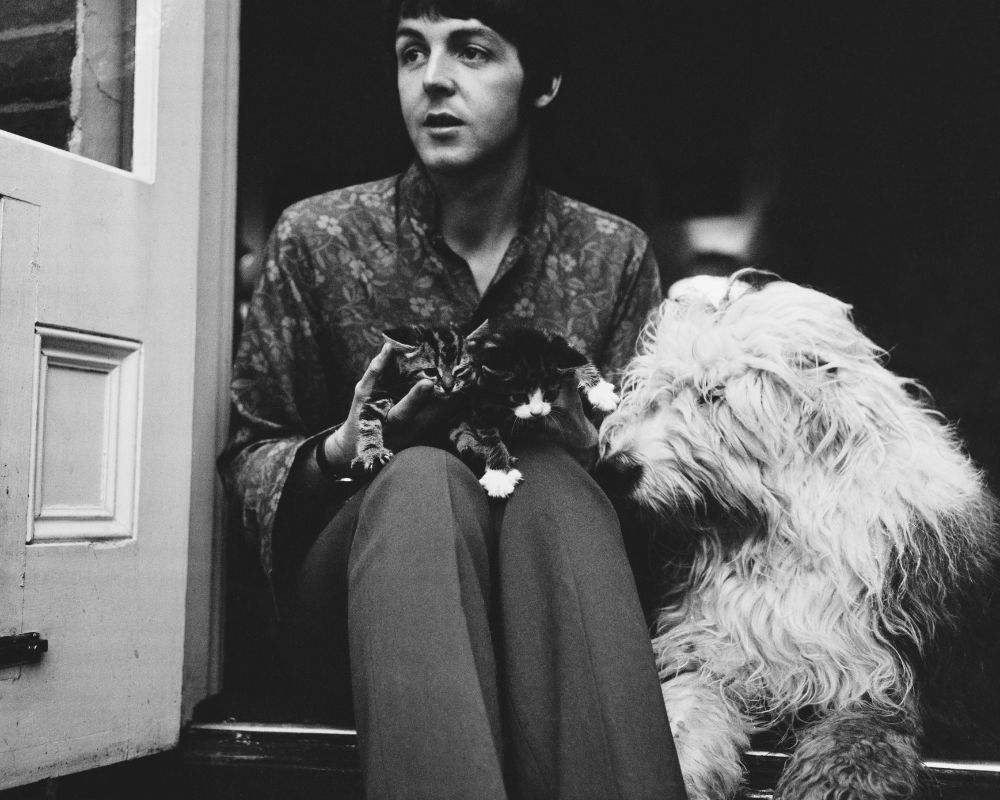
Meanwhile, the back garden resembled a small petting zoo, with ducks, rabbits and chickens roaming around Linda’s vegetable patches. McCartney had to have his Rolls Royce reupholstered at considerable cost after he left a window open and some chickens decided it was a good place to roost.
The neighbours’ patience was also stretched by the McCartneys’ cockerel, which woke the neighbourhood up at dawn. McCartney also caused a stir by painting the house in loud colours, a move that led to complaints from the council and a hasty paint job to ensure it met the requirements of the authorities.
Which is all to say that 7 Cavendish Avenue has a unique and colourful place in rock history. And with McCartney still living there today, the story isn’t over. Now, who’s got £10 million I can borrow?
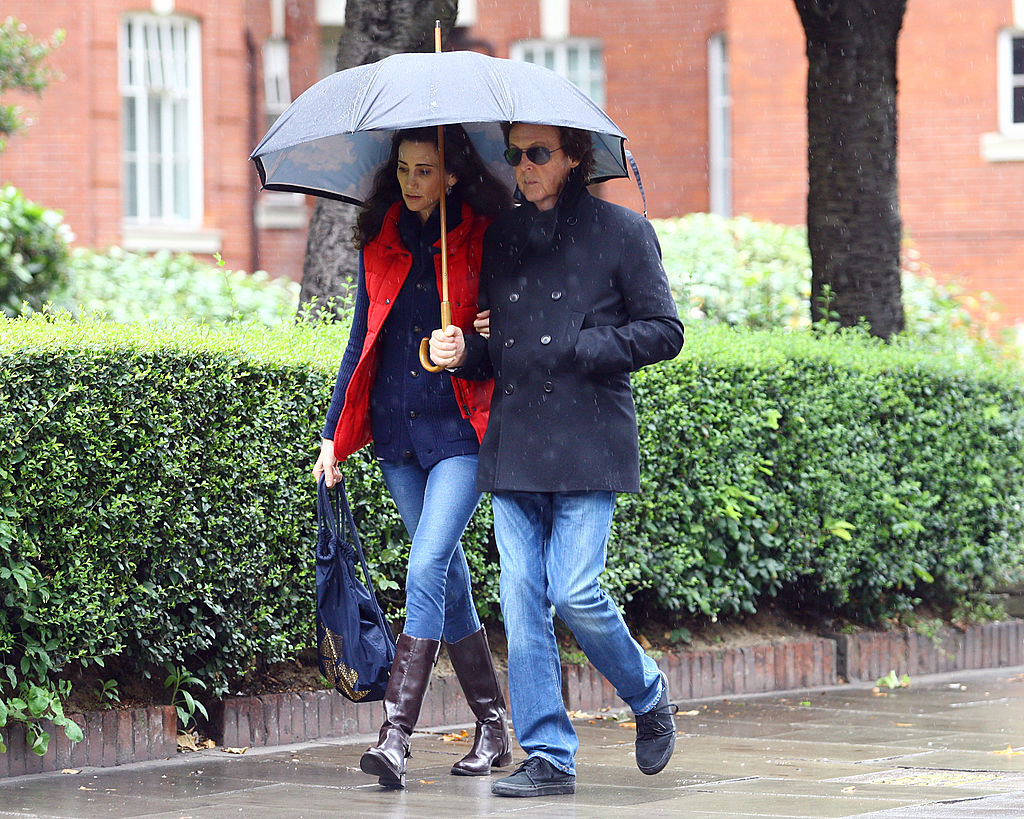
Pics Getty Images
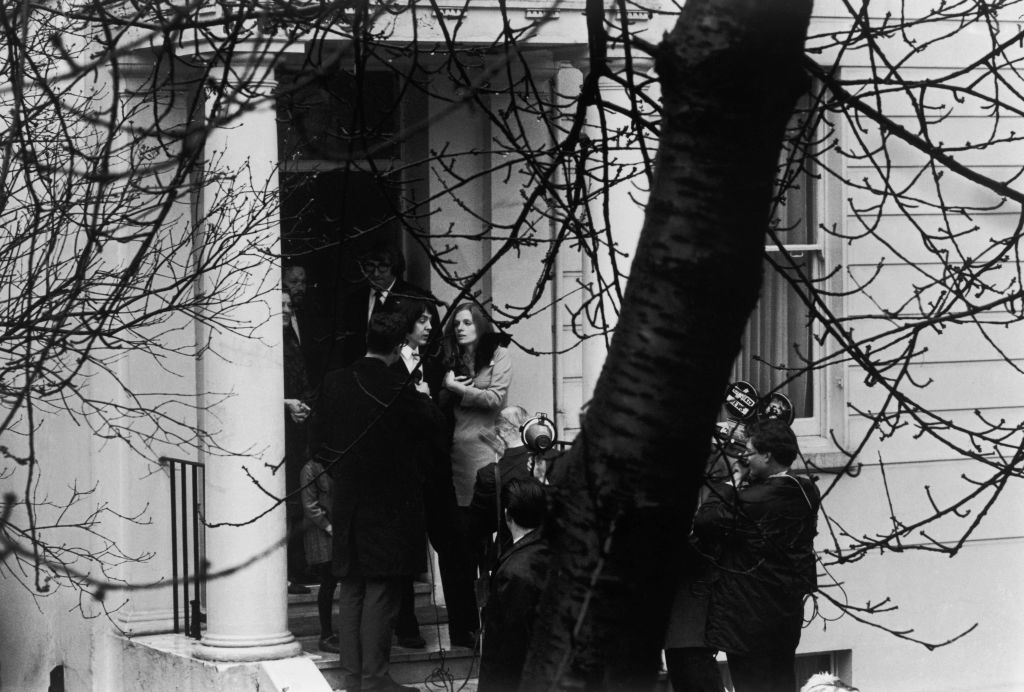
Top pic Paul McCartney outside his house at 7 Cavendish Avenue, London, March 18 1969


