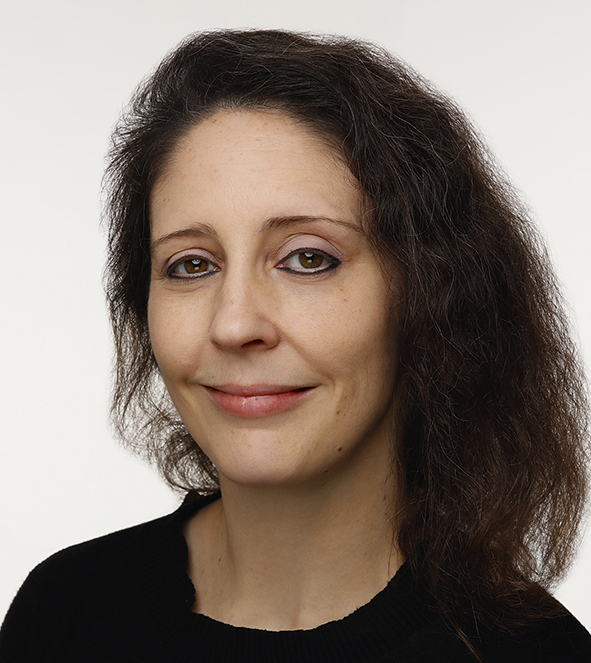
‘I was very curious as a child,’ says Sol Gabetta. ‘When I was seven years old, playing maybe four different instruments, I won a competition on my cello, and with my prize money I decided to make it five and buy a clarinet! For me, music was paradise.’
Sol Gabetta: an incredible career
Almost 40 years later, not much has changed for one of the world’s most high-profile and celebrated cellists. By any standards, Gabetta has ‘made it’. As a soloist, she has performed with top orchestras around the globe, worked with myriad high-ranking maestros and forged deep partnerships with trailblazing composers, all the while forging a successful parallel chamber music career, not least through her own festival in Switzerland, Solsberg, which turns 20 years old this summer.
Recording Saint-Saëns's First Cello Concerto for the second time
Yet at the heart of Gabetta’s musicianship is an essential humility – the ability to leave ego at the door and to open herself up to new ideas. It’s this openness that has allowed her to revisit Saint-Saëns’s First Cello Concerto – a piece she first recorded 15 years ago – with a completely fresh approach on her latest album for Sony.
‘Early in my career it was difficult for me to understand why an interpreter would go back and re-record the same work,’ she admits. ‘But since making that first Saint-Saëns recording, I have performed a lot of Vivaldi with Cappella Gabetta’ – the Baroque ensemble led by her violinist brother Andrés – ‘and performing in a period style on gut strings has led me to think deeply about sound and interpretation, and has given me the capacity to express myself in different ways. That sound is much more open, clear and flexible – not aggressive at all.’
It’s an approach that couldn’t be more different from her earlier understanding of the repertoire, she says, heavily infused as it was by the Russian school. And with Les Siècles under François-Xavier Roth, that ‘flexibility’ finds fertile ground in the distinctly French style that the ensemble brings to the project – a ‘transparency and clarity of articulation’.
Sol Gabetta: facing up to the recording process
Gabetta compares the recording process itself to a rather daunting ‘mirror’ – even for the most robust and confident of musicians. Here, there’s no place for pride or arrogance. ‘I like recording more and more as I get older,’ she reveals. ‘It is like a very exacting teacher. If you approach the process with openness, you must be prepared to accept everything – the good, the bad, the details and mannerisms. It’s the best critic. The only problem is the stress of limited time. Perhaps the ideal situation would be to have your own studio and to be able to record an album as and when you felt ready. That would be my dream.’
A distinctive cello technique: flexible fingers
Humility is all well and good, but without confidence no musician can advocate for their own artistic vision. The yin to Gabetta’s modest yang is an innate self-belief that has allowed her to forge an individual path throughout a dynamic and varied career. And the most visible manifestation of this is in her highly flexible left-hand fingers. Rather than the standard rounded hand position, Gabetta’s fingers collapse at the top joint as she presses down on the string, a technique that allows contact between the whole finger pad and the fingerboard.
‘In the beginning everyone thought I was strange… a woman from another world with this strange anatomy,’ she jokes. ‘I’ve been told such a way of playing will lead to physical problems down the line. But thus far, this has worked for me – I’ve never experienced any pain or tendonitis in my hands. And most physical issues musicians experience stem from tension rather than flexibility. Early teachers tried to get me to play with a rounded hand, but I could never reach the sound or the vibrato I was looking for in that way. So, I needed to cook my own menu.’
Sol Gabetta: the early years
It’s probable that this ability to deviate from the script was forged early on. With musical parents, encouragement can sometimes tip into coercion, but Gabetta and her siblings ‘never felt that pressure,’ she reveals. ‘My parents were serious about music. We left our home in Argentina and moved to Madrid because I wanted to study the cello with Ivan Monighetti at the Reina Sofía School of Music. That could have led to a lot of pressure to succeed. But they always told us simply to find something that we love, and to focus our creativity there.’
To this day, Gabetta continues to do just that. That the new album includes Lalo’s Cello Concerto alongside the two Saint-Saëns concertos is itself a small victory. ‘I must tell you, it was difficult to find a conductor willing to take on the piece,’ she says. ‘But it’s an incredible concerto for the soloist, with such freedom of interpretation.’ Certainly, listening to the recording, it’s clear why cellists hold such affection for the work, with its strong sense of narrative and mercurial shifts in mood. And surely Gabetta’s advocacy will help to change attitudes towards it.
Celebrating historic cellist Lise Cristiani
With her distinct streak of rebelliousness, it’s easy to see why Gabetta might be intrigued by such a trailblazing historical figure as Lise Cristiani, the first professional female cellist to perform on the public stage, and whose 200th anniversary Gabetta marked in 2025 with an album and European tour. ‘I worked closely with a musicologist to uncover as many details about her life as I could,’ she reveals. ‘And this was very difficult, because as an interpreter she didn’t have a stack of written compositions to study, nor did she make recordings.’
Gabetta bristles at those who have uncharitably suggested that Cristiani may not have been a top-tier performer. ‘What we do know,’ she points out, ‘is that Felix Mendelssohn dedicated his Op. 109 Song Without Words to her, and that some of the greatest musicians of the day performed in concerts that she organised and played in. So, I really don’t understand that negativity.’
Directing the Solsberg Festival and artist residencies
As the artistic director of Solsberg – a position she cherishes for the opportunity ‘to discover, to be curious and to experiment’ with artistic friends and colleagues in intimate settings – Gabetta has certainly had experience staging performances. But Cristiani’s example has inspired her to take a step further and to produce her own recital in a far larger venue. ‘I’m determined to do it next year,’ she says with conviction. ‘It comes with a lot of risks – you need to conceive of a programme that is attractive to the public and that sells tickets – but there is also the opportunity for greater freedom.’
A certain amount of freedom has come, of course, in the form of artist residences with numerous top orchestras and concert halls over the past 20 years – and in the current season Gabetta takes on three chamber programmes at London’s Wigmore Hall, plus several solo appearances with the Philharmonia, including Elgar’s Cello Concerto under Santtu-Matias Rouvali on 24 September 2026. Although this will be the first time the pair have collaborated in the Elgar, Gabetta and Rouvali are ‘developing a very strong relationship’, she says, having performed together recently in several cities.
High-profile collaborations
Forging strong artistic ties has undoubtedly been a feature of Gabetta’s career – including with such colleague-friends as violinist Patricia Kopatchinskaja, and with pianist Kristian Bezuidenhout, with whom she performs song transcriptions by Brahms alongside works by Mendelssohn and Schumann for her first Wigmore date on 5 October. But true to that desire to learn and grow, the latter two Wigmore performances (in 2027) deliberately move beyond the safe and convenient – involving collaborations with young artists, violinist Hana Chang and violist Timothy Ridout (12 Jan), and with violinist Veronika Eberle and pianist Beatrice Rana to form an all-female trio in works by Clara Schumann and Fanny Mendelssohn (11 June).
Sol Gabetta: embracing contemporary works
It’s unsurprising, too, that contemporary and 20th-century repertoire form part of Gabetta’s toolkit. Her second Philharmonia performance (25 March) will see her take on Weinberg’s avant-garde Cello Concerto, a work the composer deliberately hid from view until after Stalin’s death. And she has often collaborated with contemporary composers, such as Wolfgang Rihm and Francisco Coll. Though premiering a new work can be fraught with risks, the reward is artistic growth.
‘I confess I have taken on compositions in the past only to reject the work,’ she admits. ‘I would never reveal names, but you must be convinced that you are really behind the composition. And even if you know and like the composer’s work, you never really know how the new piece will turn out, as composers change and grow. And it’s certainly important that they do, or the music would become very boring very quickly!
‘Even with composers I am close to, like Francisco Coll, the process is incredibly demanding. I remember on one of our projects together we were still making changes to the score in the final rehearsal before the premiere. The stress made me ill afterwards! So, I don’t – and can’t – take on as many contemporary projects as, say, my friends Patricia and [pianist] Bertrand Chamayou. I am so impressed with their ability to absorb new music. There is something in the brain, an art of understanding a new score as soon as you see it, that they can tap into.’
Remaining artistically 'present' in an increasingly technological world
Yet for any artist, the alternative is creative decline. ‘If you do two or three tours a year and play almost the same pieces each time, it is impossible to force your brain, your musicality or even your technique and fingers to work at the level they did at the age of 19 when everything was new. Putting yourself in danger and taking risks is essential.’
Is there a risk, perhaps, that in this bold new world of technological dominance, artistic growth may become a thing of the past? And how does she foster that same level of curiosity and focus in a world in which we’re tempted to let the machines think for us?
‘This is something I’m working very hard on with my own son,’ she replies. ‘At the moment I’m trying to avoid giving him access to too many screens, games and so on, and I’m sure that will become more difficult when he gets older – he’s eight now and a drummer! But if a child has a focus – be it reading, sport, an instrument or whatever – they learn patience and the art of perfecting a craft with time and attention. That’s difficult to foster these days – even for me, I can open a score and because everything else arrives so quickly, I become frustrated that I can’t learn a piece in an hour. So, it’s a question of being present.'
A positive future
But despite all the distractions, Gabetta remains positive about the future – especially from her vantage point as a teacher at the Basel Academy in Switzerland. And that’s because the young people she encounters continue to defy the odds and to think for themselves. ‘They observe. They’re curious. And they don’t copy me,’ she says. ‘This is very, very good, as they’re developing their own characters and personalities.’ Just as Gabetta herself did as a student. Long may that continue.