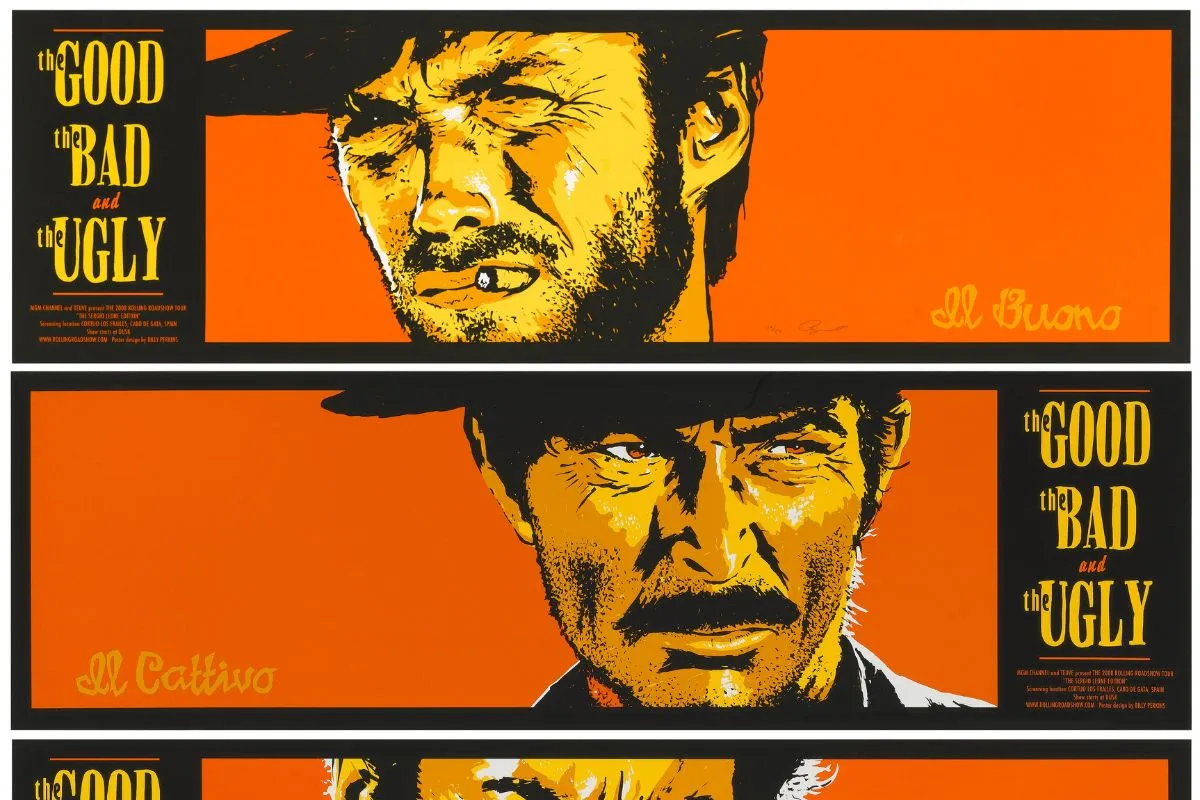
Every time I disappear to London to ‘work’, I sense that my neighbours in the lovely part of Herefordshire where I live are a little confused as to what I’m going there to do. Most likely to play on a film score; this, they sort of know. They know, too, that I’ll probably be at the front of a fine orchestra, but one which, confusingly, has no name.
What does a session musician do?
So, what or who is a session musician? Perhaps a good thumbnail would be: one who is there to produce exactly what is asked of them, but who has no affiliation beyond with the contractor or ‘fixer’ who has booked them for that project. And crucially, one who can be relied on to find no difficulty in rising to the demands of whatever musical challenges are put in front of them. But here’s the thing; these musicians all have other personas. If a string player, they may well be a member of a string quartet or working in other solo or chamber music roles; if a wind or brass player, they might be a principal in a named orchestra or have been one during a distinguished career. They may, too, have teaching roles.
And let’s not get too carried away with pay rates; session work in the UK is controlled by carefully considered agreements between the Musicians’ Union, fixers and those who employ them, and hourly rates are hardly likely to challenge those commanded by top lawyers, surgeons or similarly gifted sports people. Nevertheless, this work is that rare thing in the life of the freelance instrumentalist – it is decently and reliably remunerated. So, it’s the work everyone needs from time to time. Some film work is taken by named orchestras, but they have busy concert and touring schedules to keep – so the core of the business has always been undertaken by a rotating collective of these highly skilled but mostly uncredited independent players.
The value of film soundtracks
Hardcore cinemagoers, who stay in the theatre while the popcorn is being swept up from under the seats as the credits roll, might see the name of the contractor and a few featured instrumentalists’ names. But for the most part this work is undertaken shockingly anonymously. And because, through tradition, the music credits are left until last on the credit roll, you could be forgiven for feeling that music on a film plays an incidental part.
I offer you these quotes from big hitters in the film business. ‘There is a great joy about the music process,’ says Paul Broucek, president of music at Warner Bros Pictures. ‘It’s one of the last things that comes into the film process in finishing a film that brings the greatest value.’ American actor and director Chris Weitz agrees: ‘It’s amazing when you hear the music which has been recorded with a 120-piece orchestra… the movie is just completely reborn’.
The recent upsurge in showings of films with live orchestras is testament, too, to the huge part music plays in the experience of a film and the appetite from audiences to feel the music most viscerally. Movies are supposed to be something you watch, but it’s amazing how much watching one does with one’s ears.
A session musician must be a brilliant sight-reader
But back to my trip to London. I have arrived at one of the two London studios big enough to accommodate a symphony-sized orchestra, so what happens next? After a few introductions and a bit of social life, I sit down to play…
Levels of fearless sight-reading need to be high. Not only does one need to get everything on the page pretty much perfect immediately (there is no ‘rehearsal’ time accounted for in the session – musicians will be recording what will go onto a film forever within minutes of sitting down) but one needs also to get a feel for the concept of the thing.
In the 1985 documentary film of Leonard Bernstein recording his own West Side Story, there are many interesting insights into the recording process – and one of these is his careful explanation that the orchestra being used is a ‘contracted’ band: ‘This is an orchestra… put together with the best elements available at this time of year in New York: it’s what’s called a “contracted”, “pickup” orchestra – but – superb.’
Those New York sessions differ fundamentally from most session work in that there is no film to synchronise to, but the ease of the players looks and feels very familiar. The spotlight can fall on anyone at any time. Yet one senses that they know they can rise to pretty much any challenge issued to them.
How is the score synchronised to the picture? Rise of the 'click-track'...
Music is almost always the final element in a film’s journey to completion and when composers are commissioned to write a score there is usually uncomfortably little time. The release date may be only weeks away and perhaps 80 minutes of music must be written and orchestrated in time to hit the desks of the musicians when they enter the studio for the session. But if all is reasonably coordinated, a score is ready to get recorded the moment the musicians arrive.
How exactly is music synchronised to the picture? This has become a far more exact science in the digital age. The ‘click track’ – a kind of time code translated into the music’s beats and bars, and conveyed into the musicians’ ears via headphones – has been around since before I did my first film in 1986. It is still the fundamental matrix by which all is coordinated during the sessions. Events on the film can be traced to minute subdivisions and the score adjusted accordingly. It also allows for multiple versions of the same music cue to be recorded and edited later.
The good old days... greater flexibility
But I admit to feeling nostalgic about the older ways of doing things. With composers like Ennio Morricone, John Williams and Jerry Goldsmith, all of whom I have worked with, there existed greater flexibility. As late as 2012, I worked on a film – Outlaws – with a score by the late James Horner, for which the enormous screen at the back of Abbey Road’s Studio One was winched down and film was projected onto it from a booth upstairs.
The lights were lowered – we all had desk lamps to see the music – and Horner simply conducted the music to the picture: each performance would be different and coordinating events on screen to happenings in the score was ‘felt’ and transmitted to the players. A series of coloured ‘wipes’ or ‘streamers’ would appear on the screen to warn Horner about an upcoming event; but this, by today’s digital exactitudes, was flexible and open to interpretation. The orchestra could surge and swell just as the emotional needs of the film were felt.
Breaking down the score into its constituent parts is now often taken to extreme levels, with brass, wind, strings and percussion, even subdivisions of these, all recorded separately. I’m not aware of any of my colleagues really loving this. What musicians adore is playing together and forming a blended sound. But as is paralleled in so many walks of life, now we are seemingly lashed to a sense of fragmentation and control over minutiae.
The 'live' room vs the 'control' room
There are really two realities operating during a session recording and it’s essential that a musician accepts that one is more important than the other. Everything that happens in the ‘live’ room – that’s where the sounds are made – is monitored and controlled from the ‘control’ room. Here is the composer, if they have chosen not to conduct, plus a music editor, a producer, a sound engineer, orchestrators, and perhaps the film’s director and various others who are interested not only in how the thing sounds, but in how these sounds work with the picture and other sound elements, not least dialogue - quite a lot of which might already be fixed into the score.
Session musicians... the need for flexibility and a lack of ego
So, let’s imagine you’ve just played a violin solo: you feel reasonably okay about what you’ve just delivered; if you’re lucky, you might feel it was in tune, was sweet-toned and a decent representation of what was on the page in front of you. But now comes the judgement from the control room – the emotional feel might not be quite right when heard with and over the picture, and this means trying it with perhaps less vibrato, a different kind of tone or an octave higher. These you must undertake immediately and with no less control or precision than your first rendition.
Here, ‘session mode’ must kick in and immediately override any vanity or local concerns about how one is playing or feeling. The whole studio will, of course, be listening in to see how their colleague is doing, even though they will make a good show of reading books or doing crossword puzzles while they are not directly involved. And then, finally, it seems it will work better on a cello, viola or clarinet anyway…. So, getting used to challenges that are not fixed is essential.
Just get it right...
I can remember various extreme instances of this kind of thing: ‘Try it on the D string, do it with almost no sound, now split the difference but make it more ghostly...’ and all the while a camera might be waved at one from close quarters, as the session is being filmed. It’s amazing, too, how a crucial solo might end up being recorded in the last ten minutes of a session. Nobody says anything but heavily understood is, ‘Get it right!’
But from my unexpectedly significant induction into the world of film with Morricone’s score for The Mission back in 1986, through every kind of score since, with such wonderful composers, there has always been so much to enjoy. Here’s to my utterly brilliant session colleagues and friends. May we continue to sound the heart and soul to that which is seen.
Tales from the studio – session musicians tell their stories
Karen Jones, flute
So, there I was, an hour and three quarters early for my first ever session for the globally renowned fixer Isobel Griffith. I sat down and glanced at the colossal pile of music on my stand – Harry Potter and the Prisoner of Azkaban. I decided to have a quick scan through to see if there was anything marked solo and looking tricky! There was – 36 seconds of flute virtuosity and it was marked at a terrifyingly fast tempo. At that very moment in my peripheral vision, I could see a pair of feet approaching. ‘Good morning, I’m John Williams! You may like to dig out the tricky flute solo I’ve written. I propose we record it at the end of the project in a couple of weeks, which gives you time to work on it.’
I found my mouth opening and the words emitted seemed to offer recording that afternoon if perhaps I could spend the lunch hour practising it! He agreed to give it a go and told me the feel and speed of the passage. I was a fresh face on the block and some of my colleagues were none too pleased when, as they munched their sandwiches in the studio, hoping for a bit of peace and quiet, I launched into practising what must have sounded like a flute study!
Williams came back after his lunch, donned his gold headphones and looked up in horror, shouting to me, ‘I am deeply sorry, but the click track for your solo is infinitely faster than I led you to believe.’ Nevertheless, I was ready, we did two takes and I had it in the bag. The composer seemed thrilled and that, quite honestly, is one of my proudest and most memorable experiences ever as a flute player.
Richard Watkins – French horn
A big, Hollywood-type blockbuster film will usually call on a large horn section of at least eight players, and contractors will typically book eight principal horns from the top orchestras.
It might be natural to assume that there would be a jockeying of position to try and play first horn but in reality, the opposite is true! The section fills up from eighth horn as everyone arrives, as the fee is the same regardless of which chair you sit in. The end result is one that is incredibly respectful and supportive. Great playing with superlative company!
Thomas Bowes’ album with Sinfonia Arcadiana, featuring Elgar’s Violin Concerto and five of his celebrated miniatures in new arrangements by Eleanor Alberga is out on the Rubicon label on 25 September. Watch the trailer below and find out more here: https://www.thomasbowes.com/elgar and lnk.to/ThomasBowes