
Just like authors and filmmakers, songwriters have always been fascinated by the end of the world.
Here are 11 of the best songs that imagine mankind’s extinction, from catchy MTV hits to funky floor-fillers to hard-hitting folk songs.
11 best songs about the end of the world
11. Modern English – 'I Melt With You' (1982)

The swooning new wave anthem ‘I Melt With You’ became UK band Modern English’s biggest hit and one of the defining songs of the early ’80s, becoming an MTV staple in the US and featuring on the soundtrack of the film Valley Girl.
But according to singer Robbie Grey, the lyrics refer to a couple making the most of their final moments on Earth during a nuclear war.
"It got missed for years until somebody asked me what it was about," Grey said. "I think everybody just thought it was a straightforward love song. It was almost like a metaphor for that time. Using a relationship and people making love as an example of something good against something so dark in the background."
10. Creedence Clearwater Revival – 'Bad Moon Rising' (1969)
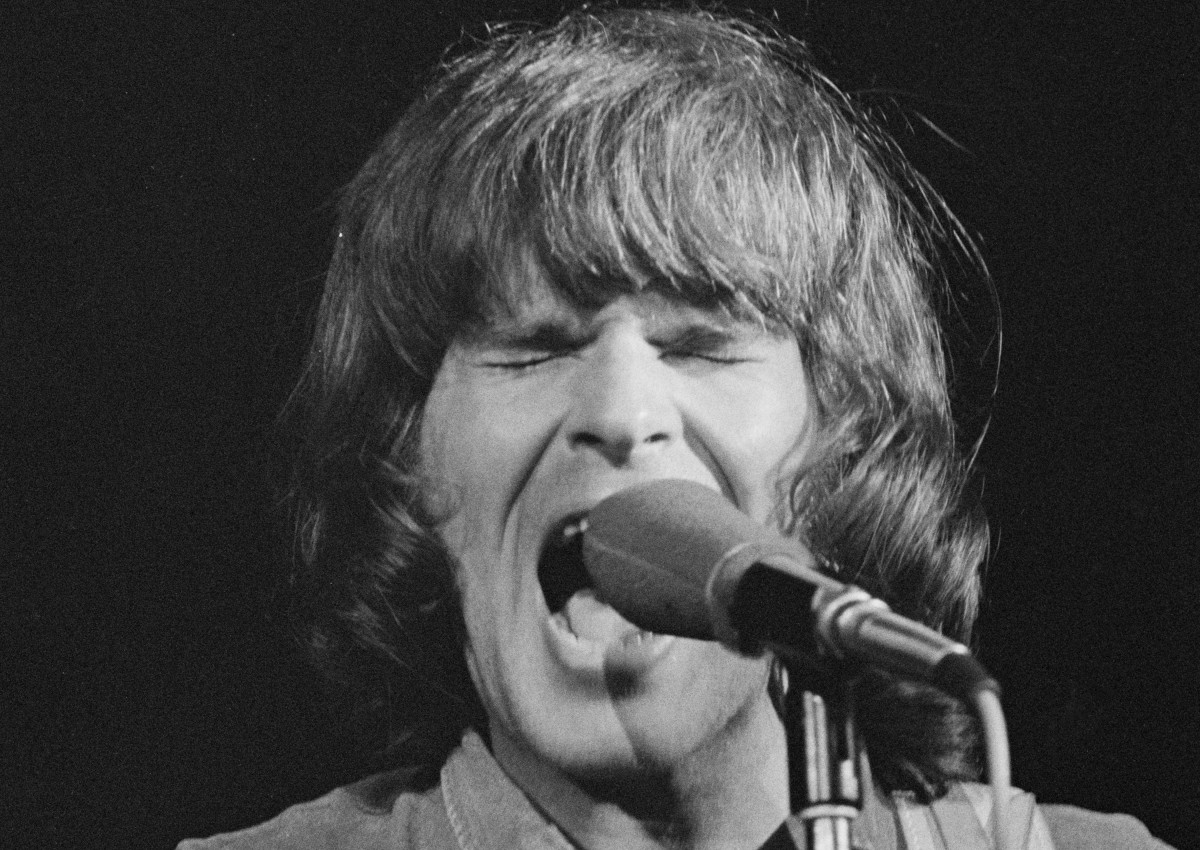
One of John Fogerty’s biggest hits was also his most ominous – at least once you pay attention to the lyrics. While ‘Bad Moon Rising’ is set to the kind of jauntily chugging country rock that had become CCR’s calling card, it was inspired by an apocalyptic scene in one Fogerty’s favourite films, the 1941 classic The Devil And Daniel Webster.
"There’s a devastating hurricane," Fogerty later said, "Furniture, trees, houses, everything’s blowing around. That story and that look really stuck in my mind and they were the germ for the song." It was only when his song was being worked on by CCR that Fogerty truly realised its darkness.
"It was about the apocalypse that was going to be visited upon us," he told Rolling Stone. "It wasn’t until the band was learning the song that I realized the dichotomy.
"Here you got this song with all these hurricanes and blowing and raging ruin and all that, but it’s, I see a bad moon rising. It’s a happy-sounding tune, right? It didn’t bother me at the time."
9. R.E.M. – 'It's The End Of The World As We Know It (And I Feel Fine) (1987)
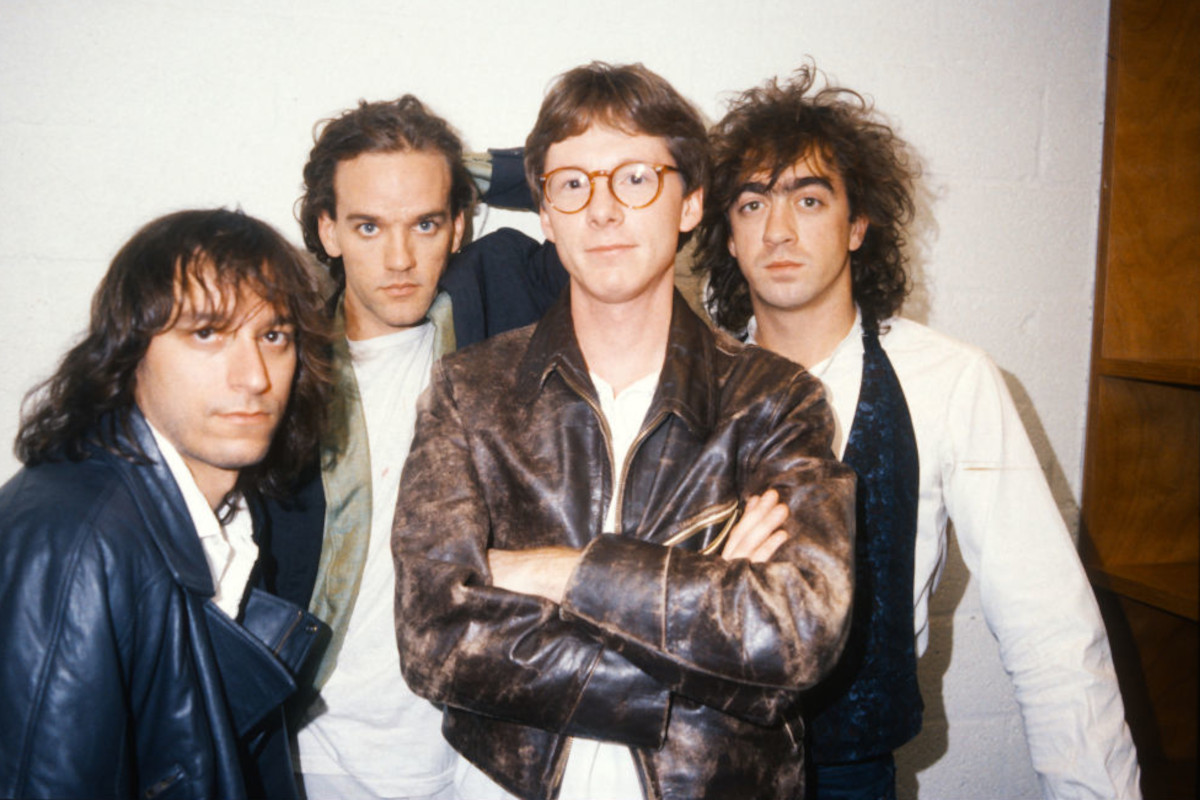
They say your entire life flashes before your eyes at the moment of death. In this R.E.M. single from 1987, singer Michael Stipe faces up to the end of life itself (at least as we know it) by spitting out a stream of consciousness lyric that takes in natural disasters, US foreign policy, Greek mythology, pop culture references and who knows what else.
Stipe’s delivery is breakneck and frenetic, in stark contrast to the anthemic chorus, in which he seems to step back and make peace with impending doom. "The words come from everywhere," Stipe told Q in 1992.
"I’m extremely aware of everything around me, whether I am in a sleeping state, awake, dream-state or just in day-to-day life, so that ended up in the song along with a lot of stuff I’d seen when I was flipping TV channels. It's a collection of streams of consciousness."
8. Phoebe Bridgers – 'I Know The End' (2020)

When confronted with the end, what else is there to do but let out a guttural scream? The final song on Phoebe Bridger’s second album, Punisher, begins as an exquisitely melancholy reflection on the end of a relationship, all gauzy guitars and gently cooed vocals.
After a couple of verses, the mood shifts as Bridgers recounts the sights of an unsettling road trip ("A slaughterhouse, an outlet mall, slot machines, fear of God"… "big bolts of lightning hanging low") while the music gets ever stormier.
Eventually, she chances upon a billboard that reads ‘The end is near’ – by this point, drums are thumping, mariachi horns are blasting and walls of distortion are closing in – at which point, she shrugs and agrees, "Yeah, I guess the end is here". Rowdy choirs repeat "The end is near" as guitars squall and Bridgers unleashes a series of cathartic screams.
Bridgers later told NME she asked for tips from her Better Oblivion Community Centre bandmate, Conor Oberst, "He was like, 'What do you mean? You just do it.' So I just did it, and my voice was sore for three days but it was so fun. I highly recommend it."
7. Tom Waits – 'The Earth Died Screaming' (1992)
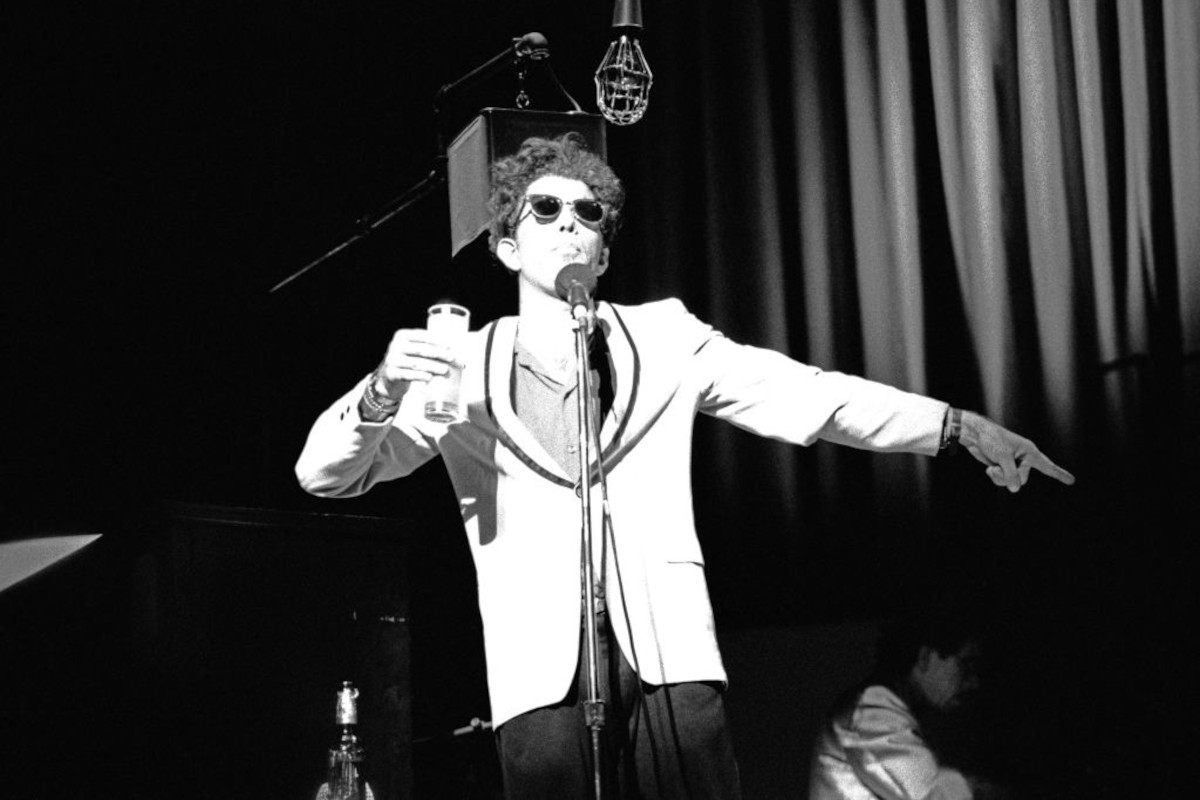
Tom Waits’ first full studio album of the ’90s, Bone Machine, was his most experimental yet. And opening track, ‘The Earth Died Screaming’ threw listeners in at the deep end.
Over a lurching rhythm – the sound of Waits and his bandmates hitting sticks on the pavement outside the studio – he mutters and growls apocalyptic visions, describing a nightmarish world of crows as big as airplanes, lions with three heads and fish falling from the sky.
The chorus finds Waits in full fire-and-brimstone preacher mode, which was no accident, as he revealed at the time, "I haven't written a song like that really before. It is a warning, like the end is near. The guys that I used to always love on downtown LA, Fifth and Main, with the briefcase with the speaker in it and the crummy little amplifier in it, going back and forth on a little wire screaming about the end of the world.
"I used to just stop and listen to those guys. To keep a crowd on a corner, now that is where you cut your teeth as a public speaker, on a busy corner at like 5:00 on a Friday afternoon, and you're talking about Jesus. Those were thrilling moments for me."
6. The Clash – 'London Calling' (1979)
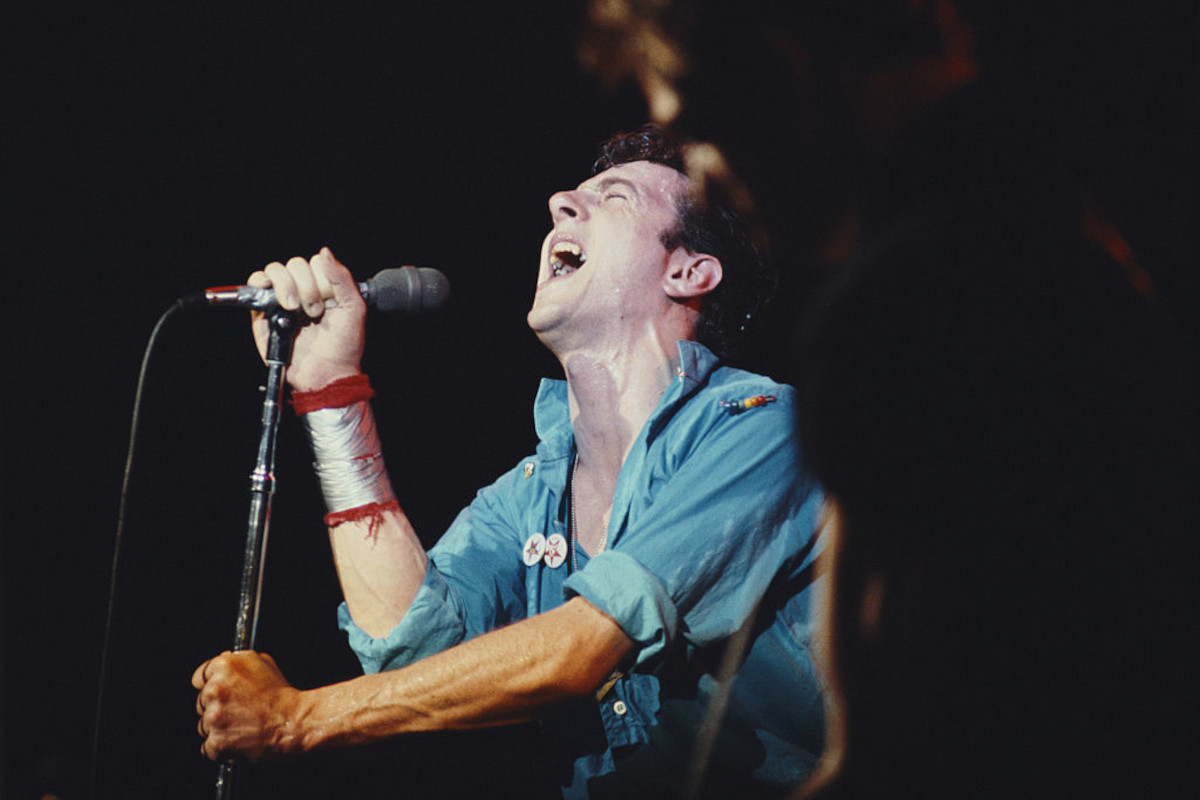
For Joe Strummer the threat of impending disaster was personal, “London is drowning and I… live by the river!” he exclaims on the opening track of The Clash’s masterpiece, 1979’s London Calling. Strummer wasn’t kidding – at the time, the frontman lived at 31 Whistler Walk, Chelsea, a stone’s throw from the banks of the Thames.
Strummer’s concern over rising water levels was sparked by reports about the impact of the Three Mile Island accident near Harrisburg, Pennsylvania, on 28 March 1979 – the worst commercial nuclear accident in US history.
From there, Strummer imagined fronting a public service announcement (‘This is London calling’ is the slogan of the BBC’s World Service) in which he informed the public of the fall-out of disaster – war is declared, a new ice age is imminent, ‘zombies of death’ are on their way, food supplies are running low.
It’s delivered with a fanatical zeal as The Clash swagger magnificently around him, but the suspicion arises that Strummer is playing an unreliable narrator and sending up the media’s tendency to peddle fear for profit. Either way, it’s a helluva way to start an album.
5. Radiohead – 'Idioteque' (2000)
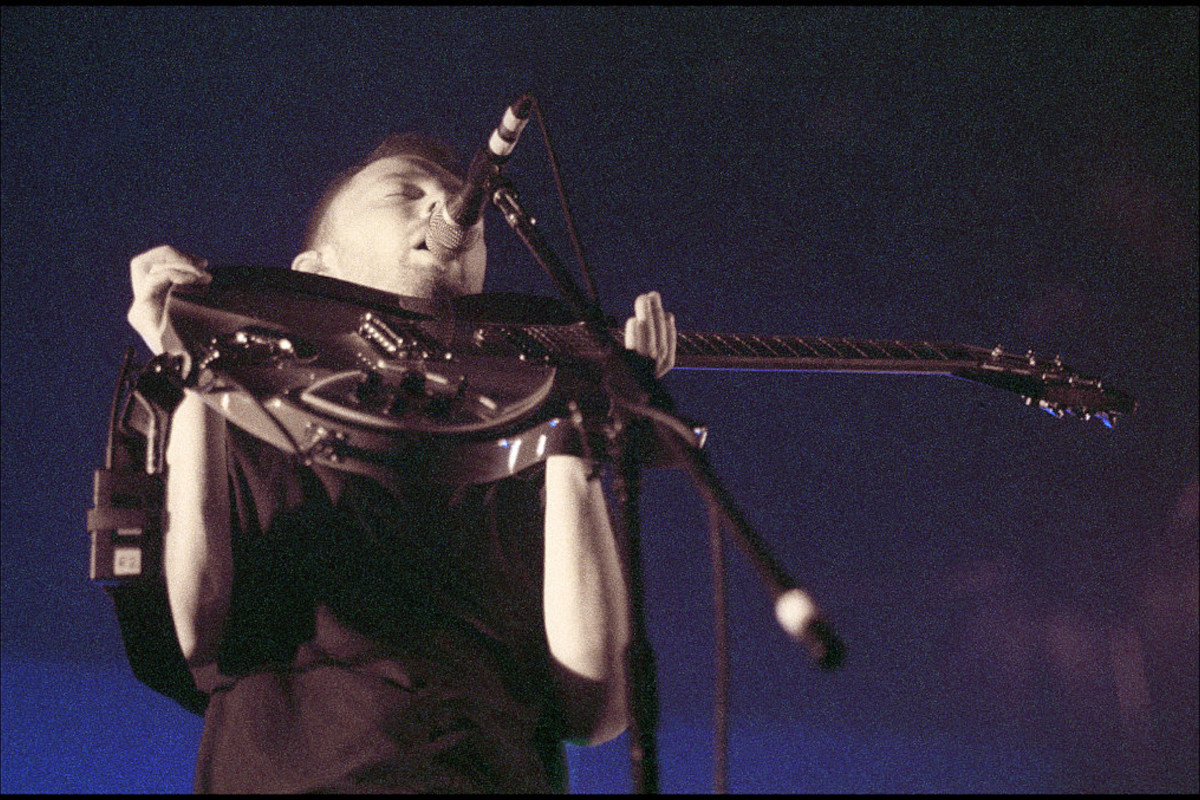
Thom Yorke’s back catalogue is littered with songs preoccupied with oblivion (‘Where I End And You Begin’, ‘The Gloaming’, ‘The Eraser’, we could go on), but it’s on Kid A track ‘Idioteque’ where the Radiohead frontman most explicitly tackles mankind’s downfall.
In an interview with XFM in 2003, Yorke discussed "an extremely unhealthy obsession" he had with the first Gulf War during the Kid A sessions, in particular footage he’d seen of missiles blowing up bunkers full of women and children taking shelter.
That disturbing image kicks off ‘Idioteque’, with an understandably frantic Yorke ranting "I have seen too much". Yorke spirals, fretting about the planet’s demise ("Ice age coming, ice age coming"), caused by a lack of humanity and gross profiteering ("Take the money and run"). "We’re not scaremongering," he howls, "This is really happening".
Yorke’s lyrics were set to Radiohead’s most electronica-inspired track to date, a clattering and glitchy dance track that perfectly echoed Yorke’s fears. "I always wanted to do a dance tune," Yorke told Select in 2000, "something you hear when you go to a club. I used to go to a club when I was at university that played hip-hop, James Brown and stuff.
"The speakers were really bad and blown up. I remembered that, because I always used to think, ‘Wouldn't it be amazing to try and get that feeling, but have all the things that freak you out, the most worrying images you could have, and rattle them off in the middle of the rhythm.'"
4. Prince – '1999' (1982)

Trust Minneapolis’ funkiest to put a celebratory spin on impending implosion. The sky has turned purple and people have lost their minds, running scattershot "from the destruction", but in the face of disaster, Prince suggests the best course of action is to dance your cares away. After all, he reasons, "Life is just a party and parties weren’t meant to last."
‘1999’ was written at a point when the end of the world was weighing heavily on people’s minds – a couple of years into US president Ronald Reagan’s first term, the Cold War with the Soviet Union had escalated sharply with increased US spending on nuclear weapons designed to intimidate the Russians.
While on tour, Prince and his band members had caught an HBO documentary about Nostradamus, which – in keeping with the doomy mood of the times – suggested harrowing events to come. While his bandmates were left feeling despondent by the show, Prince imagined the end times party to end all parties and an all-time classic was born.
3. Johnny Cash – 'The Man Comes Around' (2002)

One of Johnny Cash’s final songs, ‘The Man Comes Around’ is a vivid imagining of the events of Judgement Day, strewn with biblical references and righteous warnings. On paper, the lyrics are mighty, but when the oak-aged voice of Cash brought them to life, the effect was staggering.
"It took me nine months to write it," Cash told American Songwriter. "I wrote verse after verse, probably 25 or 30 verses, before I was satisfied with the verses I wanted to use in the song. It’s the first time I’ve ever overwritten a song, but I felt like it was necessary.
"The song was very special to me. It’s a spiritual about the second coming of Christ, about judgment day, the day of redemption."
2. Bob Dylan – 'A Hard Rain's A-Gonna Fall' (1963)

Written as the Cold War was heating up, at least three songs from Bob Dylan’s second album, The Freewheelin’ Bob Dylan – ‘A Hard Rain’s A-Gonna Fall’, ‘Talking World War III Blues’ and ‘Masters Of War’ – suggest the young singer’s mind was on the end of days.
But ‘A Hard Rain’s A-Gonna Fall’ is the most powerful, a slideshow of ominous, disconnected images – "a newborn baby with wild wolves all around it", "a black branch with blood that kept drippin’" – broken up by the titular refrain.
Typically, Dylan claimed it wasn’t about the recent escalation of a nuclear threat brought about by the Cuban Missile Crisis, but it’s difficult to imagine lyrics such as, "I heard the sound of a thunder, it roared out a warnin'/Heard the roar of a wave that could drown the whole world", to mean anything else.
1. David Bowie – 'Five Years' (1972)
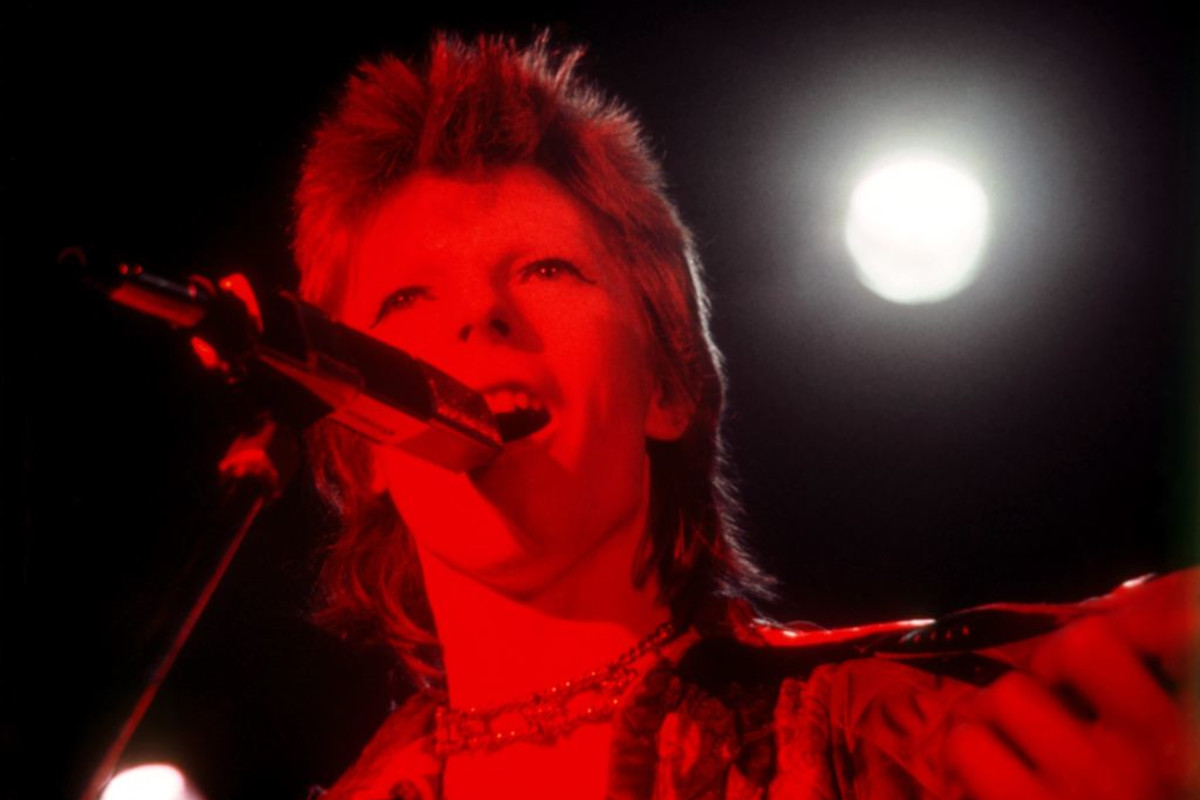
The opening track of David Bowie’s 1972 classic The Rise And Fall Of Ziggy Stardust And The Spiders From Mars sets the scene perfectly. First there’s Mick ‘Woody’ Woodmansey’s drum beat – unshowy, unadorned and sombre, as if already counting down the days till Armageddon.
"The idea of the song is that the world is ending in five years," Woodmansey told The Quietus in 2017, "so it was about finding a drumbeat that got that across – which was quite a challenge!
"I remember going through drum rolls, cymbal crashes and I kind of thought: ‘Well if it’s the end of the world… I can’t be bothered! Haha!’ You wouldn’t be excited and you wouldn’t feel like doing a lot. So, that beat came out of sort of despair and apathy."
The mood set, Bowie enters to tell of chaotic scenes in the streets as bystanders react to reports that "Earth was really dying". News anchors weep, fights break out, policemen kiss the feet of priests and our narrator is in the centre of it all, calmly observing before becoming increasingly hysterical.
"Bowie’s screaming, and what you hear on that song – the emotion – is for real," engineer Dennis MacKay told Uncut in 2012. "He’s bawling his eyes out. [Mick] Ronson was looking at Bowie, stunned.
"I was in shock, because… he was also hitting every note spot-on. I’ve worked with some great vocalists since. But no-one who could do it in one take with that much emotion."
All photos Getty Images
Top image David Bowie being interviewed at his ground floor flat at Haddon Hall, where he has been redecorating the ceiling in silver paint, Beckenham, London, 24th April 1972


